That white, chalky film on brick is not just dirt, and treating it like dirt is where a lot of property owners go wrong. If you are figuring out how to remove efflorescence from brick, the first step is understanding that the stain is really a salt deposit left behind when water moves through masonry and evaporates. Leaving efflorescence untreated can lead to it transforming into calcite (a hard, insoluble, crusty deposit). This process is caused by the calcium hydroxide in the efflorescence reacting with carbon dioxide in the air, a process known as carbonation.
Efflorescence is common on brick walls, chimneys, foundations, patios, retaining walls, and newer masonry that is still drying out. It can look minor at first, but if the moisture source is still active, it usually comes back. Cleaning the surface matters, but solving the water issue matters more.
What efflorescence on brick actually means
Brick, mortar, and concrete all contain soluble salts. When water gets into the masonry, it dissolves some of those salts and carries them to the surface. As the water evaporates, the salts are left behind as a white or grayish powder.
Sometimes it brushes off easily. Sometimes it bonds more tightly and keeps reappearing after rain or humid weather. That difference usually comes down to how much moisture is moving through the wall and how long the issue has been developing.
Efflorescence itself is usually not the same as structural damage, but it is often a sign that moisture is traveling where it should not. On exterior brick, that can point to drainage issues, failed sealant joints, poor grading, leaking gutters, sprinkler overspray, or masonry that never had a chance to dry properly.
How to remove efflorescence from brick without making it worse
The biggest mistake is going straight to high pressure or harsh acid. Brick can handle a lot, but not every brick surface should be cleaned the same way. Older masonry, historic brick, and weak mortar joints need a much more careful approach than a newer hard-fired brick wall.
Start with the least aggressive method first.
Step 1: Make sure the brick is dry
Dry deposits are usually easier to remove than damp ones. If the wall is still wet from rain, irrigation, or washing, wait until the surface has dried out. Efflorescence is easier to evaluate and clean when the salts are fully visible.
Step 2: Dry brush the surface
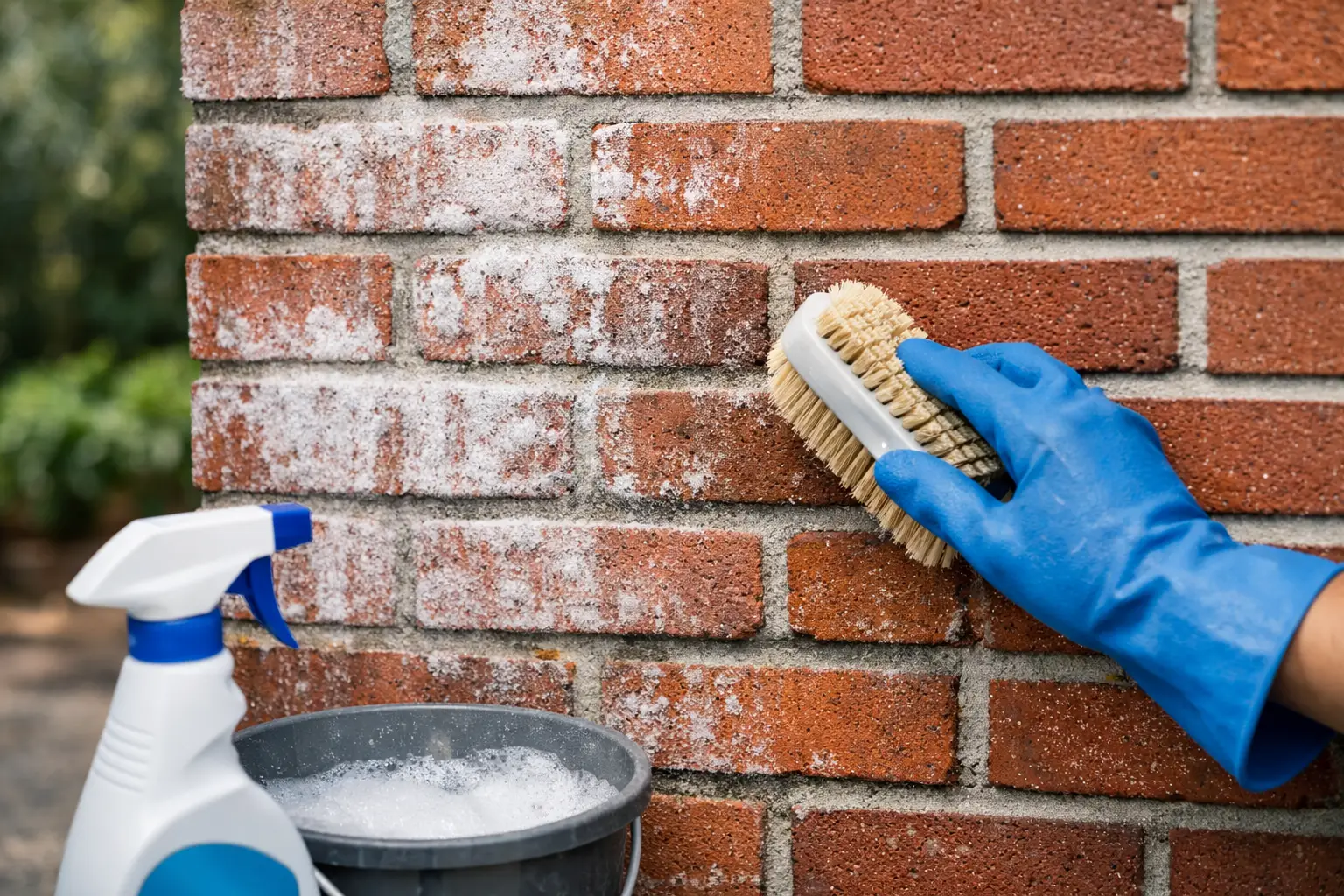
In many cases, a stiff nylon or natural fiber brush will remove a good amount of the residue. Brush gently but thoroughly, working from top to bottom so you do not drag salts over clean areas. A wire brush is usually a bad idea because it can scar the brick face or damage mortar.
This dry-brush step is worth doing even if you plan to use a cleaner afterward. It removes loose material first and reduces how much dissolved residue gets spread around during rinsing.
Step 3: Rinse with low-pressure water
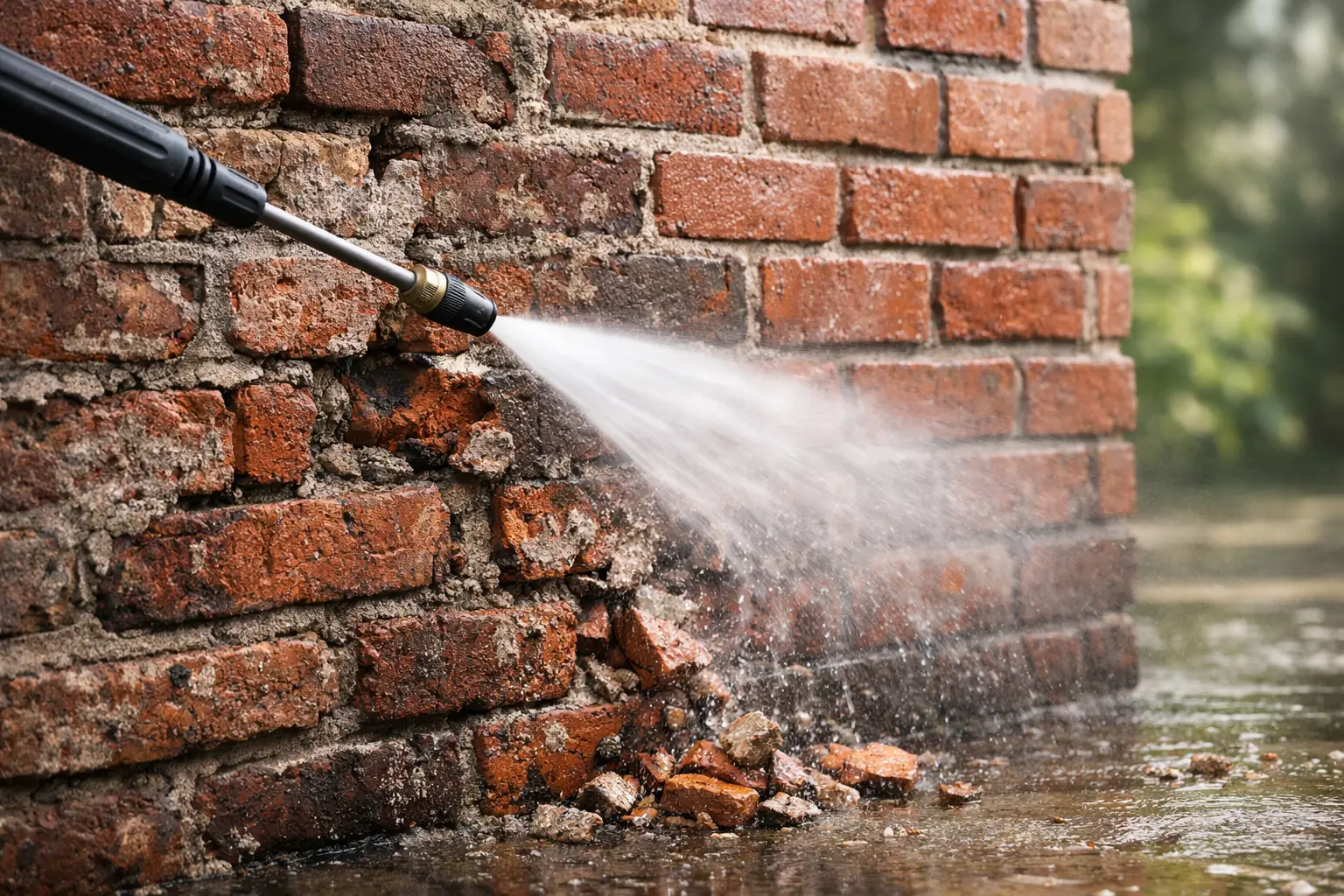
After brushing, rinse the brick with a gentle stream of clean water. The goal is to flush remaining surface salts away, not to drive more water deep into the wall. That is why pressure washing at full force is risky here. Too much pressure can etch brick, open mortar joints, and force water farther into the masonry, which can set you up for more efflorescence later.
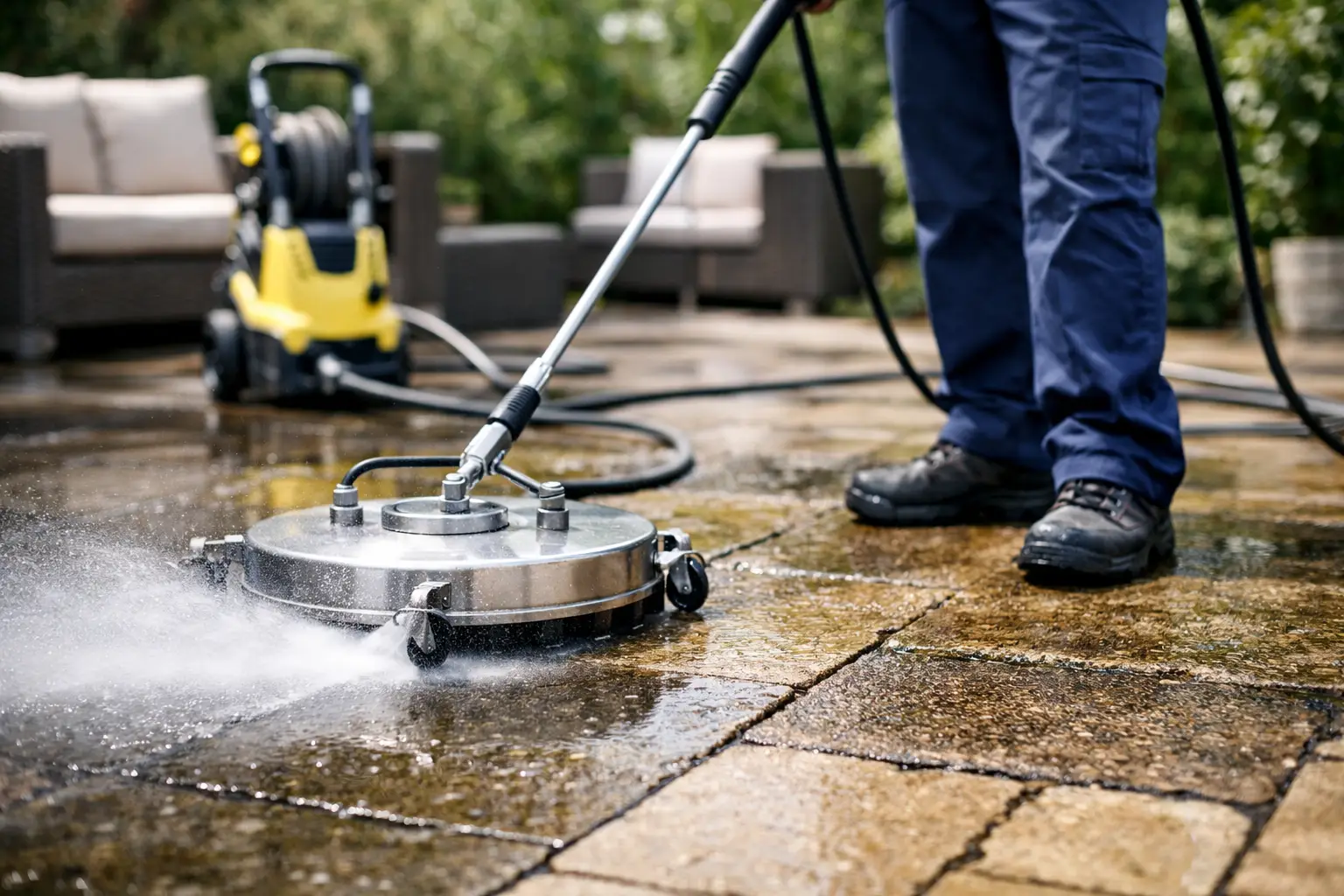
On some surfaces, especially patios or retaining walls, a controlled professional wash may be appropriate. It depends on the brick type, mortar condition, and severity of buildup.
Step 4: Use a masonry-safe efflorescence cleaner if needed
If brushing and rinsing do not solve it, you may need a cleaner made for masonry salt deposits. This is where caution matters. Not every white stain on brick is the same, and not every acidic cleaner is safe for every wall.
A proper efflorescence remover should be matched to the surface and used exactly as directed. The brick often needs to be pre-wet, the cleaner diluted correctly, and the dwell time controlled. Letting a strong product sit too long can discolor the masonry or affect the mortar. On surrounding surfaces, runoff can also damage metal, painted trim, plants, or nearby concrete.
If you are dealing with older brick, custom masonry, or a visible front elevation, test a small area first. A spot that looks cleaner is not always a success if it also changes the brick color or texture.
When pressure washing brick is the wrong move
A lot of homeowners assume pressure washing is the answer because the stain is on the surface. That logic makes sense until you remember that efflorescence starts below the surface with moisture movement.
High pressure can remove some deposits quickly, but it can also blast out mortar, roughen the brick face, and force water into voids and cracks. On historic homes or softer brick, the damage can cost far more than the cleaning ever should have.
That does not mean brick should never be professionally washed. It means the method has to fit the material. In many cases, lower pressure, the right cleaner, proper rinse technique, and attention to moisture sources produce a better result than raw force.
Why efflorescence keeps coming back
If you clean the brick and the white film returns, the problem is not the cleaning. The problem is usually the water source.
Common causes include overflowing gutters, downspouts discharging too close to the foundation, sprinklers hitting the wall, cracked mortar joints, poor drainage, missing or failed flashing, and soil or mulch piled too high against the brick. On newer construction, it can also be part of the natural drying process, especially during the first year or two.
Interior moisture can play a role too. On basement walls or chimneys, condensation and water intrusion can push salts outward from inside the structure. That is why recurring efflorescence should be treated as a moisture symptom, not just a cosmetic nuisance.
How to keep efflorescence from returning
Once the brick is clean, focus on correction, not just appearance. Make sure gutters are flowing properly and downspouts move water away from the structure. Adjust sprinkler heads so they are not soaking masonry every morning. Check grading around the foundation so water drains away instead of settling near the wall.
Look closely at mortar joints, sealant around windows and penetrations, and any cracks that may be letting water in. If the brick is on a chimney or retaining wall, the source may be higher or deeper than it first appears.
Some property owners ask about sealing the brick right away. Sometimes that is appropriate, but only after the masonry is truly dry and only with the right breathable product. Trapping moisture behind a non-breathable coating can make the problem worse. This is one of those areas where product choice and timing matter a lot.
When to call a professional for efflorescence removal
If the affected area is small and the brick is in good condition, a careful DIY approach can work. But there are clear cases where professional help is the safer choice.
If the brick is older, the mortar is crumbling, the staining covers a large area, or previous cleaning attempts have not worked, it is smart to stop experimenting. The same is true if you are dealing with a commercial property, a historic structure, a winery, or a highly visible entry where appearance matters and surface damage would be expensive.
An experienced exterior cleaning company should do more than remove the white residue. They should evaluate the brick type, the condition of the mortar, the likely water source, and the safest cleaning method for that specific structure. That is especially important in Central Virginia, where freeze-thaw cycles, humidity, and seasonal rain can keep moisture issues active longer than expected.
At Blue Ridge Exterior Cleaning, that kind of surface-specific decision-making is a big part of the job. Brick cleaning is not about using the most aggressive method. It is about getting the result without creating a bigger repair bill.
A quick note on stains that are not efflorescence
Not every white mark on brick is salt. Paint overspray, hard water staining, mortar smears, and lime run can look similar from a distance. If the deposit is crusty, glossy, or localized in unusual patterns, it may need a different treatment.
That is another reason why guessing with random cleaners can backfire. The wrong product may do nothing at all, or it may remove part of the finish while leaving the stain in place.
Brick usually gives you some warning before moisture problems turn into bigger masonry issues. If you see white staining, take it seriously, clean it carefully, and pay attention to why it showed up in the first place. The right fix is not just a cleaner wall. It is a brick surface that stays sound, looks right, and is not quietly holding onto water.