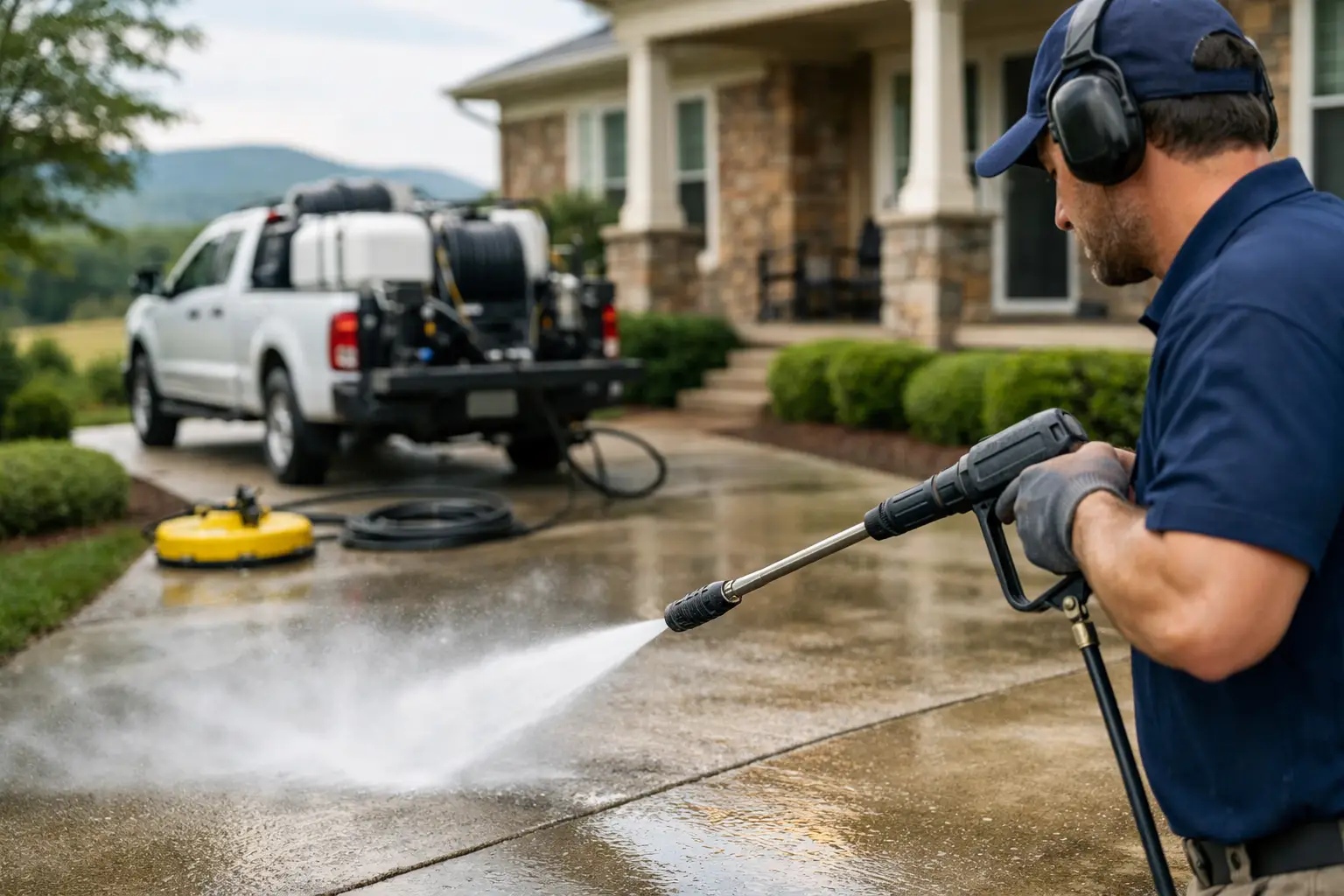
If you have lived around Central Virginia for long, you have seen what our climate does to exterior surfaces. One shaded side of a house turns green. A brick walkway gets slick after a wet stretch. A storefront starts looking tired even when the business inside is well run. Charlottesville pressure washing is not just about appearance. It is about protecting materials, reducing slip hazards, and keeping a property from aging faster than it should.
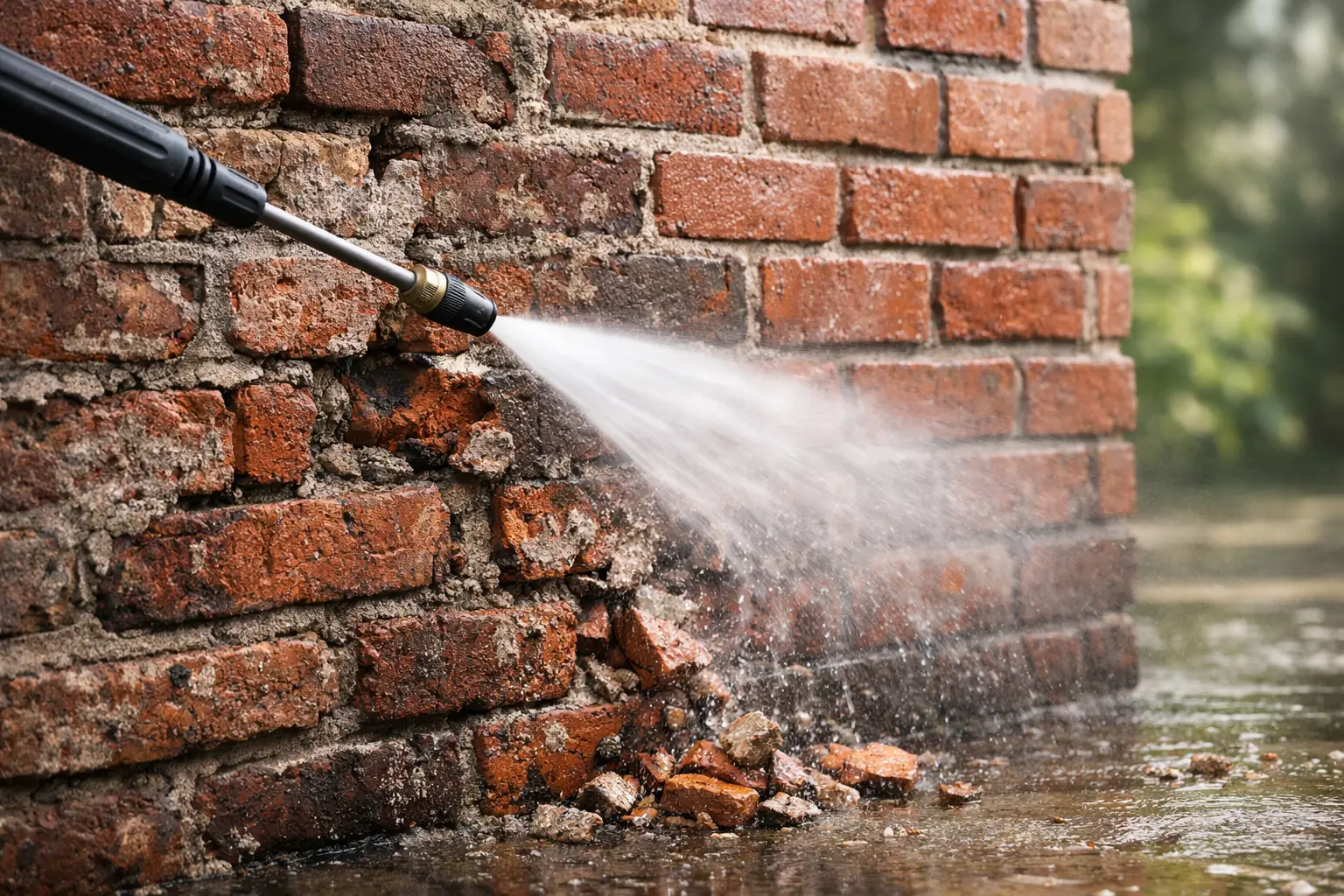
That is where a lot of property owners get mixed messages. They hear “pressure washing” used as a catch-all term, then assume every surface should be blasted with high pressure. That is how etching happens on concrete, how siding gets forced full of water, and how roof shingles lose granules. Good exterior cleaning starts with a simpler question – what is the surface, what is growing on it, and what cleaning method will remove it without causing damage?
What Charlottesville pressure washing should actually include
A professional approach is not one machine and one pressure setting. It is a mix of methods. Concrete may need high-output surface cleaning. Vinyl siding often needs a soft wash approach with the right detergents and controlled rinsing. Roofs should be cleaned with low-pressure methods designed to kill and remove organic growth without shortening the roof’s life.
That matters in Charlottesville because properties here deal with a little bit of everything. Tree cover creates shade and trapped moisture. Pollen coats horizontal surfaces. Red clay can stain driveways, foundations, and siding. Historic and custom homes often have materials that require extra care. A contractor who treats every job the same will miss those differences, and the results usually show.
For homeowners, the goal is usually curb appeal, maintenance, and avoiding expensive repairs. For commercial properties, appearance matters too, but safety and presentation can carry even more weight. A dirty entry, stained sidewalks, or algae growth around common areas can affect how customers, tenants, and visitors see the property before they ever walk inside.
Not every surface wants the same cleaning method
This is the point many companies rush past. Pressure is only one part of cleaning. Water volume, temperature, detergents, dwell time, and rinse technique all matter.
House washing
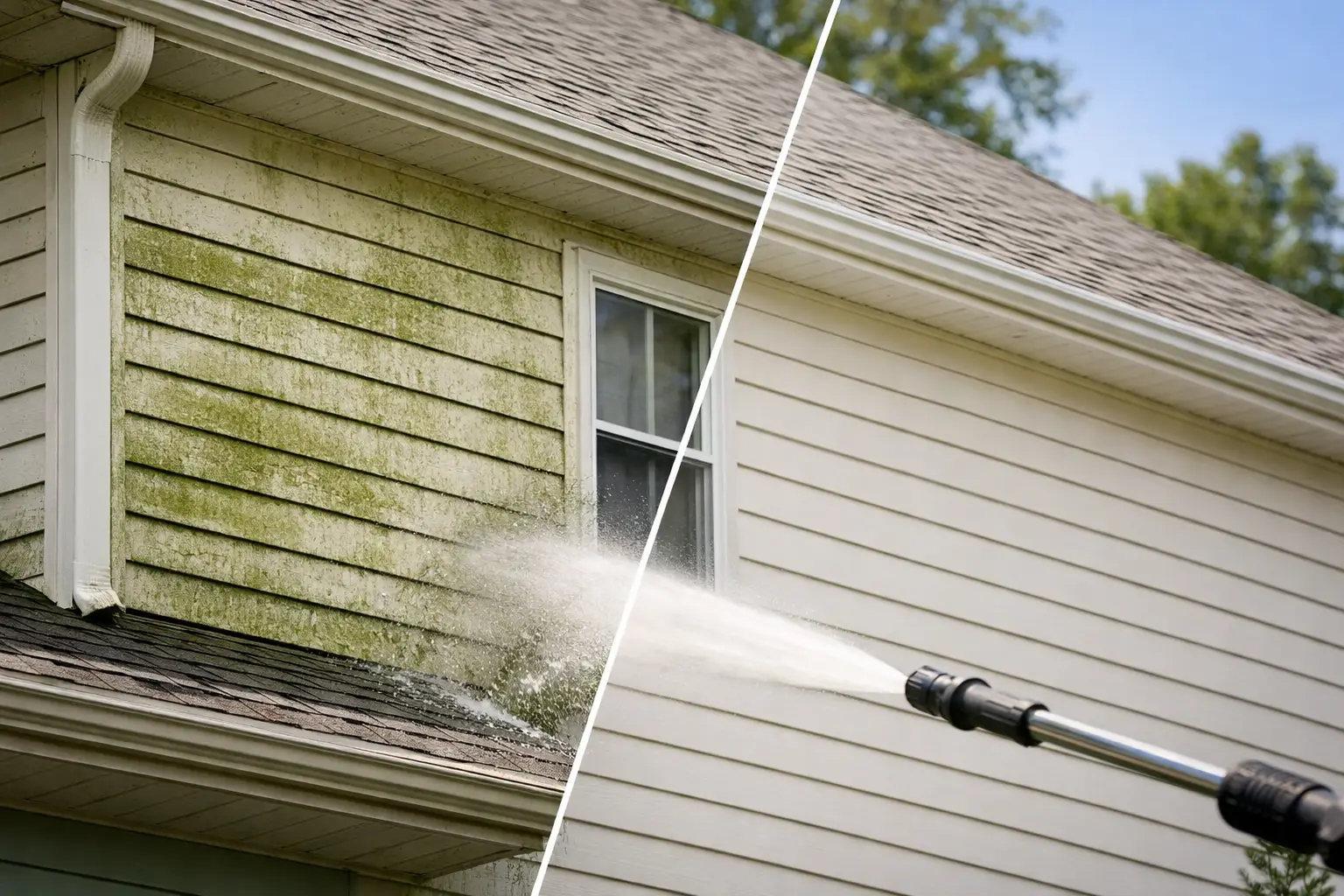
Most homes do not need aggressive pressure on the siding itself. In many cases, a soft wash process is the better choice. It removes algae, mildew, spider webs, and dirt while lowering the risk of oxidation marks, water intrusion, or damage around trim, vents, and windows. If a house has painted surfaces, older materials, or delicate areas, the need for a careful process goes up.
Concrete, patios, and walkways
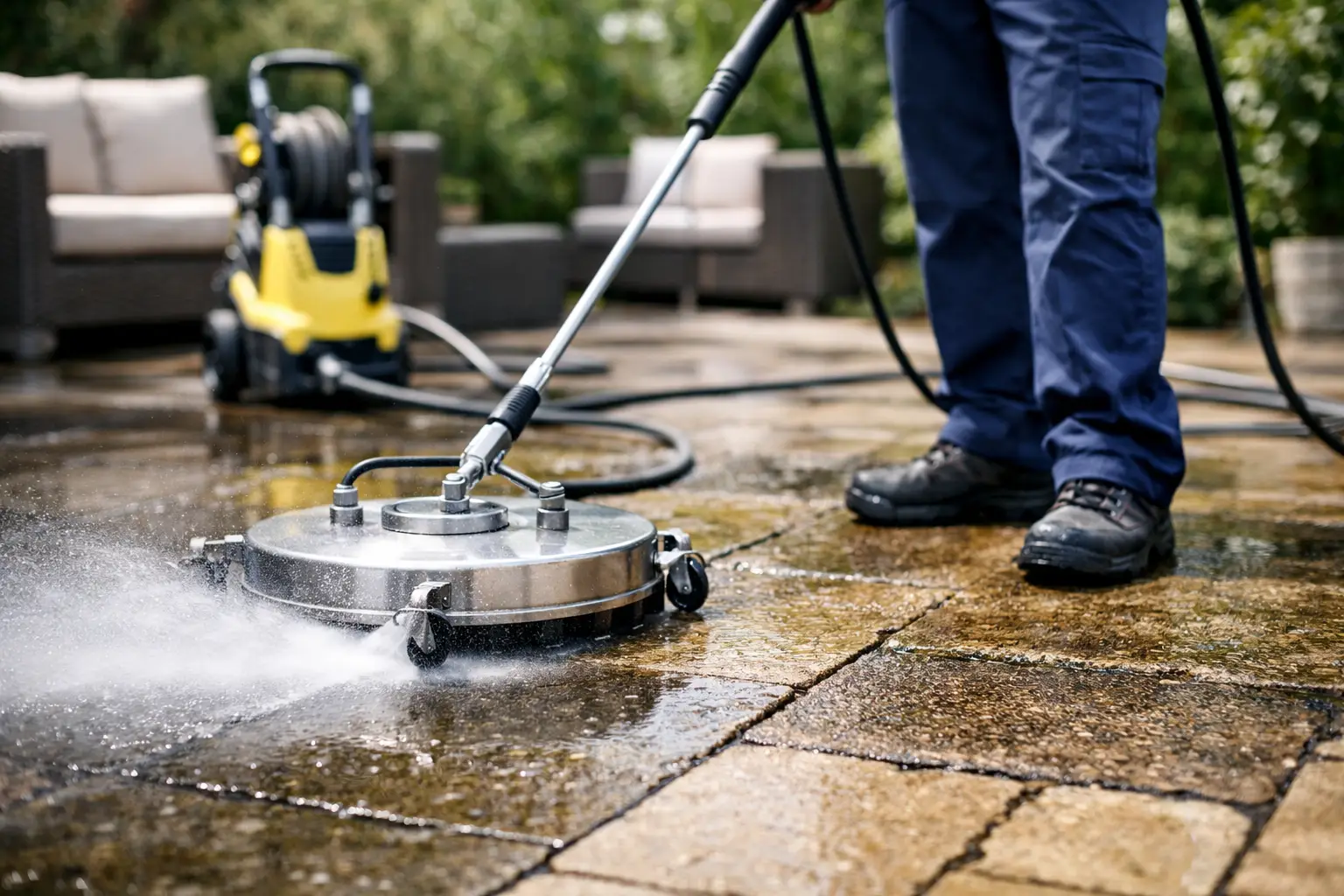
Driveways and walkways usually can handle more force than siding, but that does not mean more pressure always equals better results. Professional surface cleaners help produce a more even finish and reduce striping. Oil spots, rust, red clay, and deep organic staining may need specialty treatment. Some stains improve significantly but do not disappear completely. A contractor should be honest about that before the job starts.
Roof cleaning
Roofs are one of the clearest examples of why the method matters more than the label. Black streaks and moss are not just cosmetic. They can hold moisture and contribute to wear over time. But a roof should not be cleaned with the same approach used on a parking area. Low-pressure roof cleaning is designed to treat the growth at the source instead of forcing water up under shingles.
Decks, fences, and wood surfaces
Wood can be cleaned beautifully, but it can also be ruined quickly. Too much pressure leaves furring, gouges, and uneven marks that show up even more after staining. Older wood, splintering boards, and softer species need a measured approach. Sometimes the best result comes from cleaning and brightening rather than trying to strip every bit of discoloration in one pass.
Why cheap pressure washing often costs more later
A low quote can be appealing until you look at what is being skipped. Exterior cleaning done well takes time. Pre-treatment matters. Protecting landscaping matters. Using the right machine for the right surface matters. So does showing up when promised and communicating clearly if the weather changes the schedule.
The lowest-price operator usually has to make up that discount somewhere. It may show up as rushed work, poor rinsing, damage to screens or trim, missed stains, or a one-size-fits-all process. It may also show up in what they avoid discussing – runoff control, roof safety, delicate materials, or realistic expectations for heavily stained surfaces.
That does not mean the highest quote is automatically the best either. But if one estimate is dramatically lower than the rest, it is worth asking what method will be used, what is included, and what protections are in place. A professional should be able to explain the process in plain language without dancing around the details.
Residential and commercial properties have different priorities
Homeowners usually call when they are getting ready to sell, preparing for guests, noticing algae growth, or realizing the outside of the home no longer matches how well they keep the inside. The best service experience for residential customers is straightforward – fast response, honest recommendations, clear pricing, and results that improve the look of the property without introducing risk.
Commercial work adds another layer. Property managers and business owners often need scheduling around customer traffic, tenant expectations, or operating hours. They may need recurring service instead of a one-time cleanup. They may also need a company that can handle more than one issue, such as sidewalks, building exteriors, dumpster pads, windows, playground areas, or graffiti removal.
That broader capability matters because it saves time and reduces the hassle of coordinating several contractors. It also helps when a property has a problem that is not standard. Wineries, historic structures, mixed-material buildings, and heavily used public-facing sites often need an experienced eye instead of a basic spray-and-go service.
When is the right time to schedule Charlottesville pressure washing?
Spring is the obvious season, and for good reason. Pollen, winter buildup, and early organic growth make exterior cleaning feel overdue. But it is not the only time to schedule service.
Summer can be ideal for concrete, patios, and outdoor living areas when you actually want to use them. Fall is a smart time to remove buildup before winter moisture settles in. For commercial properties, the right schedule may depend less on season and more on foot traffic, branding, tenant needs, and safety concerns.
It also depends on the surface. If a roof is showing active growth, waiting too long usually does not help. If a walkway is getting slippery, that is not a project to postpone for cosmetic reasons. Some cleaning is about appearance. Some of it is about reducing risk now.
How to choose a pressure washing company without guessing
Start with experience, but do not stop there. Exterior cleaning is full of companies that can wash a driveway but struggle with roofs, specialty stains, or delicate surfaces. Ask how they plan to clean your specific material. Ask whether they use soft washing where appropriate. Ask how they protect plants, surrounding finishes, and nearby fixtures.
You should also pay attention to how they communicate before the job. If getting a callback is difficult, if the explanation is vague, or if every answer sounds like a sales script, that usually does not improve after you are booked. The right company is responsive, direct, and willing to tell you when a surface needs a different service than the one you asked about.
That level of honesty matters. Sometimes a customer asks for pressure washing when what they really need is soft washing, roof cleaning, stain treatment, or a combination of services. A company focused on property protection will say so. Around Charlottesville and the surrounding area, that is especially important because homes and commercial buildings often combine brick, painted trim, concrete, wood, composite materials, and glass in the same project.
Blue Ridge Exterior Cleaning has built its reputation around that kind of problem-solving approach. Not by being the cheapest option, but by matching the process to the surface and doing the work with the kind of communication property owners expect.
If your exterior surfaces are looking worn, slick, or stained, the right next step is not to ask how much pressure they need. It is to ask what method will clean them safely and keep the property looking like it is cared for.