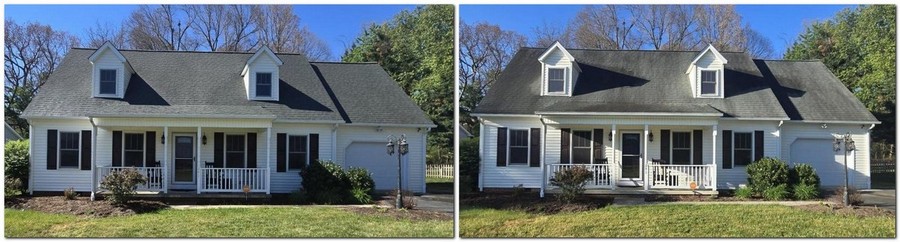
A roof usually tells you it needs attention before it starts leaking. The problem is that most property owners do not spend much time looking at it, so stains, moss, and algae can sit there for months or years before anyone realizes what is happening. If you are asking when should a roof be cleaned, the best answer is this: before organic growth has time to hold moisture, spread, and shorten the life of the roof.
That does not mean every roof needs cleaning on a fixed annual schedule. Timing depends on what is growing, how fast it is spreading, the roof material, how much shade the property gets, and whether nearby trees keep dropping debris. A roof in full sun may stay cleaner longer than one under heavy tree cover. A home near the woods in Central Virginia often sees buildup sooner than a property with better airflow and less moisture.
When should a roof be cleaned based on visible signs?
The clearest sign is dark streaking. On many asphalt shingle roofs in Charlottesville, those black lines are not just surface dirt. They are often algae growth that feeds on the limestone filler in the shingles. Left alone, algae can spread across larger sections of the roof and trap more moisture than the surface was meant to handle.
Moss is another sign that should not be ignored. If you see green clumps, fuzzy patches, or raised growth along shaded sections, the roof is already staying damp too long. Moss does more than change appearance. It can lift shingle edges, hold water against the roof surface, and create conditions that speed up wear.
Lichen is even more stubborn. It starts as small flat patches and gradually bonds tightly to the roof. Once it establishes itself, removal becomes more delicate because aggressive cleaning can damage the shingle granules. That is why waiting too long rarely helps. The longer growth is allowed to mature, the harder it is to remove safely.
Debris buildup also matters. Valleys packed with leaves, pine needles, and seed pods can block water flow and keep sections of the roof damp. Even if there is no obvious staining yet, that trapped moisture creates the conditions for algae and moss to take hold.
The best time of year to clean a roof
In most cases, spring through fall is the most practical window. Milder temperatures help cleaning solutions work properly, and the roof has a better chance to dry out after treatment. Spring is a smart time to inspect for winter buildup, especially if branches, leaves, and moisture have collected over colder months.
Fall can also be a good time, particularly after trees begin shedding. Cleaning after heavy leaf drop helps reduce moisture retention heading into winter. For many homeowners, this is the right moment to deal with staining and debris before freezing temperatures make roof conditions less predictable.
Summer is not automatically wrong, but hot days can make timing more sensitive. On very warm surfaces, cleaning methods and product dwell times need to be managed carefully. That is one reason roof cleaning is not just about spraying water and hoping for the best.
Winter is usually the least ideal time unless there is a specific reason to address a problem quickly. Ice, cold surfaces, and inconsistent drying conditions can complicate both safety and results. If a roof is heavily affected by moss or blocked drainage, though, it may still make sense to address the issue before it causes bigger trouble.
Why waiting too long costs more
A dirty roof is not always an emergency, but it is rarely a problem that improves by itself. Algae spreads. Moss thickens. Debris collects in more places. Moisture stays where it should not. What starts as a cosmetic issue can become a maintenance issue, and eventually a roofing issue.
On asphalt shingles, retained moisture and organic growth can reduce the roof’s ability to shed water as intended. On older roofs, that can accelerate aging. On higher-end properties, visible roof staining also affects curb appeal more than many owners realize. A roof takes up a large portion of what people see from the street, especially on homes with steep pitches or commercial buildings with visible entry approaches.
There is also a safety factor. Moss and wet debris around roof edges, gutters, walkways, and entry points can contribute to slippery conditions. For commercial properties, that turns a maintenance choice into a liability concern.
How often should a roof be cleaned?
There is no honest one-size-fits-all answer. Some roofs may need attention every few years. Others can go longer. The right schedule depends on tree coverage, humidity, roof pitch, drainage, previous growth, and how visible early staining is.
If a property has large overhanging trees, frequent shade, and limited airflow, inspections should happen more often. In those conditions, growth tends to return faster. A newer roof in a dry, sunny setting may not need cleaning nearly as often.
What matters most is not sticking to an arbitrary schedule. It is catching problems early. A light level of algae staining is easier and safer to address than heavy moss that has been rooted in place for years.
Roof material changes the answer
Asphalt shingles are the most common concern, and they require the most caution. They should not be cleaned with the kind of high-pressure washing many people imagine. The goal is to treat and remove growth while protecting the granules that help the shingles do their job.
Metal roofs can also collect algae, oxidation, and debris, but the cleaning approach is different. Tile, slate, cedar, and other specialty roofing materials each bring their own risks. Historic properties need even more care because aggressive methods can do permanent damage.
This is where experience matters. A roof may look simple from the ground, but cleaning the wrong material the wrong way can shorten its life instead of extending it.
Should you clean the roof yourself?
For most property owners, this is one of those jobs that sounds easier than it is. The risks are not just about falling, though that is reason enough for many people to stay off the roof. The larger issue is using the wrong method.
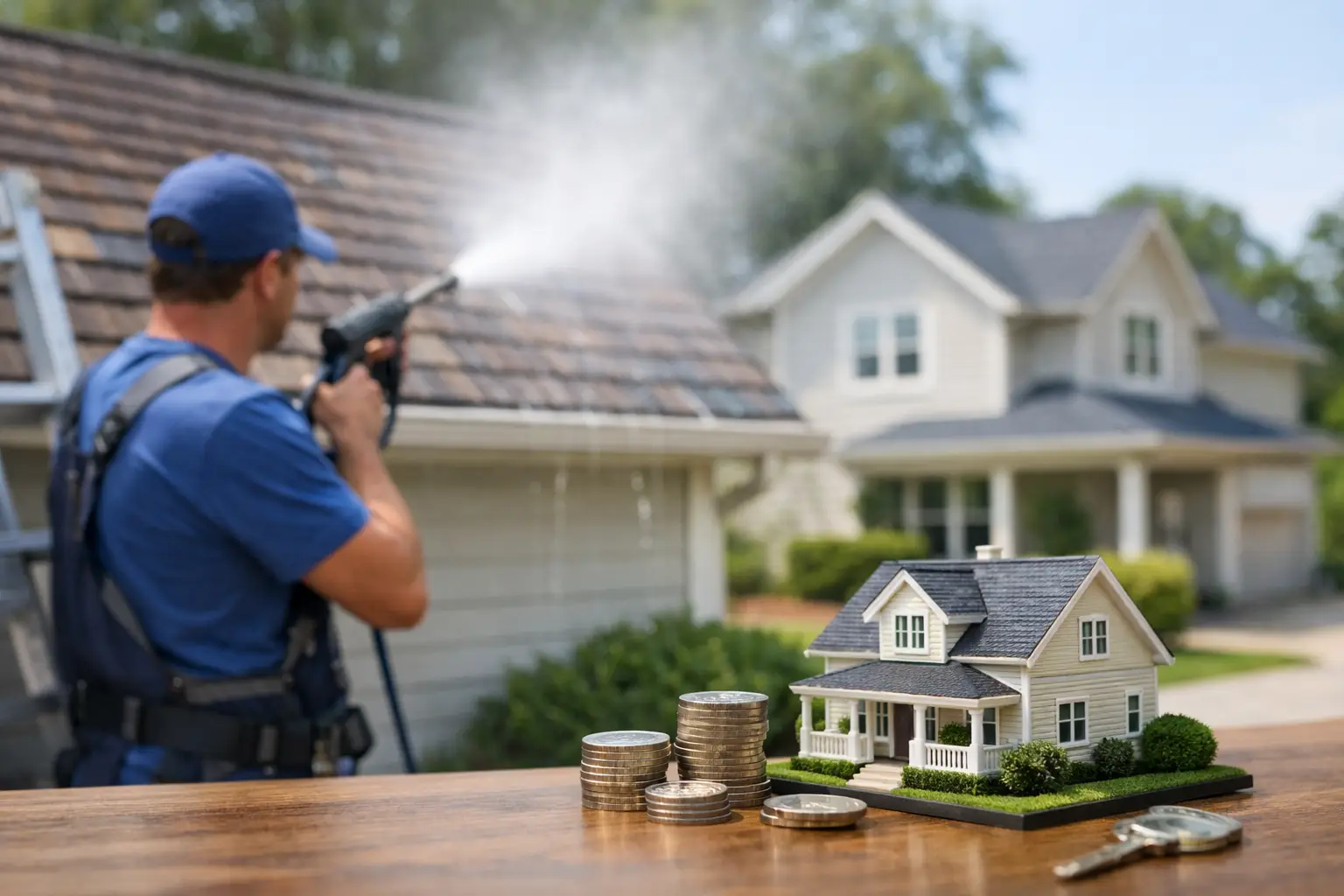
A pressure washer in inexperienced hands can strip shingle granules, force water under roofing components, scar softer materials, and leave the roof in worse shape than it started. Even if the roof looks cleaner that day, damage may already be done.
Professional roof cleaning usually relies on low-pressure application and cleaning agents designed to treat growth rather than blast the roof surface. That approach takes more technical judgment, not less. The goal is clean results and property protection at the same time.
When to act sooner rather than later
If you see moss lifting shingles, dark streaks spreading across multiple slopes, gutters filling with roof debris, or damp shaded sections that never seem to dry, it is time to stop waiting. The same goes for any roof that is about to be listed for sale, photographed for leasing, or presented to customers. Appearance matters, but timing matters more when moisture-related wear is already underway.
Commercial properties should be especially proactive. A stained or neglected roof affects the overall impression of the building, and deferred maintenance often shows up in other ways around the exterior. For facilities that serve families, guests, tenants, or customers, a cleaner property sends a clearer message about standards.
In areas like Waynesboro, Staunton, Harrisonburg, and the surrounding Valley, where tree cover, humidity, pollen, and seasonal debris can all work against a roof, regular inspection is the smarter habit than waiting for obvious damage.
A good rule is simple: clean the roof when staining, moss, or debris begin affecting drainage, drying, appearance, or material condition – not after the problem has had a full season or two to settle in. If you are not sure whether your roof is at that point yet, that is usually the right time to have it looked at by someone who understands the difference between a roof that is dirty and a roof that is starting to suffer for it.