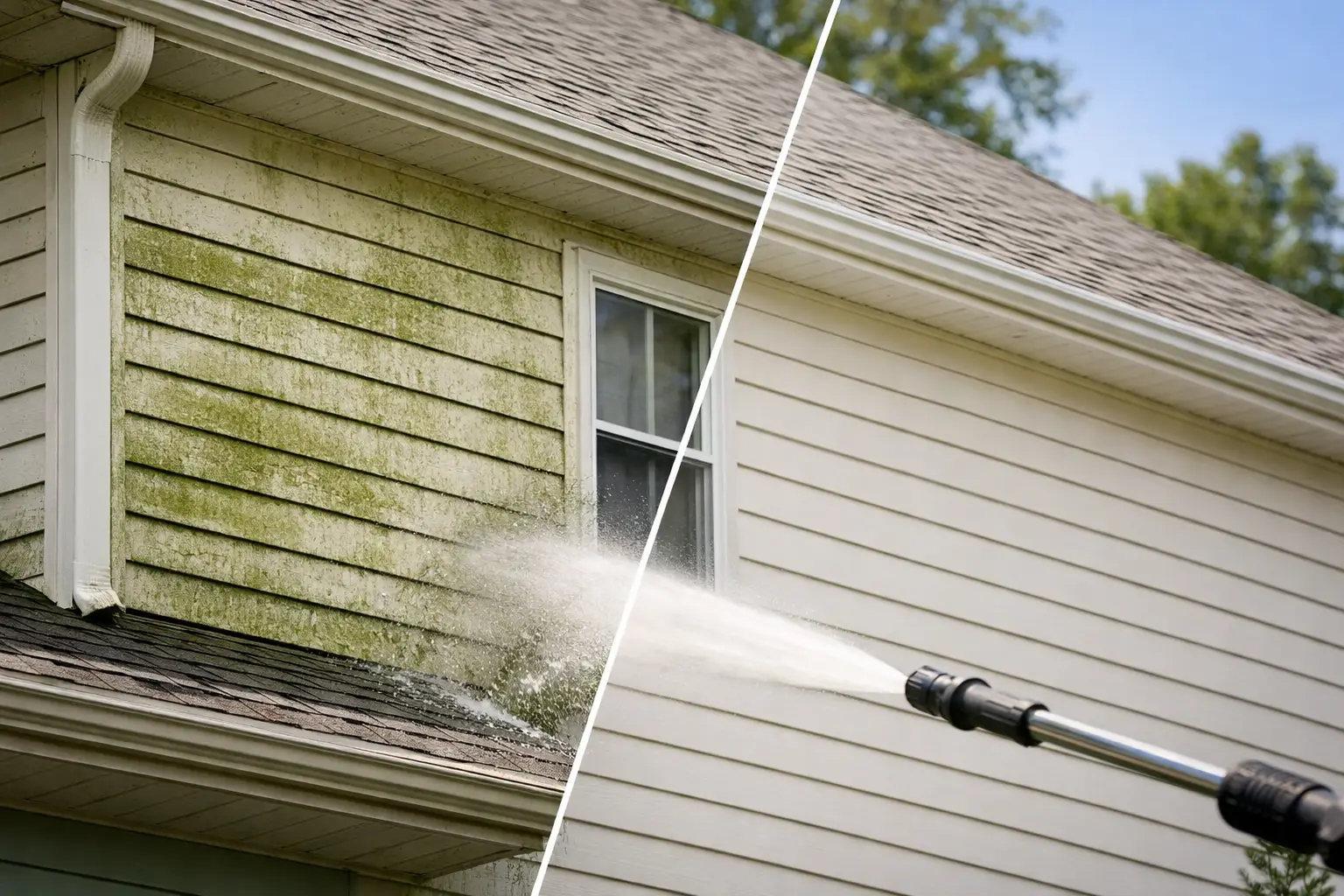
Green streaks on vinyl, chalky-looking patches on painted siding, and dark buildup along shaded walls can make an otherwise well-kept property look neglected fast. The right house washing results for algae-stained siding are not just about making the home look brighter for a day. They remove the organic growth at its source while treating the siding, landscaping, windows, and nearby surfaces with care.
In Central Virginia, algae staining is a common exterior problem. Humid summers, tree cover, morning shade, and moisture that lingers after rain give algae an ideal place to grow. North-facing walls, areas beneath gutters, and siding near shrubs often show it first. Left alone, the staining spreads, holds moisture against the exterior, and takes away from curb appeal.
What Good House Washing Results Look Like
A professionally washed home should look clean and even, not merely striped where a pressure wand passed over the siding. The original color of the siding should be clearer, especially around trim lines, corners, and underneath overhangs where algae tends to hide.
On light-colored vinyl, the difference can be immediate. Green algae staining lifts away, and the siding often looks several shades brighter once the surface is rinsed clean. On darker siding, the improvement may be more subtle from a distance, but the streaks, dull film, and blotchy appearance should be gone.
Good results also include the details. Soffits, fascia, gutters, porch ceilings, exterior trim, shutters, and the lower portions of the walls should receive appropriate attention. A house wash that leaves a clean center section but misses the edges is not a complete job.
Just as important, the siding should not show pressure marks, oxidation streaks, damaged caulk, displaced trim, or water forced behind exterior components. Cleaning results only count when the property is protected in the process.
Why Soft Washing Is Usually the Better Method
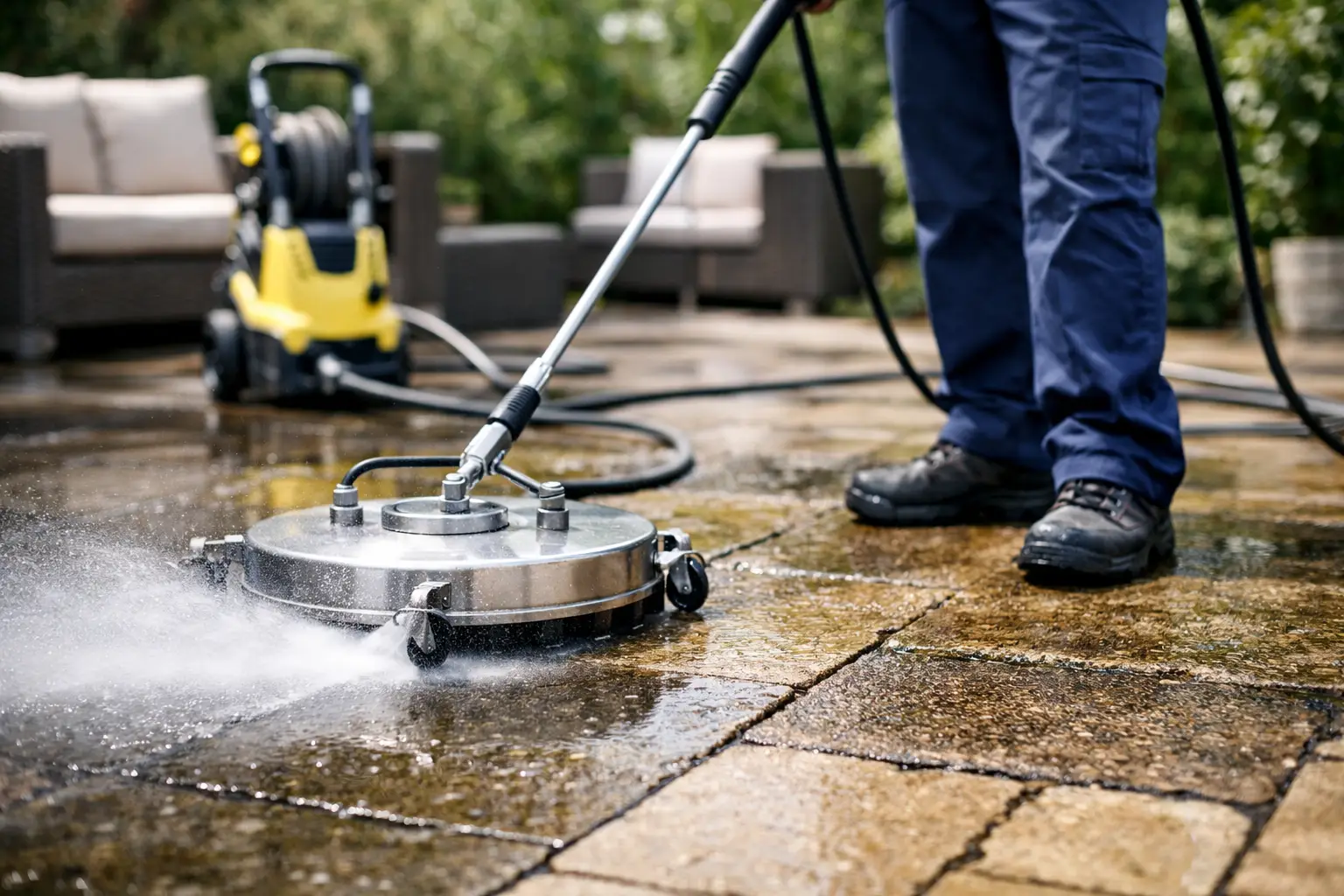
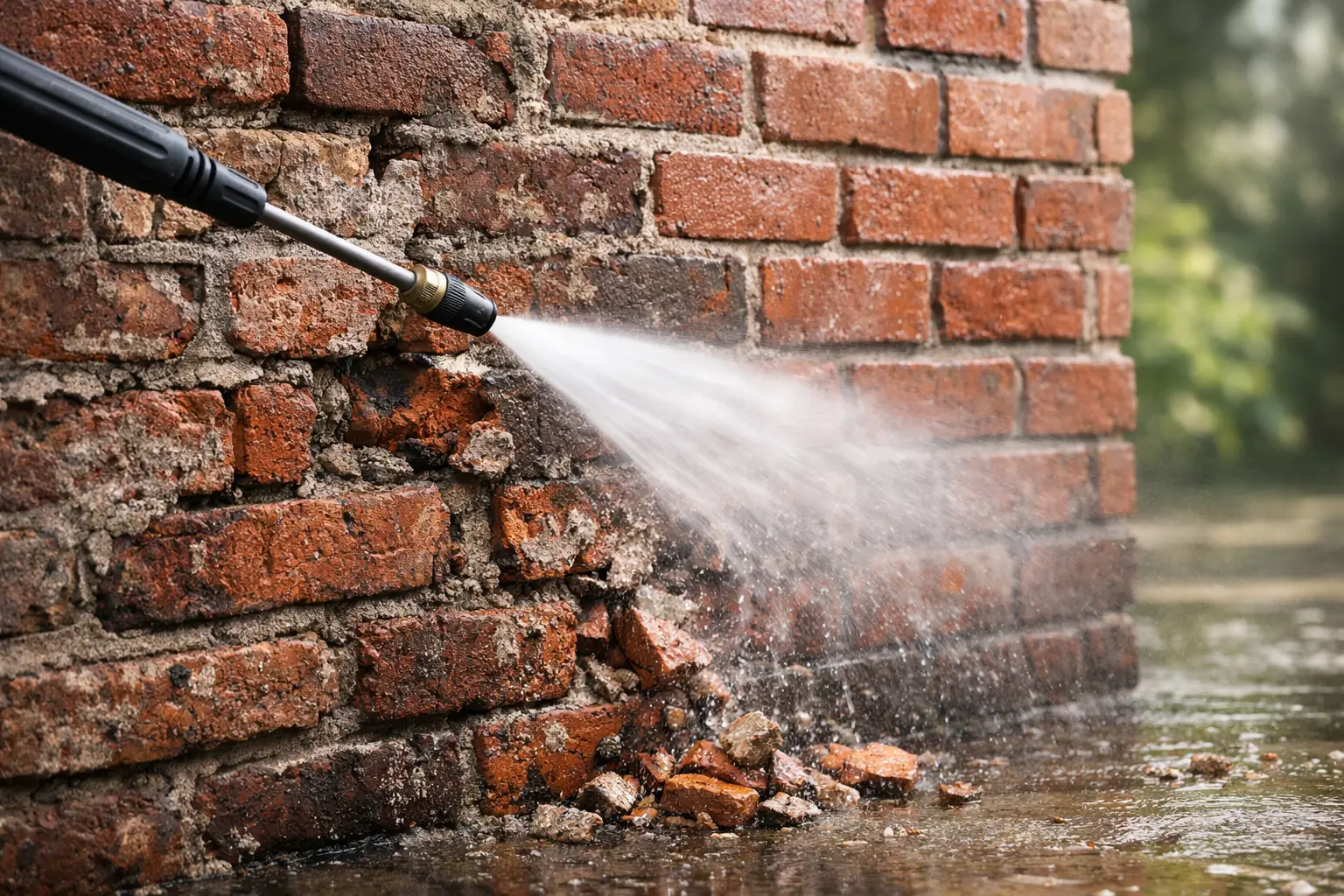
Many homeowners call every exterior cleaning service “pressure washing,” but siding generally does not need high pressure. In fact, high pressure can create costly problems. It can force water behind vinyl siding, scar painted wood, damage seals around windows, and leave visible wand marks on delicate surfaces.
For algae-stained siding, a soft washing approach is typically the right solution. This process applies a carefully mixed cleaning solution at low pressure, allowing it time to break down algae, mildew, and other organic buildup. The surface is then thoroughly rinsed with controlled water pressure.
The key difference is that soft washing treats the growth rather than trying to blast it off. A high-pressure rinse may remove the visible green layer, but it can leave behind spores that allow staining to return quickly. Proper cleaning chemistry reaches into the texture, seams, and laps of the siding where growth begins.
That does not mean every exterior uses the same mixture or dwell time. Vinyl, Hardie board, painted wood, stucco, brick, and older historic materials all require different decisions. Heavy staining may need a second application. Oxidized siding may need a more cautious approach to avoid revealing uneven fading or creating streaks. An experienced technician adjusts the process to the property rather than using one setting for every job.
The Before-and-After Difference Depends on the Stain
Not every dark mark on siding is algae. This matters because the expected result depends on what is actually on the wall.
Algae is often green, but it can appear dark gray or nearly black when mixed with dirt and moisture. Mildew may leave black speckling in consistently damp areas. General atmospheric dirt creates an overall dull look, especially along busy roads or near agricultural activity. Spider webs, insect residue, pollen, and mud splatter can make a home look stained even when algae is only part of the issue.
There are also stains that house washing will not fully remove. Rust bleeding from fasteners, red clay staining, oxidation and sun damaged surfaces, permanent paint fading, and discoloration caused by failed gutters may require a specialty treatment or repair. A dependable contractor should identify those limitations before cleaning rather than promise a perfect result that the material cannot deliver.
For example, a clean wall may reveal that a section of vinyl has faded differently from the rest of the home. The washing did not cause the fading. It removed the dirt and organic film that had been masking it. Honest communication before the work begins helps prevent that kind of surprise.
What Happens During a Professional House Wash
The best outcomes start with inspection, not spraying. A technician should walk the property, identify algae-heavy areas, note fragile landscaping, and look for loose siding, open electrical fixtures, deteriorated caulk, failing paint, or drainage problems. These conditions do not always prevent cleaning, but they affect how the work should be performed.
Plants are protected with water before, during, and after the cleaning process. Outdoor furniture, grills, and sensitive items are moved or covered as needed. Windows and doors are checked, and technicians should use care around light fixtures, outlets, cameras, and older exterior features.
The cleaning solution is then applied in manageable sections. After the appropriate dwell time, the siding is rinsed thoroughly from top to bottom. Rinsing matters. It removes the loosened organic material and cleaning residue while keeping dirty runoff from drying back onto lower areas.
A final walk-through should confirm that algae staining has been addressed and that the property is left orderly. If a stain remains because it is embedded, non-organic, or tied to a material issue, that should be clearly explained. Professional service is not about pretending every surface is new. It is about delivering the best safe result and being direct about what comes next.
How Long Will Clean Siding Stay Clean?
There is no single timeline. A sunny, open wall may remain clean for years, while a north-facing wall beneath mature trees may begin showing light algae again much sooner. Moisture exposure, roof runoff, nearby vegetation, and the amount of shade all make a difference.
Most homeowners benefit from evaluating their exterior annually and scheduling house washing when staining begins to return, rather than waiting until the siding is heavily discolored. Early cleaning is usually easier on the surface and keeps the home looking maintained throughout the year.
You can help extend the results by trimming shrubs away from the siding, keeping gutters clear, correcting areas where water constantly splashes the wall, and improving airflow around shaded sections of the home. These steps will not eliminate algae in Virginia’s climate, but they reduce the conditions that feed it.
When Algae Stains Point to a Larger Issue
Repeated staining in the same isolated area can be a clue, not just a cleaning problem. A gutter that overflows, a leaking downspout joint, poorly directed roof runoff, or a sprinkler that hits the wall daily can create ideal conditions for recurring growth.
If algae is concentrated beneath a roof line, near one window, or around a particular corner, look for the source of the moisture. Cleaning will improve the appearance, but correcting the water issue is what gives the result a better chance to last. This is especially worthwhile for property managers and homeowners maintaining historic or high-value exterior materials.
For homes in Augusta County, Waynesboro, Staunton, Harrisonburg, Charlottesville and surrounding Central Virginia communities, Blue Ridge Exterior Cleaning uses surface-appropriate methods built around property protection, not a quick high-pressure pass. With more than 16 years of experience and extensive industry training, the goal is a clean exterior that looks right and is treated right.
If algae has made your siding look tired, do not assume aggressive pressure is the answer. A careful assessment and the proper soft washing process can restore the appearance of the home while helping you make informed decisions about any moisture or maintenance issues behind the staining.