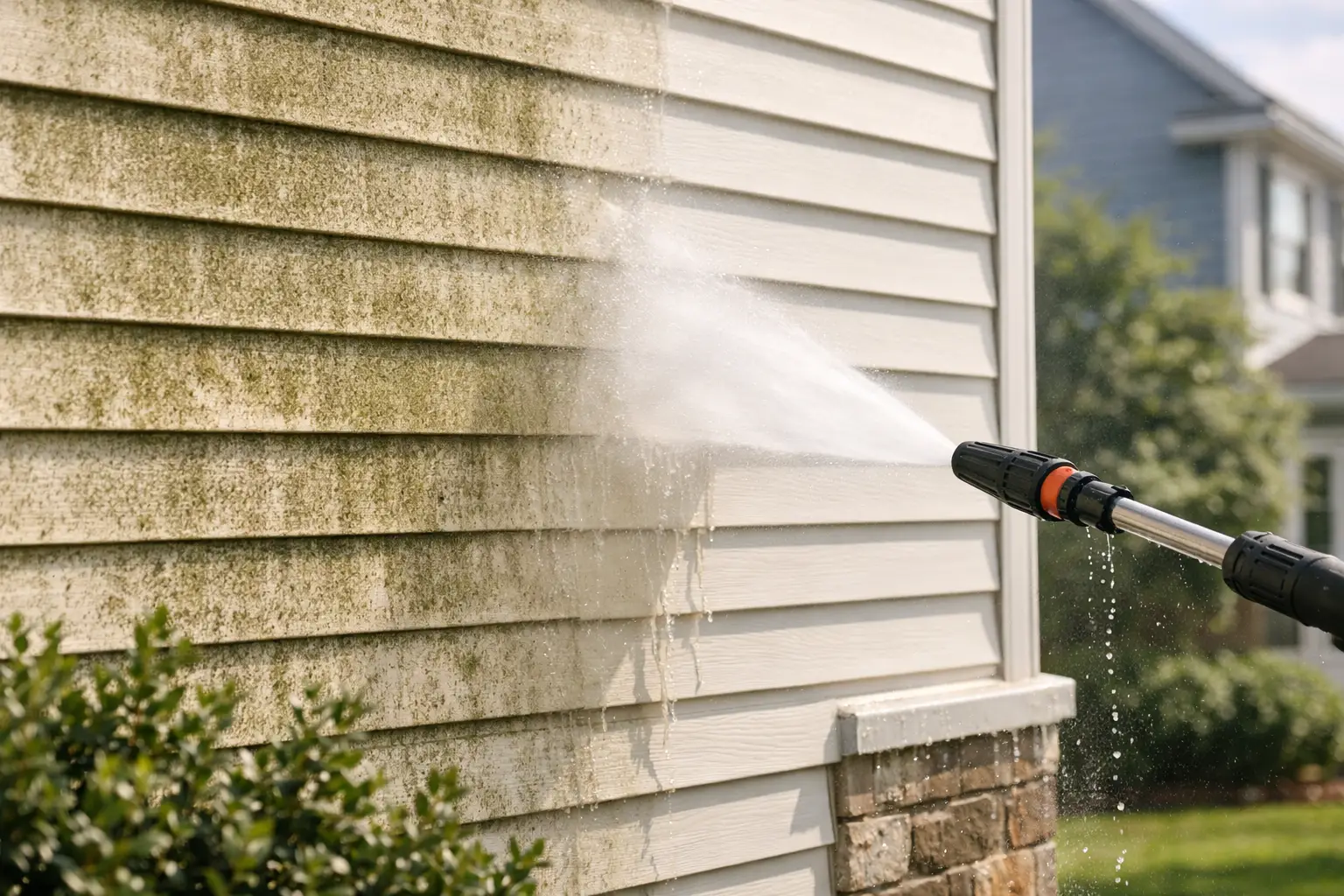
If your siding is starting to look dull, streaky, or green along the shaded side, the question usually comes up fast: how often should a house be washed? For most homes, once every 12 to 24 months is a solid baseline. But that is only a starting point. The real answer depends on your siding, your environment, and how quickly organic growth, dust, pollen, and stains build up on the surface.
In Central Virginia, homes deal with a little of everything. We see heavy pollen in spring, humidity through summer, leaf debris in wooded areas, and plenty of shaded elevations where algae and mildew take hold. A house in an open, sunny lot may stay clean much longer than a home tucked under trees near a damp slope. That is why a fixed schedule does not work for every property.
How often should a house be washed in most cases?
For the average residential property, professional house washing every 1 to 2 years keeps buildup from turning into a bigger maintenance issue. If you wait much longer than that, dirt and organic growth can become more stubborn, and the home starts to lose curb appeal well before any permanent damage shows up.
That said, some homes need annual cleaning. Others can comfortably go two years. The goal is not to wash on an arbitrary date. It is to clean the exterior before algae, mildew, and grime have time to shorten the life of painted surfaces, stain trim, or leave your home looking neglected.
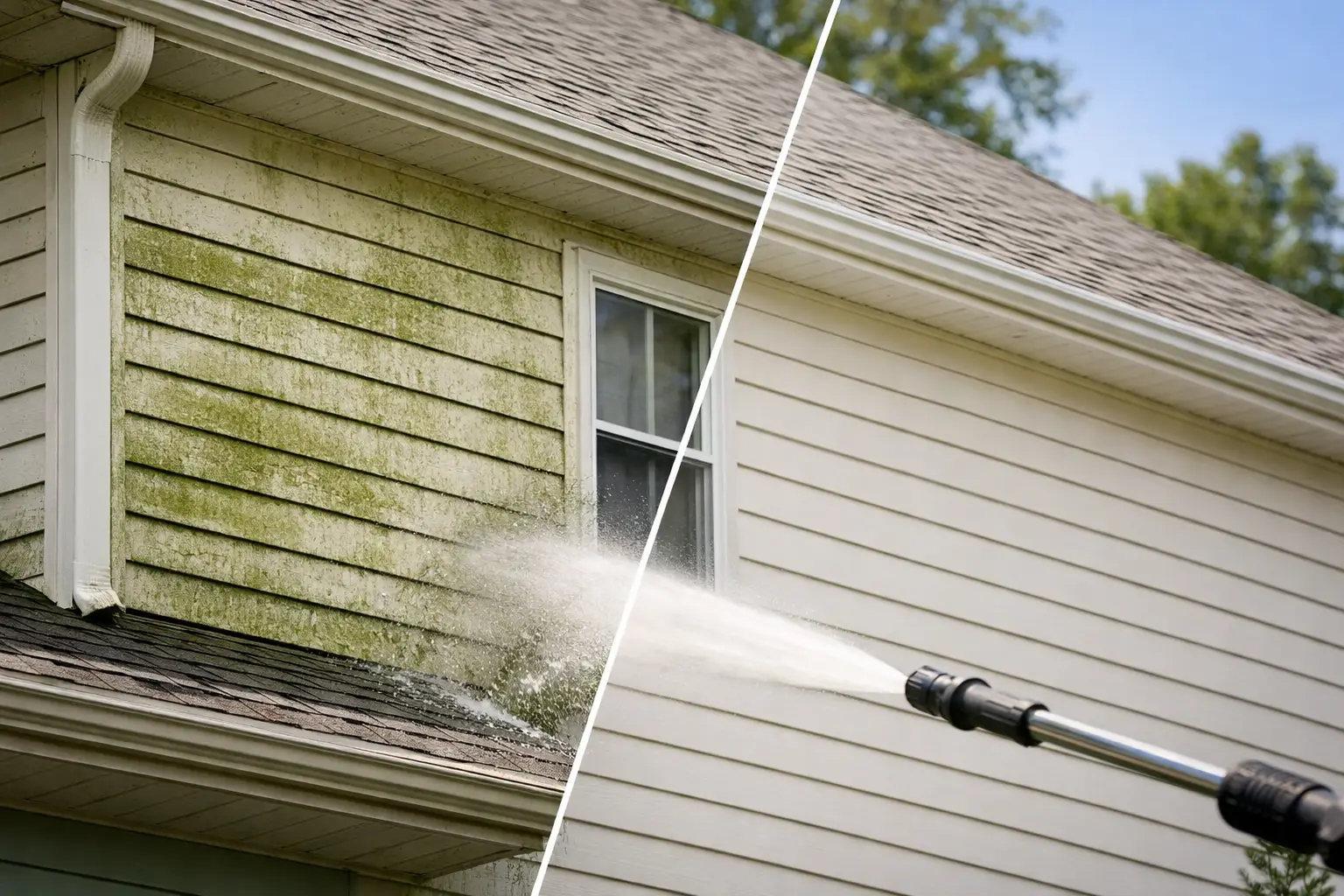
A good rule is simple: if you can clearly see green growth, black streaking, spider webs collecting dust, or dingy areas that make the siding look older than it is, it is time.
What changes the washing schedule?
Several factors affect how often a house should be washed, and they matter more than square footage alone.
Siding material
Vinyl siding is common and generally does well with routine soft washing every 12 to 24 months. It tends to show green algae and oxidation unevenly, especially on shaded sides.
Painted wood, Hardie board, stucco, and other more delicate finishes often benefit from regular maintenance as well, but the cleaning method matters just as much as the timing. These surfaces should be cleaned with the right detergents and low-pressure techniques. Too much pressure can create the kind of damage that costs far more than the cleaning itself.
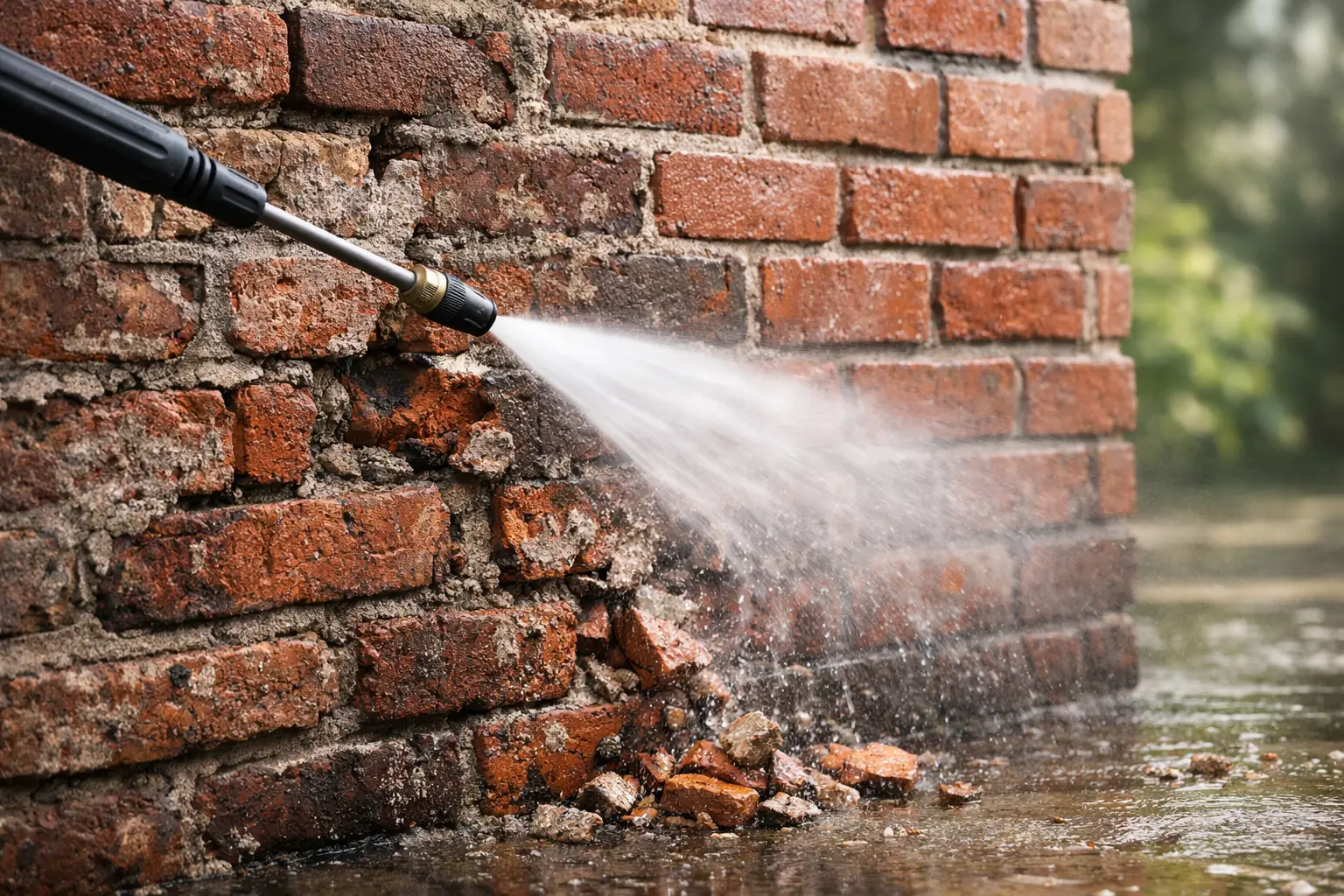
Brick can hold up well over time, but it still collects mildew, dirt, and stains. Mortar joints and older masonry need a little more care, especially on historic homes where aggressive washing is a bad idea.
Shade, trees, and moisture
Homes under tree cover almost always need more frequent attention. Shade slows drying, and moisture lingers longer on siding, soffits, gutters, and trim. That creates ideal conditions for algae, mildew, and surface staining.
Tree cover also drops sap mist, tannin stains, leaf residue, and debris that stick to exterior surfaces. If your home backs up to woods or has one elevation that rarely gets direct sun, yearly washing is often the safer schedule.
Climate and local conditions
Virginia weather is hard on exterior surfaces. Humidity, rain, pollen, and seasonal temperature swings all contribute to buildup. Even if your siding does not look terrible from the street, a closer inspection often tells a different story around gutters, under eaves, and on north-facing walls.
If you live near road traffic, construction, red clay, or open farmland, dust and staining can build faster. In those cases, a home may need cleaning more often simply to stay ahead of embedded grime.
Curb appeal expectations
Some homeowners want the house cleaned only when it starts to look noticeably dirty. Others prefer to keep it consistently sharp, especially before hosting events, listing the home for sale, or protecting a recent paint job. Neither approach is wrong, but the schedule will be different.
If appearance matters year-round, annual house washing usually makes sense. If your home stays relatively clean and you are mainly focused on maintenance, every two years may be enough.
Signs your house should be washed sooner
Even if you had the house cleaned recently, certain warning signs mean the exterior is ready again.
Green film on vinyl, black spotting under gutters, bug residue, cobwebs, and dingy trim are all common indicators. You may also notice that the siding looks flat or chalky because dirt is muting the original color. On lighter homes, this often shows up gradually, so owners stop noticing it until one clean section makes the difference obvious.
Another sign is uneven appearance. If one side of the house looks significantly darker or dirtier than the others, it is usually because moisture, runoff, or shade is accelerating buildup there. Waiting until the entire house looks bad is not always the best move.
Why regular washing matters
House washing is not just about appearances. It is preventive maintenance.
Organic growth sits on the surface and holds moisture. Over time, that can wear down finishes, stain painted areas, and make trim and siding harder to maintain. Dirt and mildew also hide small issues. When the exterior is clean, it is easier to spot failed caulk lines, damaged siding, gutter overflow, insect activity, or areas that need repair.
There is also a cost factor. Routine cleaning is usually simpler and more effective than trying to restore heavily neglected surfaces. Once staining gets deep or oxidation becomes severe, results can be less predictable and the work more involved.
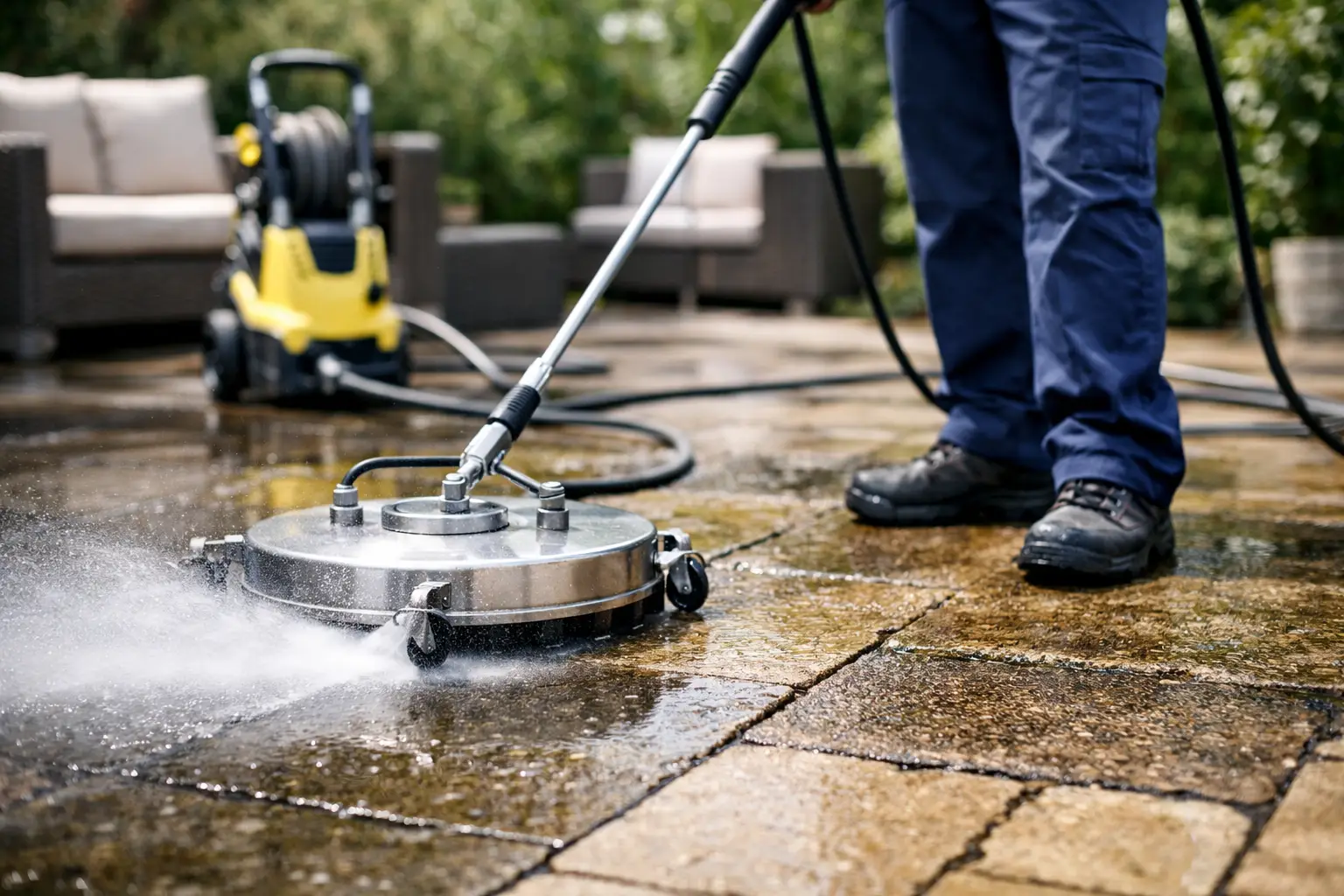
For commercial properties, the stakes are even higher. A dirty building affects first impressions, tenant experience, and the perception of how the property is managed. Walkways, storefronts, playgrounds, and common areas often need a separate schedule from the main building because they collect traffic-related grime much faster.
Should you wash a house yourself?
You can, but this is one of those jobs that looks easier than it is.
Most siding should not be blasted with high pressure. The safer and more effective approach is soft washing, which uses professional cleaning solutions and controlled rinsing to remove organic growth without forcing water behind siding or damaging finishes. DIY pressure washing often goes wrong in two ways: the house does not actually get clean, or it gets clean at the cost of etched surfaces, damaged seals, and water intrusion.
This is especially true for painted homes, older materials, stucco, historic properties, and anything with oxidation or visible wear. The right process depends on the surface. A no-nonsense contractor will tell you that upfront rather than treating every house the same.
The best time of year to wash a house
Spring through fall is usually the best window, but timing depends on what your home is dealing with.
Spring cleaning makes sense after pollen season and winter grime. Summer is effective because warm conditions help surfaces dry quickly. Fall can also be a smart time to remove buildup before cooler, wetter months allow it to linger.
If the house has active algae or mildew growth, there is no reason to wait for a perfect season. Delaying often gives the problem more time to spread.
A practical schedule for most properties
If you want a simple framework, start here.
Homes in sunny, open areas with minimal tree cover can often be washed every 18 to 24 months. Homes with moderate shade, average exposure, and normal seasonal buildup usually benefit from cleaning every 12 to 18 months. Homes surrounded by trees, high moisture, heavy pollen, or persistent algae growth are better off on a yearly schedule.
Commercial properties and high-visibility buildings may need more frequent service depending on foot traffic, public exposure, and surface type. Storefront concrete, entry areas, dumpster pads, and playgrounds often need separate attention well before the building itself does.
If you are not sure where your property falls, a professional inspection is worth it. An experienced exterior cleaning company can usually tell you whether you are looking at normal dirt, active organic growth, oxidation, or something more specialized like red clay staining.
Blue Ridge Exterior Cleaning works with homeowners and property managers across the region who want the job done correctly the first time. That means using the right process for the surface, communicating clearly, and protecting the property while delivering a visible result.
The right washing schedule is the one that keeps buildup from getting ahead of you. If your home looks tired, streaked, or greener than it should, that is usually your answer.