Red clay has a way of showing up where you do not want it – splashed onto siding after a storm, tracked across concrete, baked into brick, or ground into a walkway after a muddy week in Virginia. If you are trying to figure out how to remove red clay stains, the biggest mistake is treating it like ordinary dirt. It is not. Red clay bonds tightly to porous surfaces, and the wrong cleaner or too much pressure can leave you with a bigger problem than the stain itself.
In Central Virginia, this is a common issue on homes, commercial buildings, patios, retaining walls, and entry areas. The orange-red color comes from iron-rich soil, which is why these stains can linger long after the mud itself has dried. Once that mineral content settles into pores and texture, a quick rinse usually will not touch it.
How to remove red clay stains without damaging the surface
The right approach depends on what the clay landed on. Concrete can handle more than painted siding. Brick and stone often need a different treatment than vinyl. Wood, older masonry, and historic materials require even more care. That is why there is no one-size-fits-all answer.
For most surfaces, the process starts with dry removal, not water. If the clay is still loose, sweep or brush away as much as possible before adding moisture. Spraying wet clay immediately can spread the stain and push it deeper into pores. On concrete or pavers, a stiff brush can help break up the top layer. On siding or painted surfaces, use a softer brush to avoid abrasion.
After that, a low-pressure rinse is usually the safest first test. This helps remove any remaining soil without forcing it deeper or stripping a finish. If the stain remains – and it often does – you are dealing with mineral discoloration, not just leftover mud.
That is where chemistry matters. Red clay stains often respond better to specialty cleaning solutions than to pressure alone. Professional cleaners use products designed to break down iron-rich staining while matching the chemistry to the material. Too mild, and nothing happens. Too aggressive, and you risk etching concrete, fading paint, or damaging mortar joints.
Why pressure washing alone usually fails
A lot of property owners assume higher pressure is the answer. It makes sense on paper. If a little water does not work, more force should. In practice, that approach often leaves a faint orange shadow behind, or worse, scars the surface while the stain stays put.
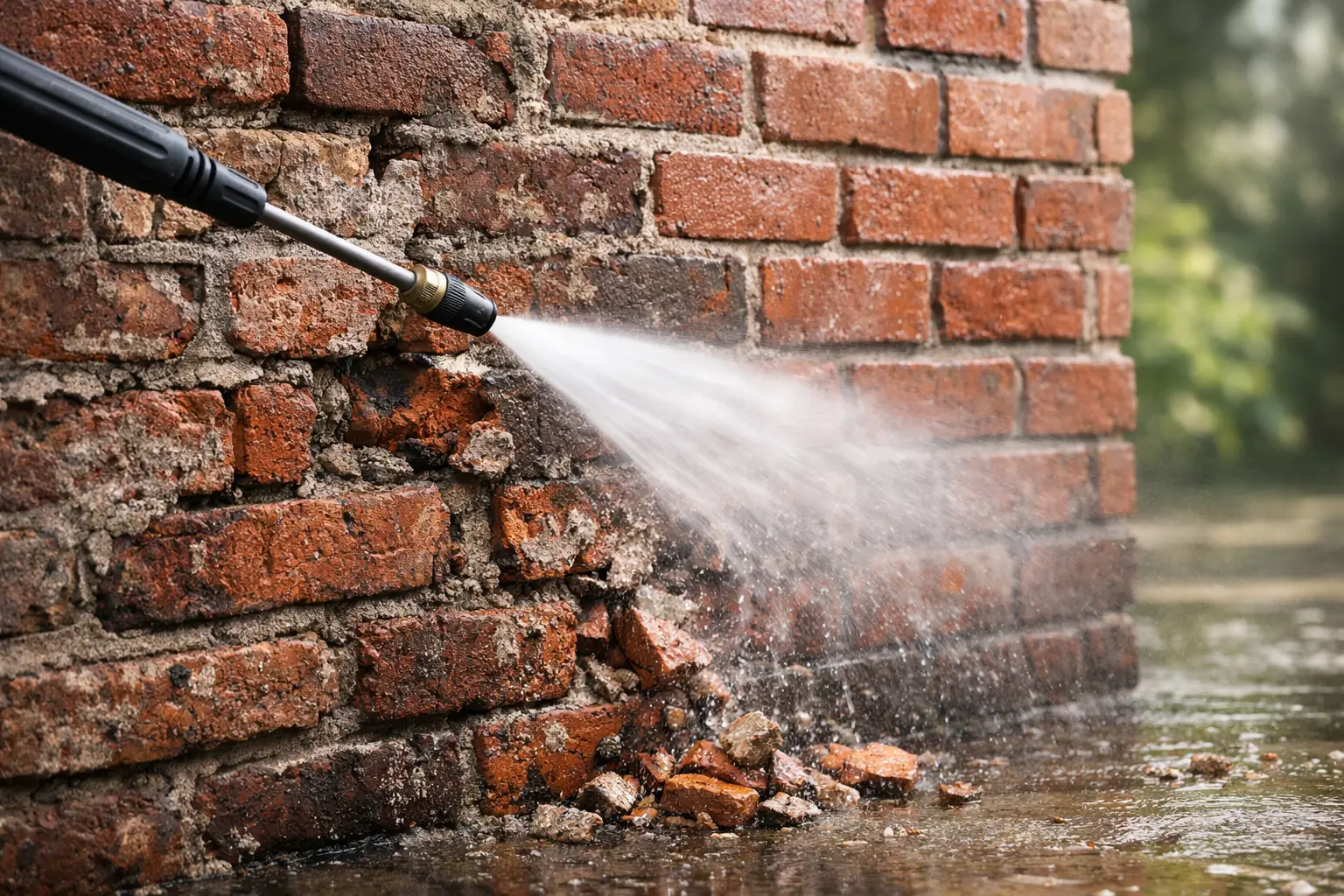
Pressure washing alone usually fails because red clay does not sit only on the surface. It works into pores, texture, and microscopic openings. Blasting it with a pressure washer may remove loose material, but the mineral residue often remains. On siding, high pressure can force water behind panels. On concrete, it can create uneven cleaning marks. On brick, it can wear away softer mortar. On wood, it can raise the grain and leave lasting damage.
This is especially true on older properties, decorative hardscapes, and surfaces that have already seen years of weathering. Cleaning should restore appearance, not shorten the life of the material.
Concrete and pavers
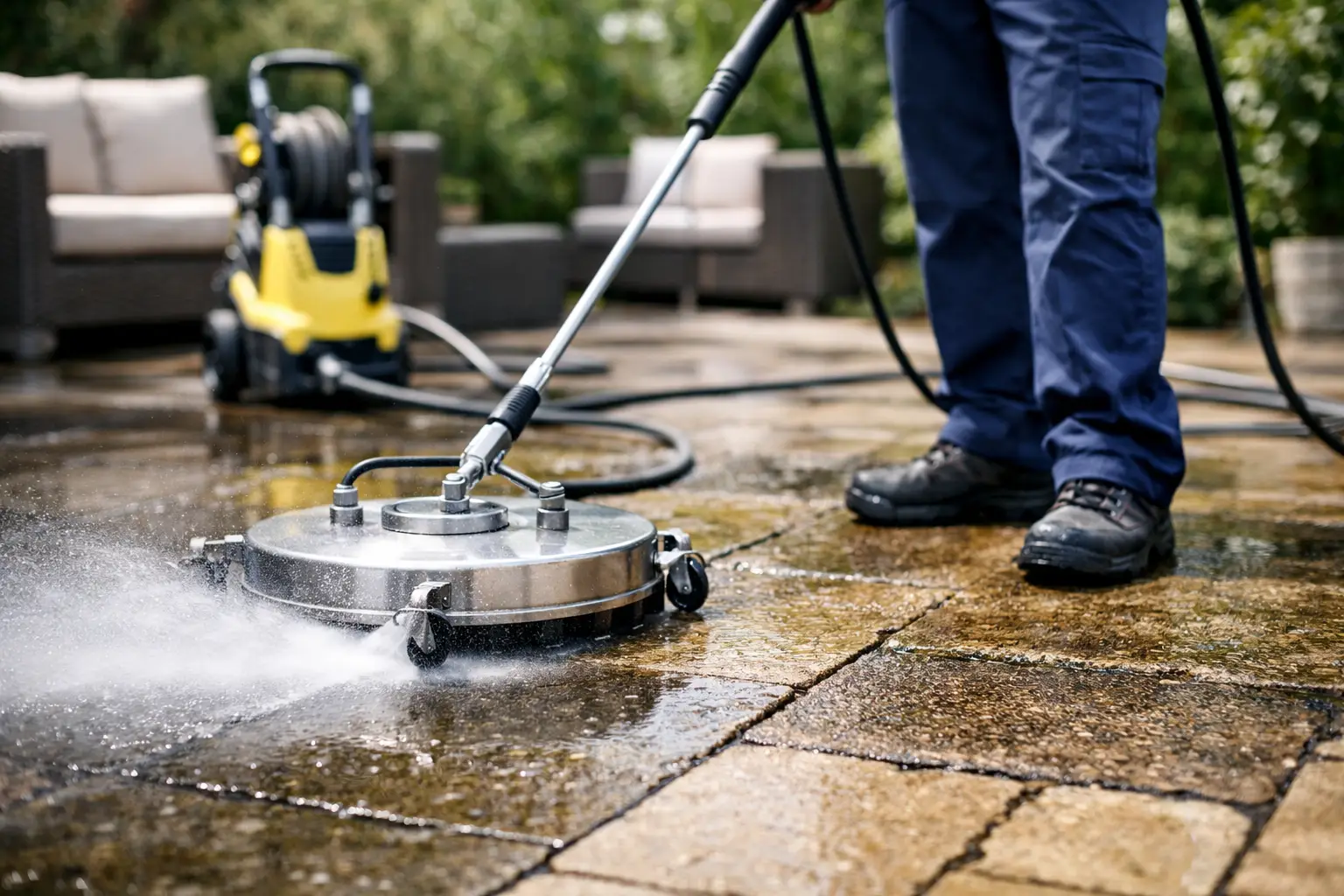
Concrete driveways, sidewalks, patios, and pavers are some of the most common places for red clay staining. They are also some of the trickiest because of how porous they are. If the stain is recent, dry brushing first and then applying the right cleaner can make a big difference. Letting the product dwell is often more important than using extreme pressure.
For deeper staining, hot water cleaning may help, but only when paired with the correct stain treatment. Heat can improve results on some surfaces, though it is not a cure-all. The condition of the concrete matters too. Older, more porous slabs may hold clay more stubbornly than newer sealed surfaces.
Siding and painted exteriors
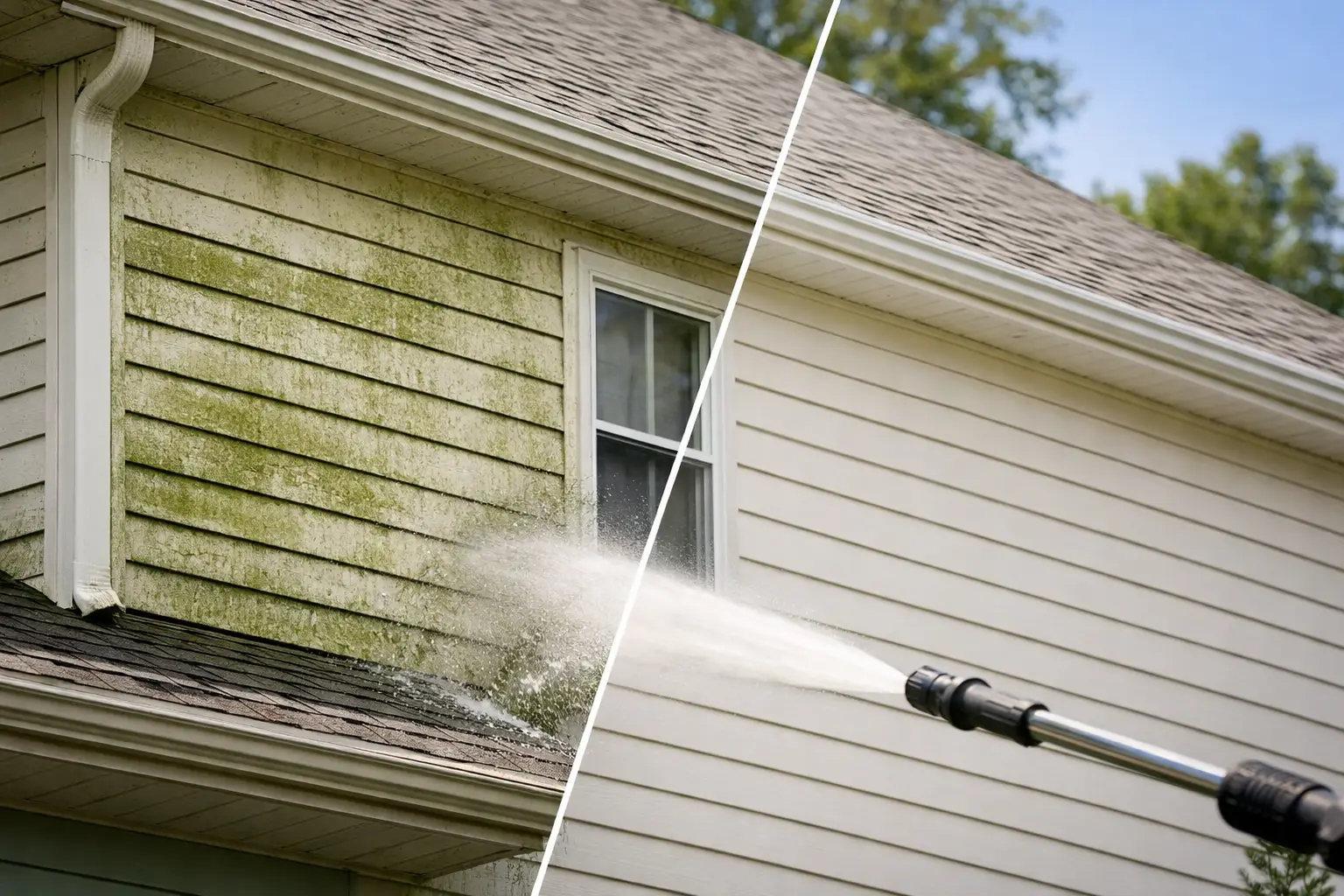
Vinyl siding, painted trim, and other finished exterior surfaces need a lower-pressure, soft wash approach. This is not the place for aggressive pressure washing. The goal is to remove staining while protecting the finish, seals, and surrounding landscaping.
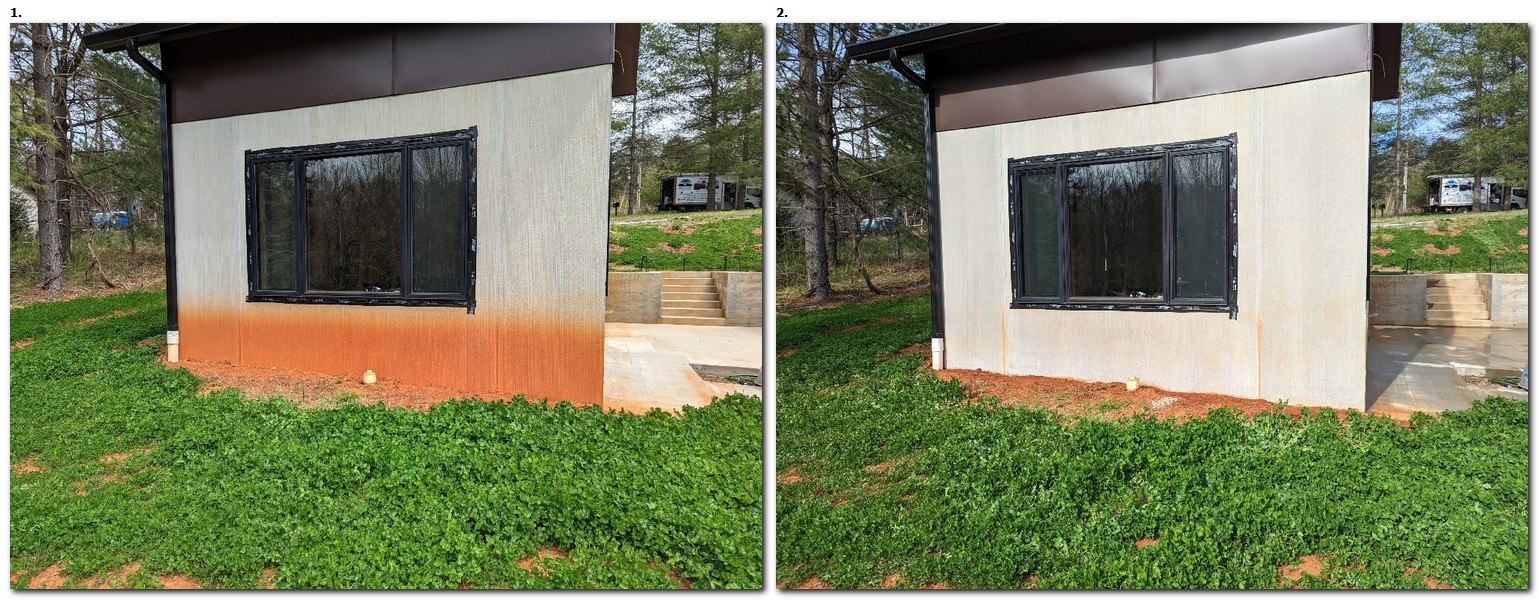
If red clay has splashed onto a home after rain or drainage issues, the staining may be concentrated near the foundation or around downspouts. Those patterns tell you something useful: if the drainage problem is not corrected, the stain will likely return. Cleaning the surface is only half the job.
Brick, stone, and masonry
Brick and masonry can be durable, but they are not invincible. Different brick types absorb moisture differently, and mortar is often more vulnerable than the brick itself. Some stain removers that work on concrete are too harsh for masonry, especially on older homes, retaining walls, and historic properties.
This is where surface testing matters. A professional will usually test a small area first to confirm the cleaner is effective and safe. That extra step is worth it. It reduces the chance of discoloration, etching, or uneven results.
Common DIY mistakes that make red clay stains worse
The first is using straight household chemicals without knowing how they react with the surface. Acidic products, bleach-heavy mixes, and random online remedies can create patchy results or permanent damage. The second is overusing pressure. The third is skipping a test spot and cleaning the whole area based on guesswork.
Timing is another issue. Fresh stains are easier to address than months-old buildup that has baked in through heat, rain, and foot traffic. Still, even old staining can often be improved with the right process. It just may take more than one pass, especially on rough concrete or deeply textured masonry.
There is also a practical trade-off with DIY cleaning equipment. Most rental machines give you pressure, but not necessarily the right nozzles, detergents, surface knowledge, or water temperature. That means homeowners often work harder, take longer, and still end up with mixed results.
When professional red clay stain removal makes sense
If the stain covers a large area, affects multiple materials, or sits on a surface you cannot afford to damage, it usually makes sense to bring in a professional. The same goes for commercial properties, storefronts, wineries, HOAs, and facilities where appearance matters and downtime needs to stay minimal.
Professional red clay stain removal is really about control. Control of pressure, chemical strength, dwell time, rinse method, and surface protection. Experienced exterior cleaners know when a stain needs specialty treatment, when it needs repeated applications, and when the issue is actually poor drainage, runoff, or irrigation overspray causing repeat staining.
That matters in places like Augusta County, Waynesboro, and Albemarle, where clay-heavy soil is part of the landscape. Local experience is not just a talking point. It affects how quickly someone can identify the cause, choose the right method, and avoid unnecessary damage.
At Blue Ridge Exterior Cleaning, this is one of the exterior problems we are asked to solve because standard washing often does not fix it. Red clay requires a more technical approach, especially when the stain is set into concrete, masonry, or delicate exterior finishes.
How to keep red clay stains from coming back
Removal is only part of the solution. Prevention usually comes down to reducing where mud splashes, where runoff travels, and where foot traffic carries clay back onto hard surfaces. Downspout extensions, better grading, gravel in trouble spots and mulch will help with most red clay staining.
On some surfaces, sealing may also reduce future staining by limiting how deeply clay can absorb. That depends on the material and its condition. Not every surface should be sealed, and not every stain problem is solved with a coating. But for certain patios, pavers, and concrete areas, it can help make future cleanup easier.
If you are deciding whether to handle it yourself or call a pro, the best rule is simple: match the cleaning method to the surface, not just the stain. Red clay is stubborn, but it is not unbeatable. With the right process, most stains can be reduced significantly or removed entirely without turning a cosmetic issue into a repair bill.
A clean surface looks better, lasts longer, and tells people the property is cared for – and when red clay is part of life in your area, knowing when to use a careful hand instead of more force makes all the difference.