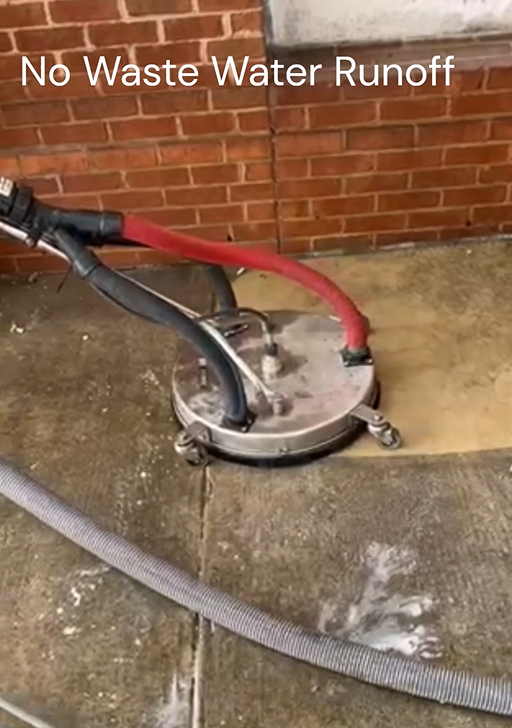
One missed storm drain can turn a routine cleaning job into a runoff problem. The proper method to reclaim water when pressure washing is not just about staying tidy. It is about protecting landscaping, keeping wash water out of waterways, and handling contaminants the right way on residential and commercial properties.
For commercial sites, the stakes are higher because parking lots, dumpster pads, storefronts, and service areas often produce wastewater that should never be allowed to flow untreated into the storm system. The right process starts before the machine is even turned on.
Start with containment, not cleanup
The biggest mistake is treating reclaim as something you deal with after washing. By then, water has already moved across concrete, into mulch beds, or toward a curb inlet. A professional approach begins by identifying where runoff wants to go and stopping it there.
That usually means blocking or sealing nearby storm drains, using berms to redirect flow, and choosing a cleaning sequence that pushes wastewater toward a collection point. On flatwork, that collection point may be a low corner of the surface. On commercial jobs, it may need to be created with containment tools so water stays in a manageable area.
This is where experience matters. A patio behind a home, a restaurant pad, and a historic masonry walkway all behave differently. Surface slope, joint spacing, surrounding landscaping, and the type of residue being removed all affect the reclaim plan.
The proper method to reclaim water when pressure washing
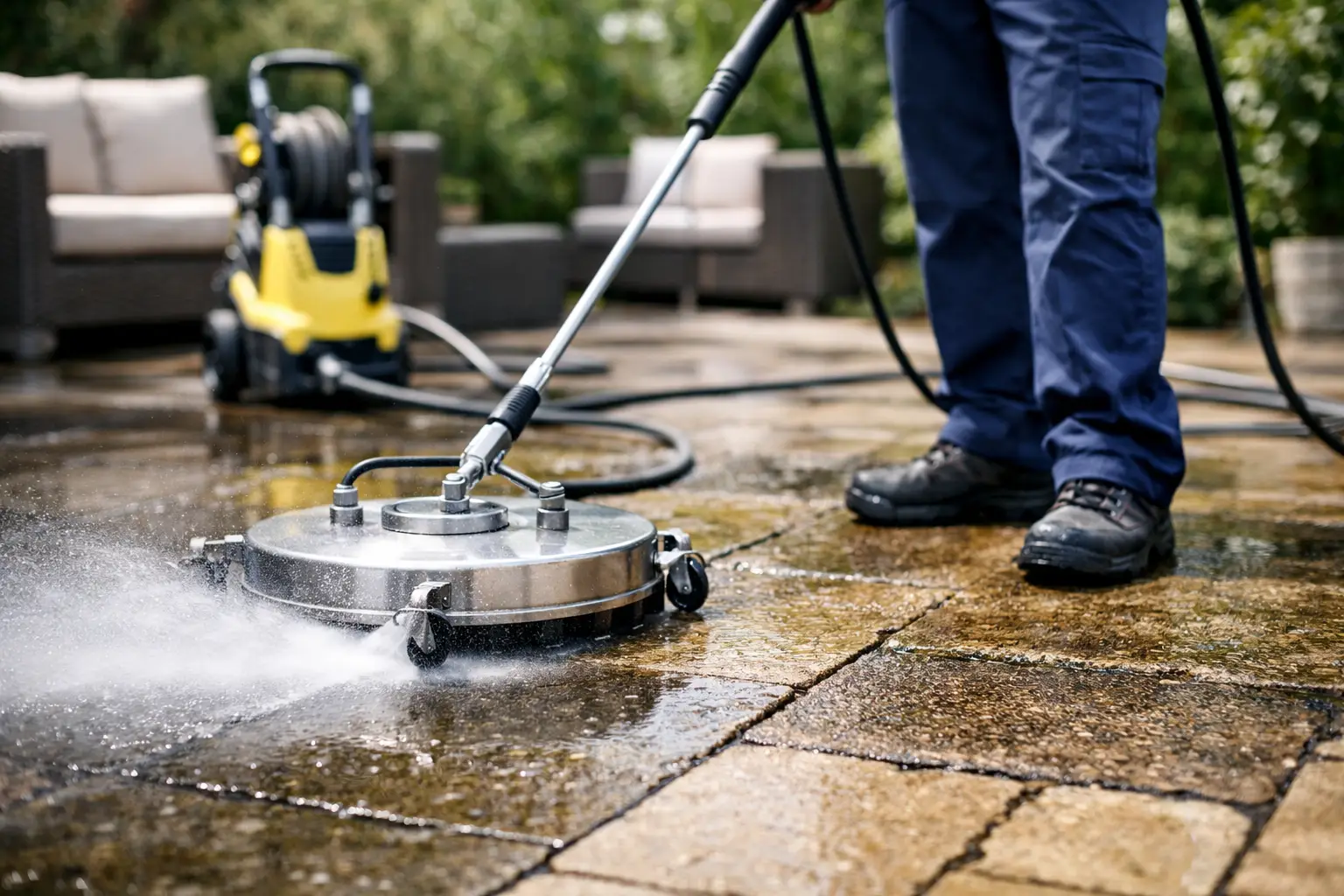
Once water is contained, the next step is recovery. In most cases, professionals reclaim wash water with a vacuum recovery system, sump pump setup, or other collection equipment designed to remove standing wastewater efficiently. Surface cleaners paired with vacuum recovery are especially useful on larger concrete areas because they clean and collect at the same time.
After collection, the water is pumped into a sanitary drain or filtered, stored, or disposed of according to the type of wastewater and local requirements. That last part matters. Clean rinse water is one thing. Wastewater containing grease, chemicals, paint debris, or heavy sediment is another. The proper method to reclaim water when pressure washing depends on what is in the water, not just how much of it there is.
Why storm drains are the line you do not cross
Many property owners assume a storm drain works like a sanitary sewer. It does not! Storm drains typically carry water directly to local creeks, streams, and rivers with little or no treatment. That means soap, algae, sediment, and surface contaminants can end up in the environment fast.
For a business or facility manager, it can mean liability, regulatory attention, and a bad look for the property. Reclaiming water is part of doing the job responsibly, especially on commercial sites where runoff can move across sidewalks, parking lots, and neighboring properties.
Not every job requires the same reclaim setup
This is where no-nonsense planning beats one-size-fits-all advice. A lightly soiled residential walkway may only require drain protection, controlled washing, and recovery at one collection point. A commercial dumpster pad with grease and heavy buildup needs a much more controlled process, often with hot water cleaning, stronger containment, and more deliberate wastewater handling.
Roof cleaning, soft washing, and delicate historic surfaces also require a different mindset. The goal is not simply to capture volume. It is to control where runoff goes and keep cleaning solutions off sensitive areas. On older masonry, around decorative stone, or near landscaped beds, water management is part of surface protection.
Equipment helps, but process is what protects the property
A lot of contractors talk about machines. The machine matters, but the process matters more. Good water reclaim work depends on reading the site, selecting the right pressure and flow, using the right cleaning agents, and setting up recovery before runoff spreads.
That is also why low-price pressure washing often creates expensive problems. If a contractor shows up without containment tools, recovery equipment, or a disposal plan, the property owner is taking on unnecessary risk. Clean concrete is not enough if wastewater ends up in the wrong place or if surrounding surfaces are damaged in the process.
For property managers in Central Virginia, the safest approach is to work with a company that understands both cleaning and control. Blue Ridge Exterior Cleaning handles jobs with that bigger picture in mind because surface results only matter when the property is protected from start to finish.
What property owners should ask before hiring
If reclaiming water is relevant to your project, ask how runoff will be contained, how wastewater will be collected, and what happens to that water afterward. Ask whether the contractor has experience with your type of surface and whether detergents, grease, sediment, or specialty stains change the reclaim method.
Those are simple questions, but they tell you a lot. A qualified contractor should be able to explain the plan clearly, without dodging the details. When the answer is specific, the work usually is too.
Pressure washing is easy to do poorly and much harder to do correctly. Reclaiming water is one of the clearest signs that a contractor is thinking beyond the spray wand and treating your property with the level of care it deserves.