If you have black streaks on a roof, green buildup on siding, or a grimy concrete walkway, the question is not whether to clean it. The real question is soft washing vs pressure washing, because the wrong method can leave you with etched concrete, damaged shingles, or water forced where it does not belong.
A lot of property owners use those terms like they mean the same thing. They do not. Both methods are professional exterior cleaning tools, but they solve different problems and apply force in very different ways. Choosing correctly matters for appearance, surface life, and repair costs.
Soft washing vs pressure washing: what is the difference?
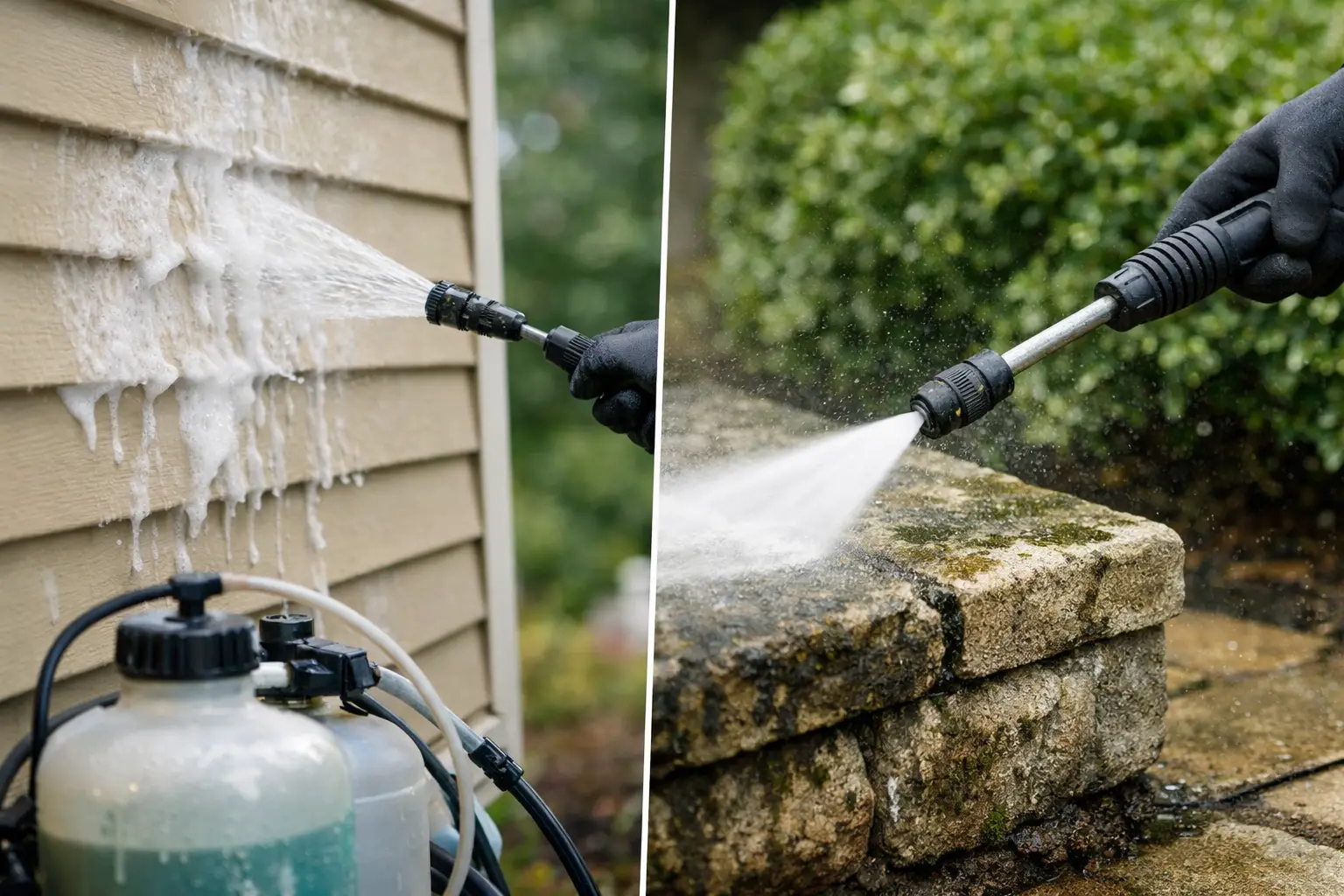
Soft washing relies on low pressure and specialized cleaning solutions to break down organic growth, dirt, algae, mildew, mold, and bacteria. Instead of blasting contamination off a surface, it treats the source and rinses it away gently. That makes it the safer option for more delicate materials and surfaces that can be damaged by high pressure.
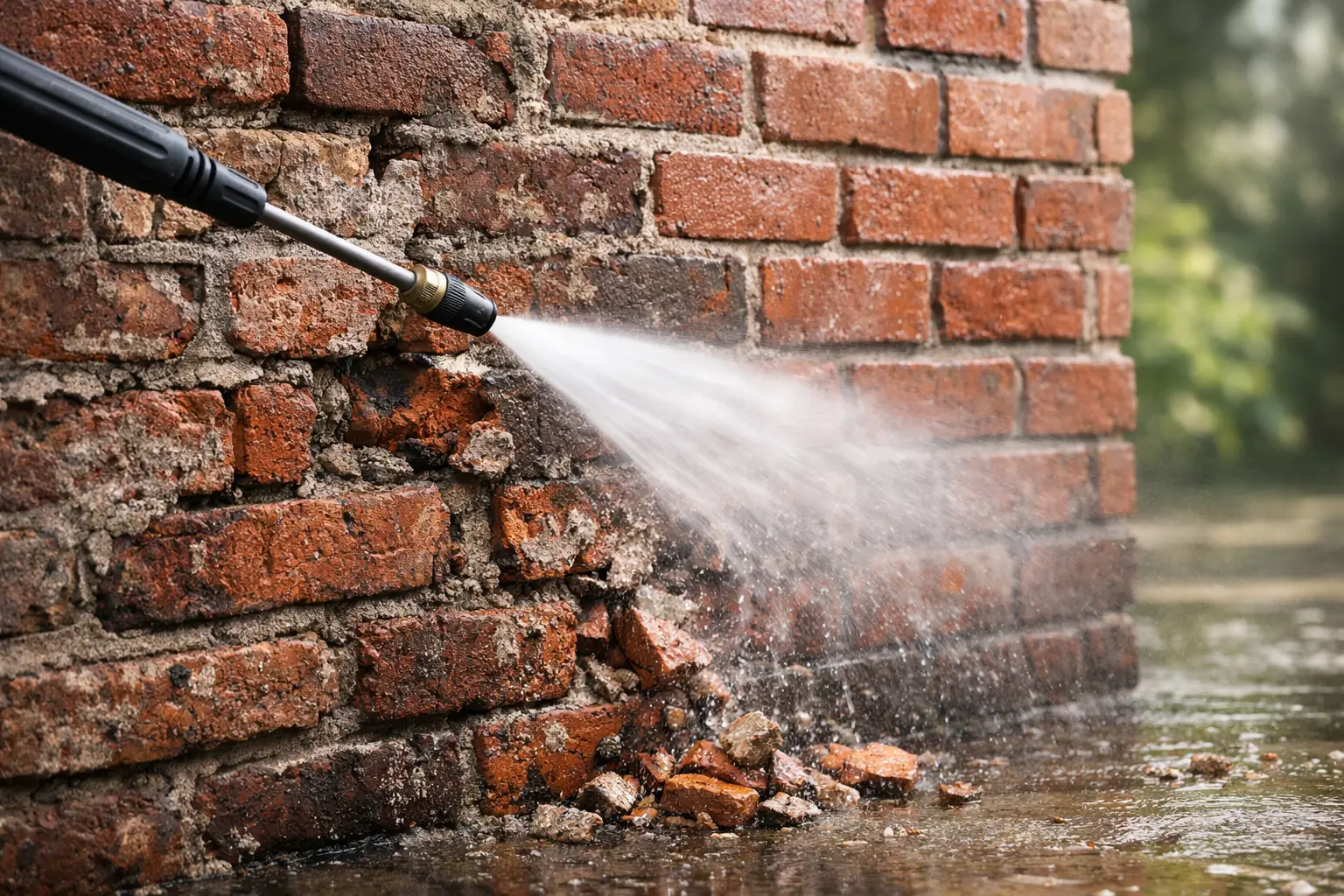
Pressure washing uses higher water pressure to remove heavy soil, mud, grease, surface buildup, and embedded grime. On the right material, it is highly effective. On the wrong one, it can cut lines into wood, strip paint, scar masonry, or force water behind siding and trim.
That distinction is where many cleaning problems start. People see dirt and assume more pressure is better. In practice, the best results come from matching the method to the material and the type of buildup.
When soft washing is the better choice
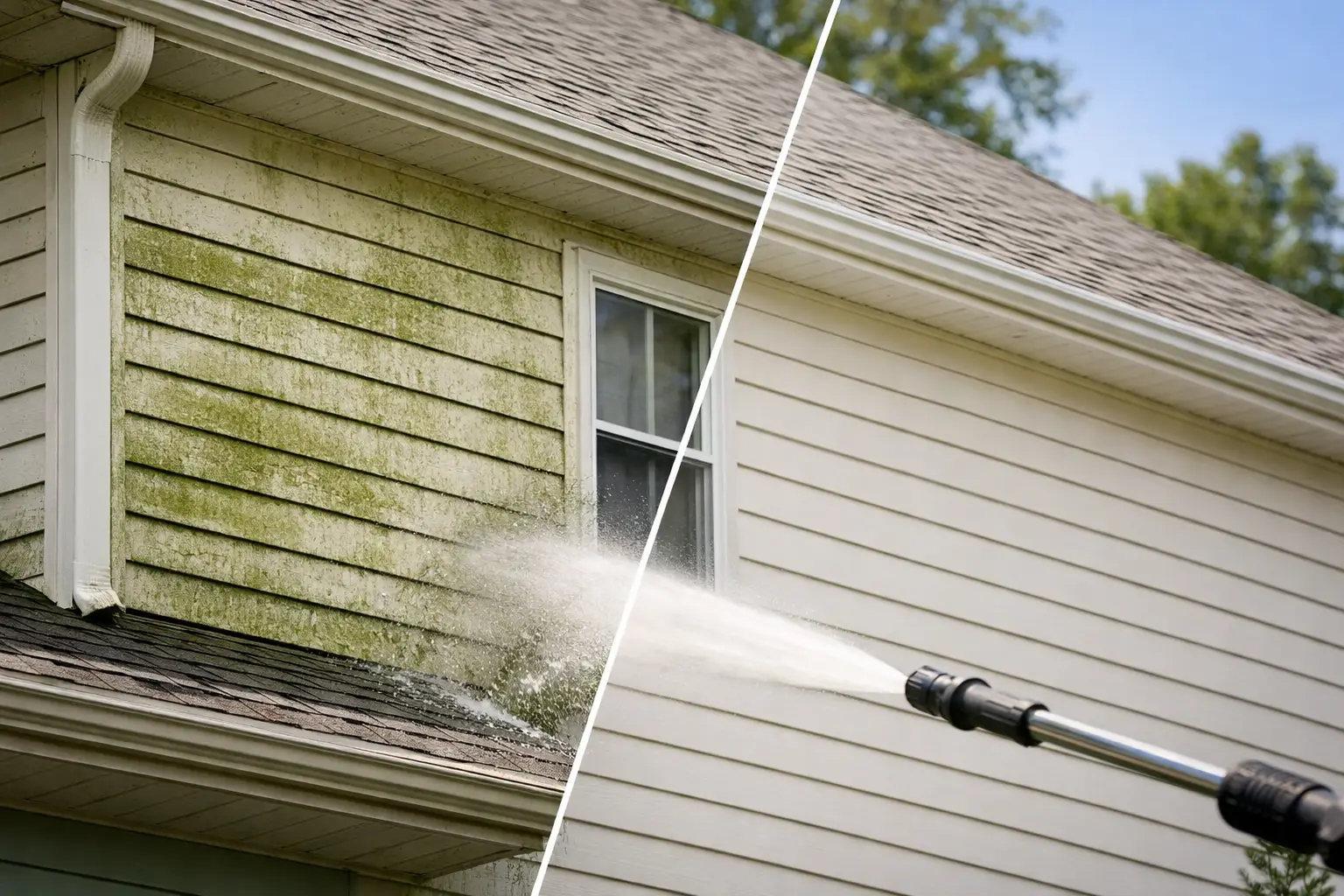
Soft washing is usually the right choice when the main issue is biological growth or when the surface itself is vulnerable. Roofs are the clearest example. Asphalt shingles should not be aggressively pressure washed. The force can dislodge granules, shorten roof life, and create unnecessary damage. Soft washing treats the algae that causes those dark roof streaks and removes it without beating up the roofing system.
It is also well suited for vinyl siding, painted surfaces, stucco, some masonry, screened enclosures, trim, fences in certain conditions, and many exterior surfaces around homes and commercial properties. If a surface can be scratched, gouged, lifted, or stripped, lower pressure is usually the safer direction.
Soft washing also tends to produce a more complete clean when growth is involved. Pressure alone may remove what you can see, but it may not fully kill the spores and organic matter causing the staining. That can mean faster regrowth. A proper soft wash is designed to clean and treat, not just rinse off the top layer.
When pressure washing makes more sense
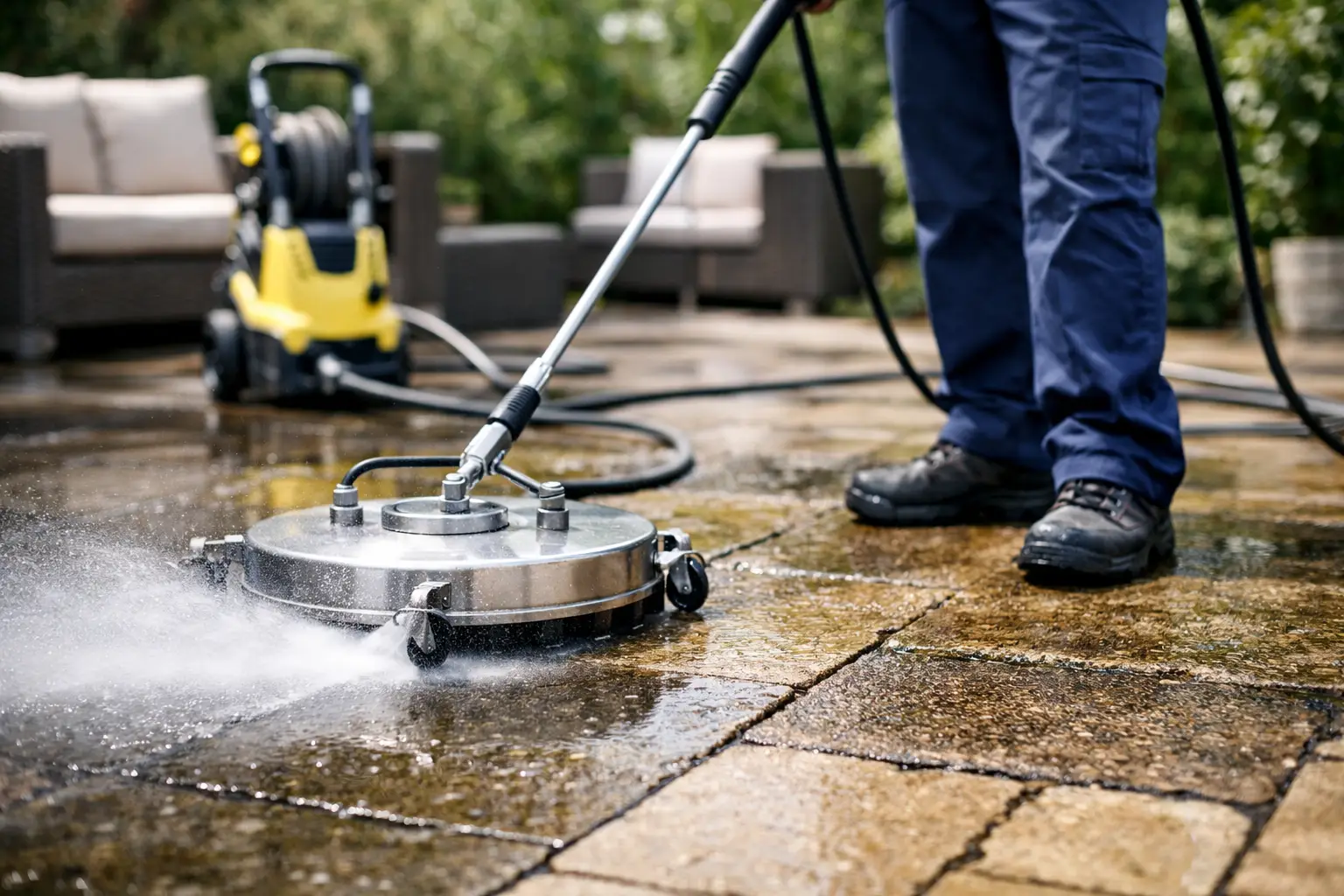
Pressure washing earns its place on hard, durable surfaces that can handle more force. Concrete driveways, sidewalks, curbs, patios, parking areas, retaining walls, and some commercial surfaces often respond well to pressure washing. These are places where soil, grime, chewing gum, grease, and years of buildup may need mechanical cleaning power.
Even here, the answer is not always maximum pressure. Skilled technicians adjust pressure, flow, nozzle selection, temperature, and technique based on the surface. Hot water pressure washing, for example, is often the right tool for grease and oily buildup in commercial environments because heat helps break contamination down more effectively than cold water alone.
Wood is where people often get in trouble. A deck may look sturdy, but too much pressure can fur the grain, leave wand marks, and cause splintering. Sometimes lower pressure with the right cleaning approach is the better move. Sometimes a restoration process is needed instead of a simple wash. It depends on the age, condition, and finish of the wood.
The biggest mistake: treating every surface the same
Exterior cleaning is not just about getting a surface wet and making stains disappear. Roof shingles, historic brick, concrete, stained wood, painted trim, EIFS, pavers, and storefront concrete all behave differently. The buildup on them behaves differently too.
A black-streaked roof needs a different approach than a red clay-stained foundation. A winery patio, a playground surface, and a residential vinyl-sided home may all need cleaning, but they should not be cleaned the same way. The equipment matters, but judgment matters more.
That is one reason experienced contractors put so much emphasis on inspection. You need to identify both the surface and the contaminant before deciding how to clean it. Going straight to high pressure is often the fastest route to avoidable damage.
Which lasts longer?
If the staining is caused by algae, mold, mildew, or other organic growth, soft washing often gives longer-lasting results because it addresses the root of the problem. Pressure washing may make the surface look clean for the moment, but if the organism is still active, the discoloration can return quickly.
On hard surfaces with packed-in dirt or grease, pressure washing may be the better long-term cleaning method because it physically removes the buildup that low-pressure rinsing would not fully clear. Again, this is why soft washing vs pressure washing is not really a battle between two competing services. They are separate tools for separate conditions.
What about damage risk?
This is where the difference becomes expensive.
Improper pressure washing can crack older window seals, scar wood, dislodge mortar, leave wand marks on concrete, damage screens, and force water behind siding. It can also remove oxidation unevenly or strip paint where it should not. On roofs, it can do real harm.
Soft washing is not risk-free either. Cleaning solutions must be mixed and applied correctly, and surrounding landscaping must be protected. Overspray, improper dwell time, or poor rinsing can create problems if the technician is careless. The safer method still requires training, process control, and attention to detail.
The right contractor understands that surface protection is part of the job, not an extra.
Soft washing vs pressure washing for common surfaces
For most homes, the roof should be soft washed. Siding is soft washed as well, especially when the issue is algae, mildew, dust, and general environmental staining. Concrete walks and driveways are usually good candidates for pressure washing, though the technician still needs to account for age, finish, and existing wear.
Patios can go either way depending on the material. Pavers, natural stone, and decorative surfaces require more care than standard broom-finished concrete. Decks and fences depend heavily on wood condition, stain type, and whether the goal is maintenance cleaning or restoration. Commercial storefronts often involve a mix of methods across facades, sidewalks, dumpster pads, and entry areas.
That is why one-size-fits-all pricing and one-size-fits-all process claims should raise concern. A serious exterior cleaning company asks questions first.
Why professional equipment is only part of the equation
Many DIY machines advertise pressure numbers like that alone guarantees results. It does not! The same pressure washer can clean one surface perfectly and ruin another. Proper cleaning depends on flow rate, nozzle choice, stand-off distance, detergents, heat when needed, runoff control, and knowing how different materials respond.
For property owners, this usually comes down to risk. If you are responsible for a home, office building, church, winery, storefront, or managed facility, surface damage costs more than hiring the right professional in the first place. Clean exteriors matter, but so does keeping roofs, siding, concrete, fencing, and specialty surfaces intact.
That is especially true with older homes and historic properties common in Central Virginia. Age, weathering, repairs, and original materials all make cleaning decisions more technical.
How to know which service you actually need
Start with two questions. What is the surface, and what is on it?
If the surface is delicate or the staining is organic, soft washing is often the answer. If the surface is hard and the buildup is heavy, greasy, or deeply embedded, pressure washing may be appropriate. In many cases, a property needs both. A home might need a soft wash on siding and roof, plus pressure washing on the driveway and walkway. A commercial site may need hot water pressure washing in one area and low-pressure treatment on the building exterior.
That blend of methods is normal. It is also a sign that the cleaning plan is being built around the property instead of forcing the property to fit a single service.
For homeowners and property managers who want the job done right, the best question is not which method is stronger? It is which method is right for this surface and this stain? That is the question experienced companies answer every day, and it is how Blue Ridge Exterior Cleaning approaches every project.
A clean property should look better when the job is done and still be in good shape years later. That is the standard worth aiming for.