Your roof faces constant attack from algae and moss that can cut its lifespan in half. Professional cleaning protects your investment.
Share:
Summary:
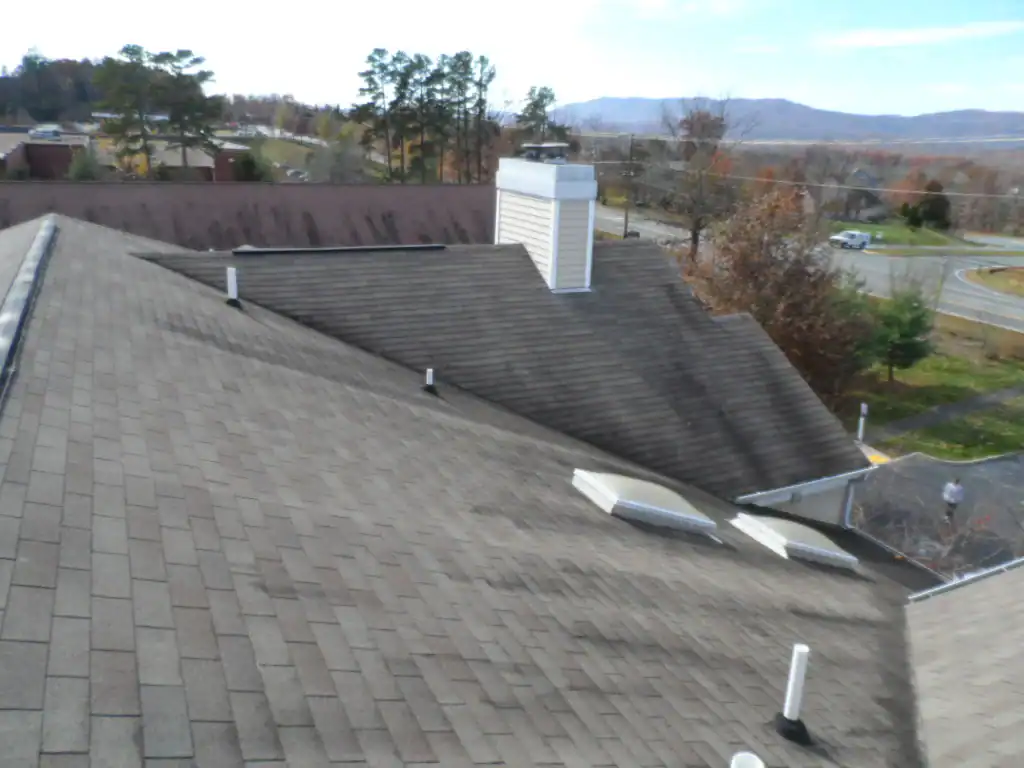
Those dark streaks running down your shingles aren’t just dirt or weather stains. They’re actually colonies of Gloeocapsa Magma, a hardy blue-green algae that feeds on the limestone filler in your shingles. This isn’t just an aesthetic problem—it’s structural damage happening in real time.
The algae literally consumes your shingles’ protective outer coating, causing premature deterioration that can cut your roof’s expected lifespan in half. What should be a 25-year roof becomes a 12-15 year replacement job, costing you thousands more than necessary.
Virginia’s climate creates perfect conditions for this algae growth, with our humid summers and moderate temperatures providing an ideal breeding ground. Once established, these organisms spread rapidly across your entire roof surface.
The damage process starts small but accelerates quickly. Algae spores land on your roof and begin feeding on the limestone in your shingles, creating those telltale black streaks. As they spread, they retain moisture against your roof surface, creating conditions for moss and lichen to take hold.
Moss is particularly destructive because it grows in the cracks between shingles, physically lifting them and allowing water to penetrate underneath. This trapped moisture leads to rot in your roof decking and can cause leaks that damage your home’s interior. The sponge-like nature of moss means it holds water against your roof long after rain stops, accelerating the deterioration process.
Lichen, meanwhile, sends root-like structures directly into your shingles, anchoring itself so firmly that removal becomes increasingly difficult over time. These organisms work together, creating a cycle of moisture retention and physical damage that compounds with each season.
The financial impact is staggering. While professional roof cleaning typically costs between $455-$550 for the average home, roof replacement runs $5,000-$14,000. When you consider that proper cleaning can extend your roof’s life by up to 50%, the math becomes clear: cleaning isn’t an expense, it’s an investment in avoiding much larger costs down the road.
The damage process starts small but accelerates quickly. Algae spores land on your roof and begin feeding on the limestone in your shingles, creating those telltale black streaks. As they spread, they retain moisture against your roof surface, creating conditions for moss and lichen to take hold.
Moss is particularly destructive because it grows in the cracks between shingles, physically lifting them and allowing water to penetrate underneath. This trapped moisture leads to rot in your roof decking and can cause leaks that damage your home’s interior. The sponge-like nature of moss means it holds water against your roof long after rain stops, accelerating the deterioration process.
Lichen, meanwhile, sends root-like structures directly into your shingles, anchoring itself so firmly that removal becomes increasingly difficult over time. These organisms work together, creating a cycle of moisture retention and physical damage that compounds with each season.
The financial impact is staggering. While professional roof cleaning typically costs between $455-$550 for the average home, roof replacement runs $5,000-$14,000. When you consider that proper cleaning can extend your roof’s life by up to 50%, the math becomes clear: cleaning isn’t an expense, it’s an investment in avoiding much larger costs down the road.
Want live answers?
Connect with a Blue Ridge Exterior Cleaning expert for fast, friendly support.
Roof neglect creates cascading problems that extend far beyond the roof itself. When algae and moss compromise your shingles, water infiltration becomes inevitable. This moisture doesn’t just damage your roof decking—it can ruin insulation, promote mold growth in your attic, and even affect your home’s indoor air quality.
Energy costs also climb when your roof darkens with algae growth. Dark surfaces absorb more solar energy, heating your home and forcing your air conditioning system to work harder. A clean, properly maintained roof reflects heat more effectively, helping control cooling costs during Virginia’s hot summers.
Property value takes a hit too. When potential buyers see a stained, moss-covered roof, they immediately start calculating replacement costs and wondering what other maintenance has been deferred. A clean roof signals that the home has been well-maintained, eliminating a major objection and supporting your asking price.
Your homeowner’s insurance coverage can be affected by roof maintenance decisions. While insurance typically covers storm damage and sudden roof failures, coverage may be denied if the damage stems from neglected maintenance. Insurance adjusters look for signs that homeowners have ignored obvious problems like moss growth or algae infestations.
Warranty coverage presents similar concerns. Most shingle manufacturers require proper maintenance to honor warranty claims. Using inappropriate cleaning methods—especially high-pressure washing—can void these warranties entirely. Professional cleaning using manufacturer-approved methods preserves your warranty protection while addressing maintenance requirements.
Documentation matters too. Professional roof cleaning companies provide certificates and documentation showing that maintenance has been performed according to industry standards. This paperwork can be valuable when dealing with insurance claims or warranty issues, providing proof that you’ve maintained your roof properly.
The peace of mind factor shouldn’t be underestimated. Knowing that your roof is professionally maintained and your warranties remain intact eliminates the anxiety that comes with deferred maintenance. You can focus on enjoying your home rather than worrying about expensive surprises.
The economics of roof cleaning become compelling when you run the numbers over time. Annual professional cleaning costs roughly $455-$550, while roof replacement runs $5,000-$14,000 or more. If cleaning extends your roof’s life by even a few years, you’ve saved thousands of dollars.
But the benefits extend beyond replacement costs. Clean roofs improve energy efficiency, reducing cooling costs during summer months. They maintain property values better than neglected roofs, protecting your largest investment. And they prevent the secondary damage that occurs when roof problems lead to interior water damage, mold remediation, and structural repairs.
Professional cleaning also provides early problem detection. Experienced technicians spot potential issues during the cleaning process—loose shingles, damaged flashing, or developing leaks that haven’t yet caused interior damage. Catching these problems early allows for minor repairs instead of major reconstruction projects.
Consider the total cost of ownership over your roof’s lifetime. A homeowner who invests in regular professional cleaning might spend $5,500-$8,250 over 15 years (assuming annual cleaning at $550). Compare that to replacing a roof prematurely at year 12-15 for $10,000+, plus the interior damage costs that often accompany roof failures. The cleaned roof not only lasts longer but performs better throughout its extended lifespan.
Your roof represents one of your home’s most significant investments, and like any investment, it requires proper maintenance to deliver expected returns. Professional roof cleaning isn’t optional maintenance—it’s essential protection that extends your roof’s life, maintains your home’s value, and prevents costly emergency repairs.
The choice is straightforward: invest in regular professional cleaning or face premature replacement costs that can run ten times higher. Virginia’s climate makes roof cleaning even more critical, with our humid conditions creating ideal environments for destructive algae and moss growth.
When you’re ready to protect your investment with professional roof cleaning services, we bring over 30 years of experience and manufacturer-approved methods to every job. Don’t wait until the black streaks become obvious—by then, the damage is already underway.
Article details:
Share:
Continue learning: