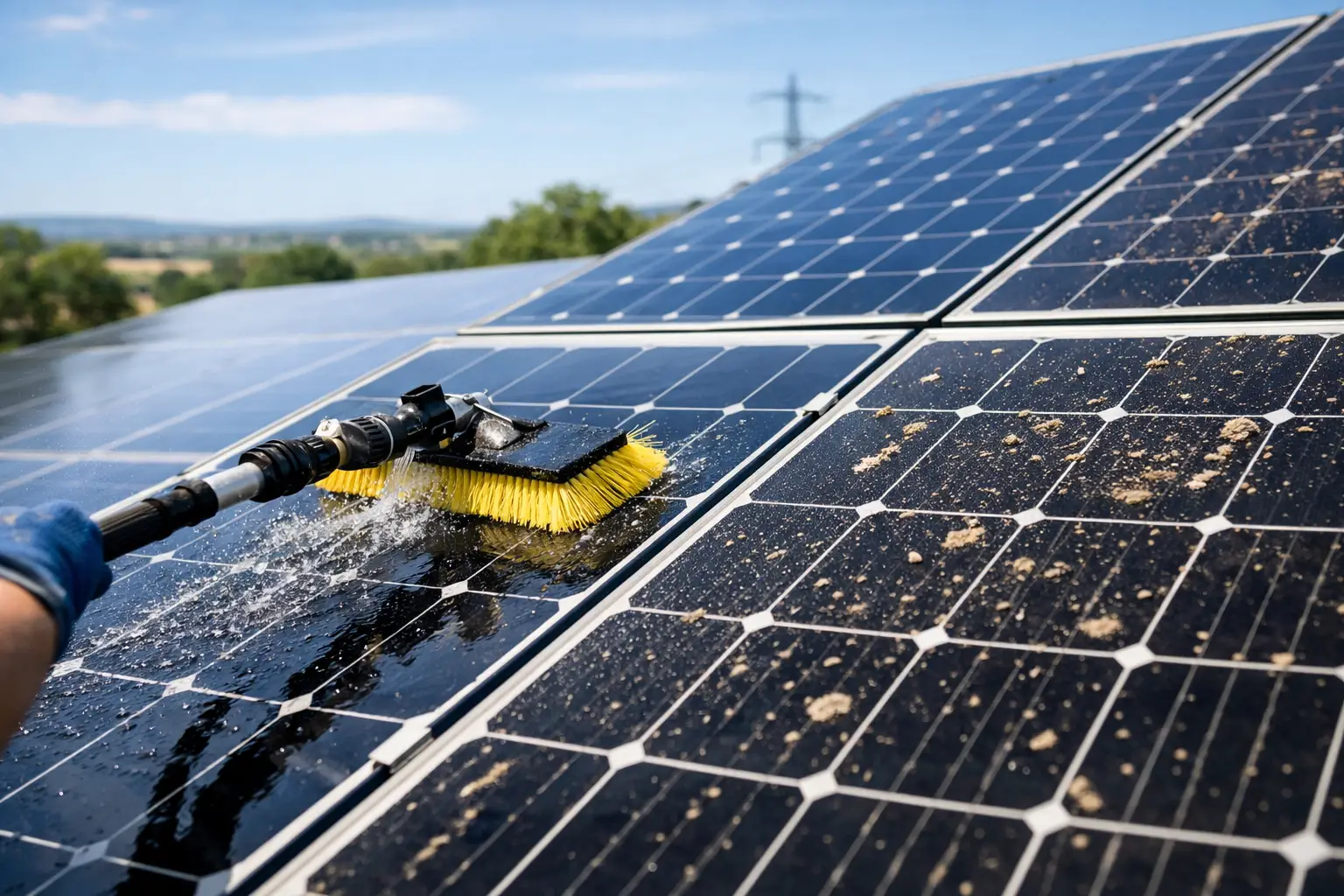
If your solar panels looked spotless the day they were installed but now have a film of pollen, dust, or bird droppings, the question gets practical fast: how often should solar panels be cleaned? For most properties in Central Virginia, a good baseline is once a year or at least every two years. But the real answer depends on what lands on your panels, how your roof is positioned, and whether buildup is light cosmetic dust or the kind of grime that can reduce performance.
Solar panels are designed to handle the weather, but they are not self-cleaning in every condition. Rain helps rinse loose dust, yet it usually does not remove sticky pollen, sap mist, bird messes, or the residue that builds up over time near trees, roads, farms, and commercial activity. That matters because even a high-quality solar system can lose efficiency when sunlight is blocked by surface contamination.
How often should solar panels be cleaned for most properties?
For many homes and small commercial buildings, cleaning every 1 – 2 years is a reasonable schedule. That range fits a lot of properties because it balances maintenance with actual need. If your panels are tilted properly, get regular rainfall, and are not exposed to heavy debris, once every two years cleaning may be enough.
If your property deals with spring pollen, nearby construction dust, frequent bird activity, or overhanging trees, twice a year is often the better choice. In Virginia, that usually means one cleaning after heavy pollen season and another later in the year if grime continues to build.
Commercial properties can be a little different. A retail site, office building, winery, farm-related facility, or other large roof area may collect dirt faster depending on traffic, surrounding land use, and roof design. In those cases, the right schedule is based less on a calendar and more on actual panel condition and performance trends.
What changes the cleaning schedule?
There is no one-size-fits-all answer because not all panel locations are equal. A home in an open neighborhood may need far less attention than a property surrounded by mature trees. The same goes for roof pitch. Panels on a steeper slope tend to shed debris better than panels installed at a flatter angle.
Trees, pollen, and organic debris
This is one of the biggest factors in Central Virginia. Pine pollen, leaf dust, sap, and small bits of organic debris can create a stubborn layer that rain does not fully remove. If your panels sit near tree cover, you may need cleaning more often than someone with the same system size in a more open setting.
Birds and nesting activity
A little bird activity can turn into a bigger cleaning issue than many owners expect. Droppings are not just unsightly. They can block light in concentrated areas and create uneven soiling across the panel surface. If birds regularly perch on the roofline or nearby structures, it makes sense to inspect panels more often.
Road dust, farming activity, and construction
Properties near gravel roads, active construction, or agricultural operations often see a faster layer of dust settle on exterior surfaces. Solar panels are no exception. Fine particles may not look dramatic from the ground, but they can still affect output over time.
Roof pitch and drainage
Panels that sit flatter tend to hold onto dirt longer. Water does not always carry debris off the surface evenly, especially if the grime has bonded to the glass. A steeper installation usually helps, but it does not eliminate the need for cleaning.
Signs your solar panels need cleaning sooner
Sometimes the calendar says you can wait, but the panels say otherwise. If you can safely view them from the ground and notice a visible film, patchy buildup, or droppings, that is worth attention. The same goes if your monitoring system shows a dip in production that cannot be explained by weather or seasonal daylight changes.
A few common warning signs include dull-looking panel surfaces, obvious pollen buildup after spring, debris collecting along panel edges, and shaded spots caused by droppings or stuck-on residue. If one section looks significantly dirtier than the rest, that can also point to runoff patterns or a specific exposure issue that needs to be addressed.
Does rain clean solar panels well enough?
Sometimes, but not always.
Rain is helpful for loose dust. It can rinse away light surface dirt and improve appearance after dry stretches. But it is not a substitute for proper cleaning when grime becomes sticky, layered, or uneven. Pollen is a good example. It often cakes onto the surface and leaves a film behind. Bird droppings, sap residue, and environmental buildup from nearby activity usually need more than rainfall to come off cleanly.
This is where a lot of property owners get mixed messages. The idea that panels are maintenance-free sounds appealing, but maintenance-free is not the same as never needing care. Like windows, roofing, and other exterior surfaces, solar panels last and perform better when buildup is addressed before it becomes a bigger issue.
Why cleaning solar panels the right way matters
Solar panel cleaning is not just about making them look better. It is about protecting performance without damaging the system.
Using the wrong method can create expensive problems. High pressure, abrasive tools, harsh chemicals, or improper foot traffic on the roof can damage panel surfaces, seals, mounts, or surrounding roofing materials. That is why panel cleaning should be handled with the same care as any specialized exterior surface.
A professional approach typically means purified water, soft tools designed for panel surfaces, and a process that removes grime without leaving residue behind. It also means understanding roof safety, access, and how to work around the system without creating new issues.
Should you clean solar panels yourself?
For ground-mounted systems with safe access, some owners choose to handle light cleaning themselves. Even then, caution matters. The wrong brush or dirty water can leave scratches or mineral spotting. Working around electrical equipment also requires common sense and care.
For roof-mounted systems, DIY cleaning is usually where risk starts to outweigh savings. Climbing onto a roof with water, hoses, and cleaning tools creates fall hazards quickly. Add wet surfaces, steep pitches, or multi-story access, and it becomes the kind of job that is better left to trained professionals.
There is also the issue of doing the job halfway. If residue is left behind or debris is pushed around instead of properly removed, you may not get the result you expected. Professional cleaning is often less about speed and more about using the right process from the start.
A practical cleaning schedule for Virginia homes and businesses
If you want a simple rule of thumb, start with annual cleaning and adjust based on conditions. For many property owners, that is enough.
It also helps to inspect visually after major pollen season, after long dry periods, and after storms that leave debris behind. Commercial properties may benefit from more regular checks, especially when appearance, energy performance, and facility upkeep are all part of the equation.
Blue Ridge Exterior Cleaning works with property owners who want that decision based on real conditions, not guesswork. That means looking at what is on the panels, how the system is situated, and what cleaning interval makes sense for the property.
How often should solar panels be cleaned if you want the short answer?
Most solar panels should be cleaned every 1 – 2 years. If your property has heavy pollen, bird activity, tree cover, road dust, or visible buildup, you may need more frequent service. If your panels stay relatively clear and performance remains steady, once every two years may be all you need.
The best schedule is the one that protects production without overdoing maintenance. A clean panel surface gives sunlight a better path in, and a careful cleaning process helps protect the investment sitting on your roof. If you are unsure whether your panels are due, a quick visual check after pollen season is often enough to tell you the next step.