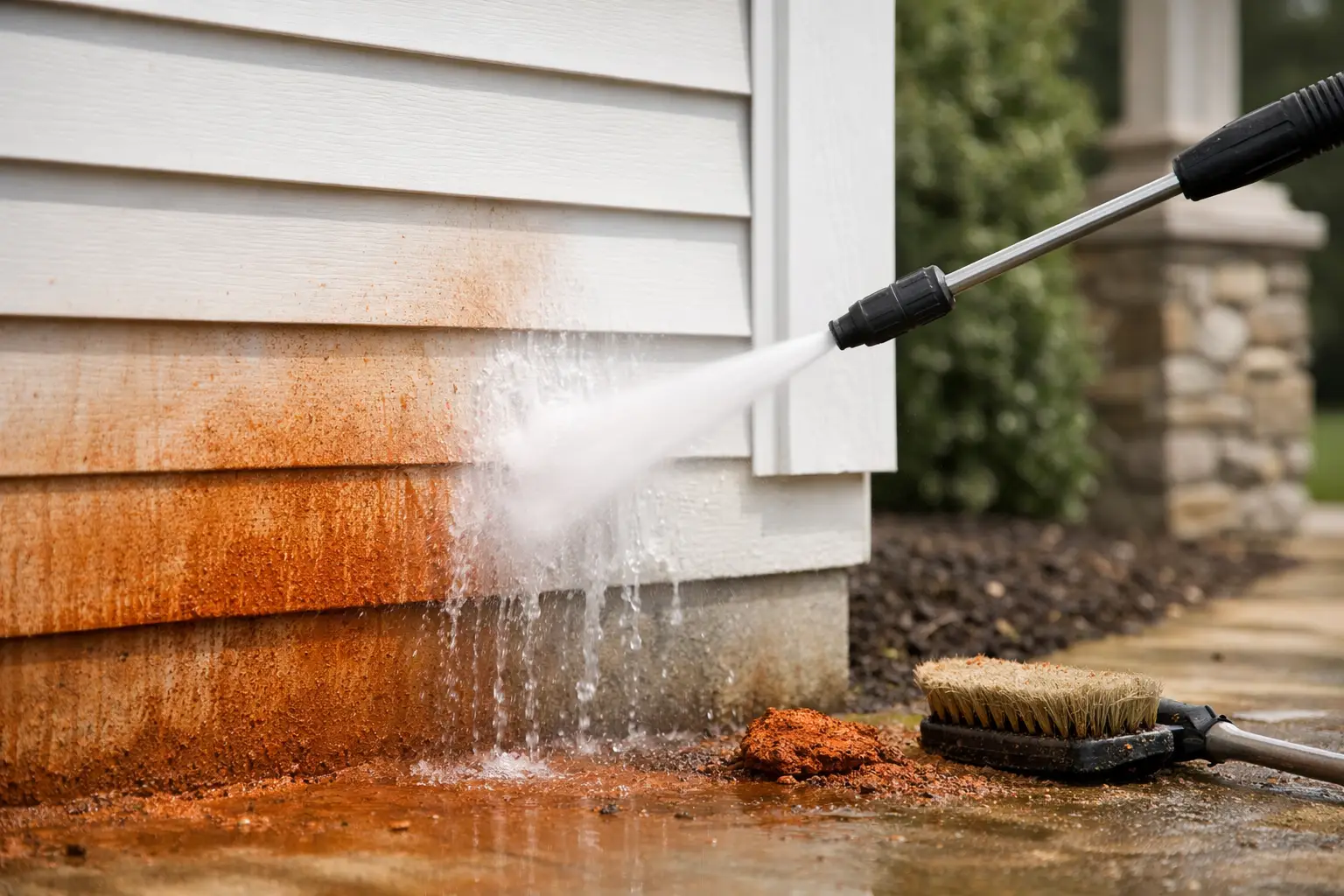
Red clay has a way of making a well-kept property look neglected overnight. One heavy rain, a muddy driveway edge, or foot traffic across wet soil can leave orange streaks on siding, trim, brick, concrete, and entry areas. If you are searching for red clay stain removal house solutions, the main thing to know is this: clay stains are not regular dirt, and treating them like dirt often makes the problem worse.
In Central Virginia, red clay is part of the landscape. It gets tracked onto walkways, splashed onto lower siding, and baked into porous surfaces by the sun. Homeowners and property managers often try to blast it off with a pressure washer, only to find the stain still there after the surface dries. That happens because red clay carries iron-rich particles that bind tightly to exterior materials. The visible stain is part soil, part mineral discoloration.
Why red clay stains are so stubborn
Ordinary grime usually sits on the surface. Red clay behaves differently. Its fine particles settle into pores and texture, especially on concrete, mortar, unsealed brick, stucco, and older siding with oxidation or wear. The iron content adds another layer of difficulty because even after loose soil is removed, a rusty orange tint can remain behind.
That is why red clay stain removal for house surfaces has to be matched to the material. The right process for vinyl siding is not the same as the right process for painted brick or exposed aggregate concrete. A cleaner that lifts clay from one surface may bleach, etch, or streak another.
Where red clay shows up around a house
Most people first notice it near the bottom of the home. Rain splash throws clay onto foundation walls, lower siding, garage doors, and porch columns. But it also shows up in less obvious places. White trim around walkways can pick up orange speckling. Concrete pads and paver edges can develop broad discoloration. Gutters, downspouts, and fence lines may stain where runoff carries clay repeatedly.
On commercial properties, the problem often appears near entrances, loading zones, playground edges, and landscaping transitions. Anywhere people, water, and exposed clay soil meet, staining can follow.
What does not work well
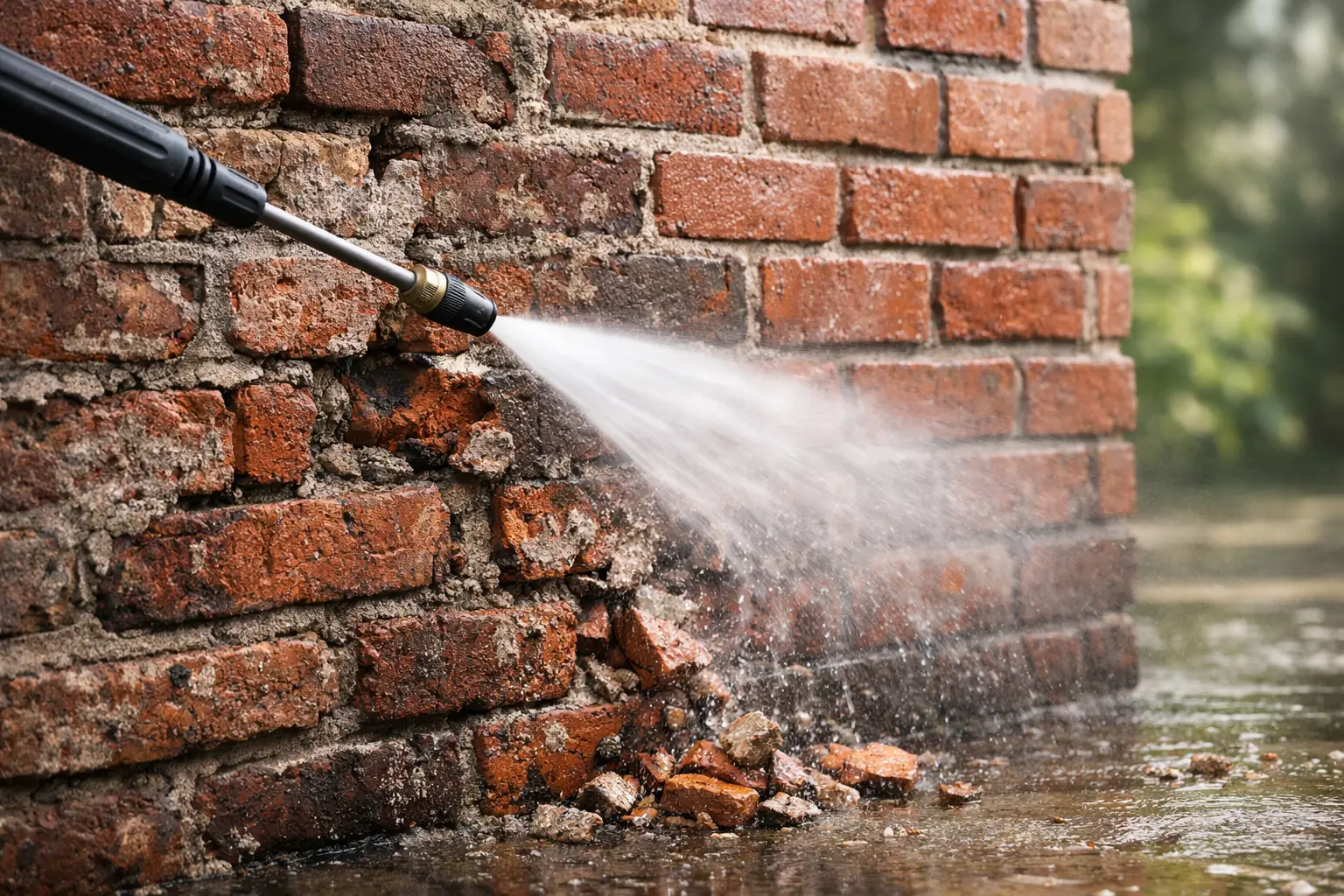
A stronger machine is usually not the answer. High pressure may remove some surface mud, but it can also scar wood, force water behind siding, strip paint, and leave lap marks on softer materials. On concrete, aggressive pressure can clean unevenly, leaving a patchy appearance that stands out more than the stain did.
Household degreasers also tend to disappoint. They are made for grease, food spills, or general grime, not mineral-heavy soil staining. Bleach has limits too. It can help with organic growth like mildew, but red clay is a different problem. Used carelessly, bleach can affect nearby landscaping, fade finishes, and still leave the orange staining behind.
The same goes for random acid use. Some acidic products can help with mineral-based staining, but the wrong product or concentration can etch concrete, damage mortar joints, dull metal, or create permanent color variation. This is where DIY efforts often get expensive.
The right approach to red clay stain removal house surfaces need
Professional red clay stain removal house work starts with identification, not guessing. The surface matters. So does the age of the stain, the level of buildup, whether sealers are present, and whether the discoloration is pure clay, iron staining, or a mix of both.
A good process usually begins with dry removal or a controlled rinse to take off loose soil without driving it deeper into the surface. After that, the cleaning agent has to match the substrate. On vinyl or painted exterior surfaces, the goal is to break down and lift the stain while protecting the finish. On concrete or masonry, the chemistry may be different because those materials are more porous and often hold the stain below the immediate surface.
Dwell time matters. So does agitation. Some red clay stains need a cleaner to sit long enough to react before a low-pressure rinse or surface cleaning step. Others respond better with repeated light treatments rather than one aggressive pass. That is not slower for the sake of being slow. It is how you avoid damage while getting a more even result.
Surface-by-surface differences matter
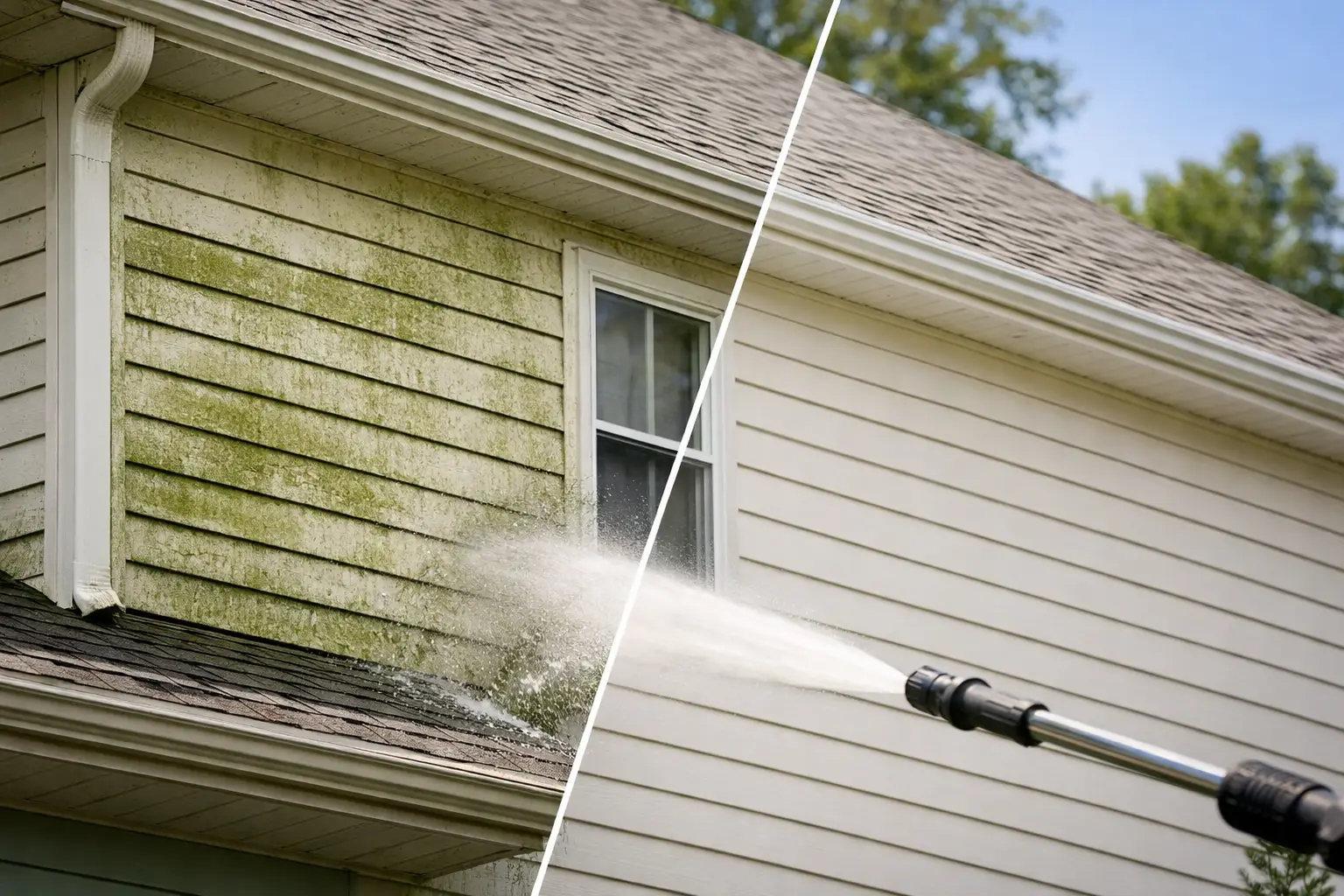
Vinyl siding is often more forgiving than people think, but only if it is cleaned correctly. Oxidized or older siding can streak if treated too aggressively. Painted surfaces can lose their finish if harsh chemistry is used at the wrong strength. Brick can hold clay in pores and mortar lines, which means uneven cleaning is a real risk.
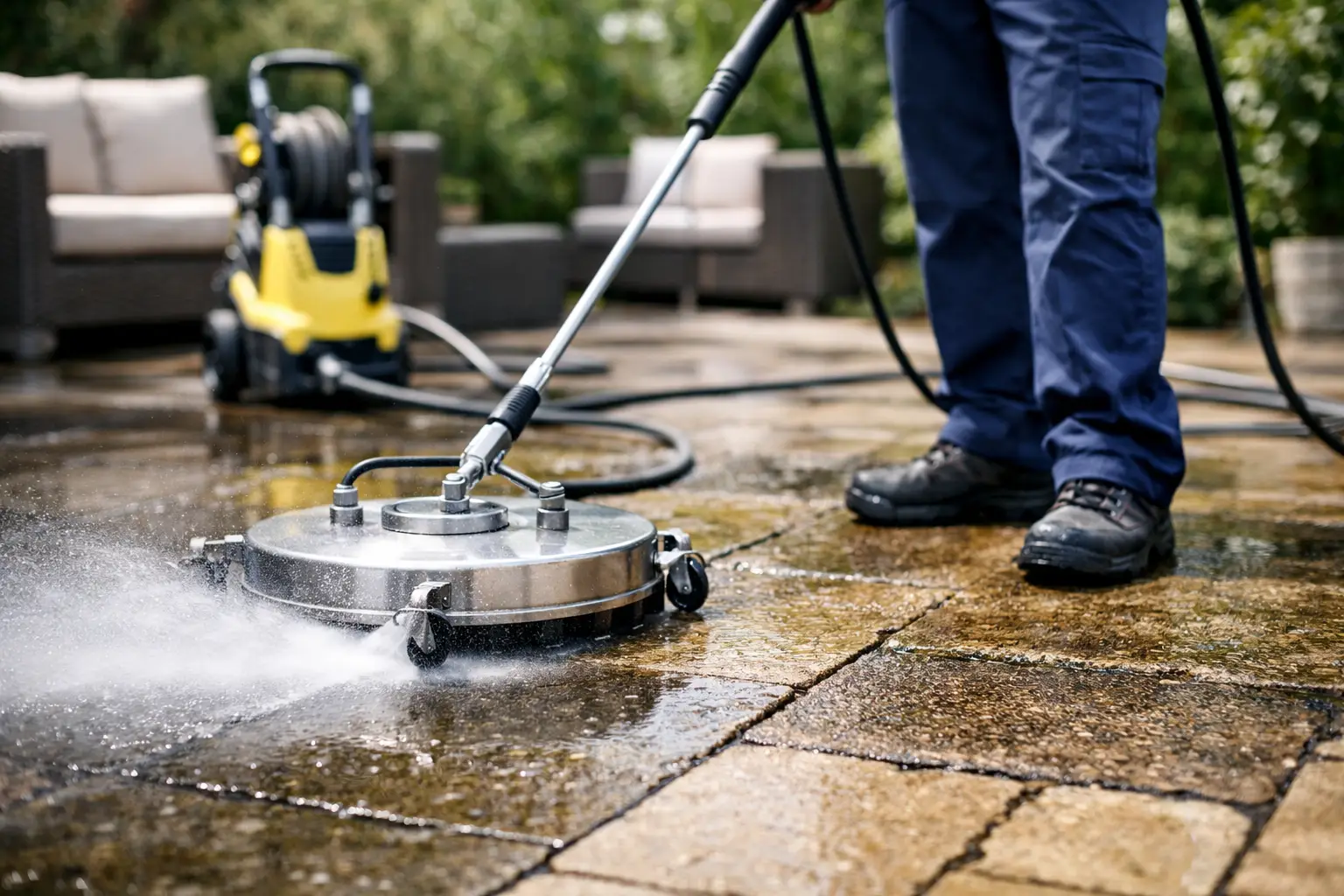
Concrete is another common trouble spot. A front walk may look simple, but concrete varies widely by age, finish, porosity, and prior sealing. The same red clay stain can come off one section easily and cling to another. Decorative concrete, stamped surfaces, and pavers need even more care because color and texture can be altered by overcleaning.
Wood surfaces bring their own trade-offs. Fences, porches, and deck steps near clay soil can pick up orange staining, but strong pressure can fur the wood or leave visible cleaning marks. In those cases, a lower-pressure, chemistry-first approach is usually the safer path.
Why some stains come back
Sometimes the stain is removed correctly, but the source is still active. If runoff from a bare clay area keeps washing across the same path, the surface will stain again. The same is true when mulch beds, uncontained soil, or drainage issues feed clay-rich water toward the house.
That is why the best result is not just cleaning. It is also identifying how the staining got there. Grading, downspout extensions, edging, stone borders, and traffic flow can all reduce repeat staining. For homeowners, that means longer-lasting curb appeal. For commercial properties, it means fewer complaints and less frequent corrective cleaning.
When to call a professional
If the stained area is large, highly visible, or on a delicate surface, it makes sense to bring in a professional early. The same goes for historic brick, specialty finishes, painted exteriors, winery properties, storefront entries, and concrete that cannot afford a trial-and-error approach.
A qualified exterior cleaning company should be able to explain the process clearly, set expectations honestly, and tell you where full removal is realistic versus where improvement may be the right target. That matters because some old stains have been heat-set into porous materials for months or years. They can often be improved dramatically, but the result depends on the surface and how long the stain has been there.
Blue Ridge Exterior Cleaning handles this kind of specialty work with the same mindset we bring to house washing, concrete cleaning, and other exterior services: protect the material first, then pursue the best possible result with the right equipment and chemistry.
What homeowners and property managers should ask
Before hiring anyone for red clay stain removal, ask how they plan to clean the specific surface, whether they use high pressure or soft washing methods, and what risks they see. You want clear answers, not vague promises. It is also reasonable to ask whether the staining may be tied to drainage or runoff and whether that should be addressed to prevent it from returning.
Price matters, but this is not a service where the lowest number tells you much. Red clay stains are specialty work. The contractor needs enough experience to know when to use pressure, when not to, and how to avoid turning a stain problem into a repair problem.
The goal is a cleaner property, not a gamble
Red clay staining is one of those exterior cleaning problems that looks simple from a distance and gets complicated up close. The stain is visible, but the real challenge is hidden in the surface itself – porosity, finish, age, and how the clay bonded to it. That is why good results come from process and judgment, not brute force.
If your siding, concrete, brick, or entry areas are carrying that orange Virginia clay look, the safest next step is to treat it like a specialty stain, not everyday mud. A careful approach protects the surface, improves the appearance, and gives you a better chance of keeping the stain from becoming a permanent part of the property.