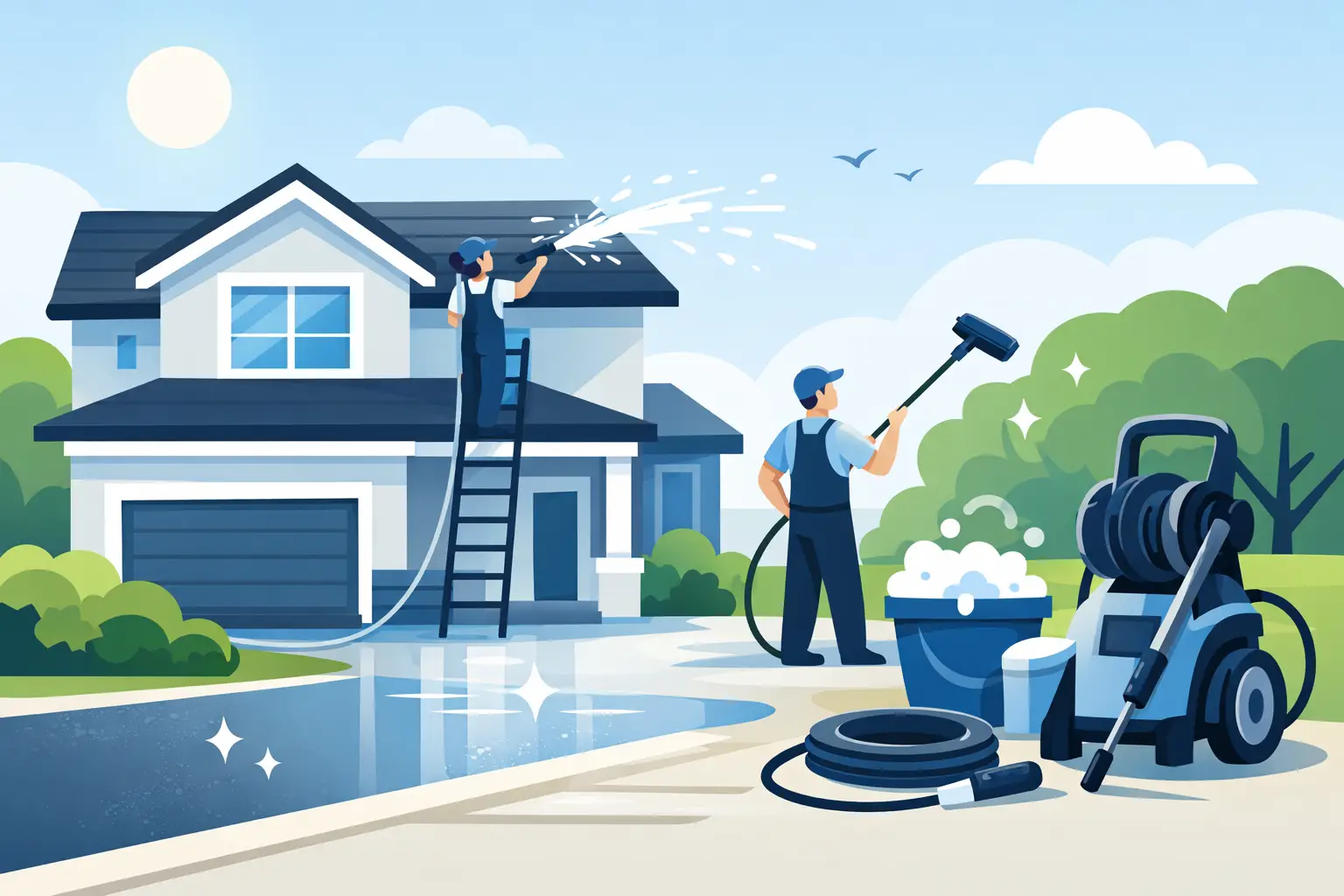
A green-streaked roof, slippery walkway, and dingy siding usually do not happen all at once. They build up slowly, and that is exactly why many homeowners wait too long to deal with them. By the time the problem is obvious from the street, the surfaces underneath have often been holding moisture, organic growth, and stains for months. Professional residential exterior cleaning services are not just about making a home look better for a weekend. They help protect the materials you already paid for.
What residential exterior cleaning services actually cover
Homeowners often think of exterior cleaning as pressure washing, but that is only part of the picture. A well-run company should be able to match the cleaning method to the surface instead of forcing every job through the same machine and hoping for the best.
That matters because vinyl siding, painted trim, asphalt shingles, brick, concrete, wood fencing, composite decking, and exterior glass all respond differently to water pressure, temperature, detergents, and dwell time. The right service may include house washing, roof cleaning, soft washing, patio and walkway cleaning, deck and fence cleaning, window washing, solar panel cleaning, and stain treatment for problem areas like red clay. Each one requires different equipment and a different level of care.
A homeowner looking at package pricing alone can miss the bigger issue. The value is not just in how many surfaces get cleaned. It is in whether those surfaces are cleaned safely and thoroughly without leaving behind damage, striping, oxidation, or premature wear.
Why the cleaning method matters as much as the result
A house can look cleaner after aggressive pressure washing and still be worse off for it. This is where experience shows up.
Soft washing versus pressure washing
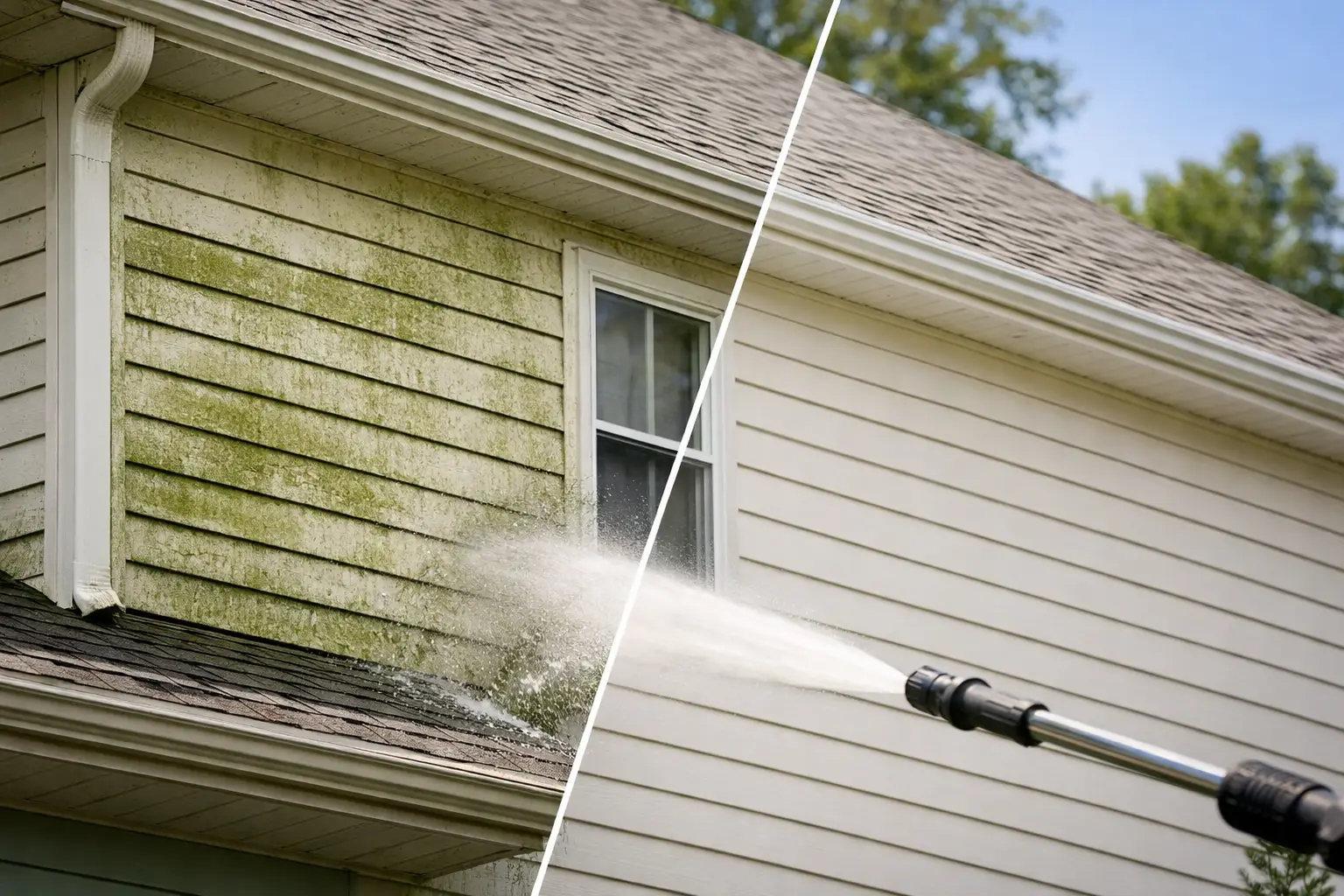
Soft washing is typically the right choice for more delicate exterior surfaces, especially siding, painted areas, stucco, and roofs. Instead of relying on brute force, it uses lower pressure with cleaning solutions designed to break down algae, mildew, and organic buildup at the source. The result is a deeper clean that tends to last longer because it treats the growth instead of just blasting off the visible layer.
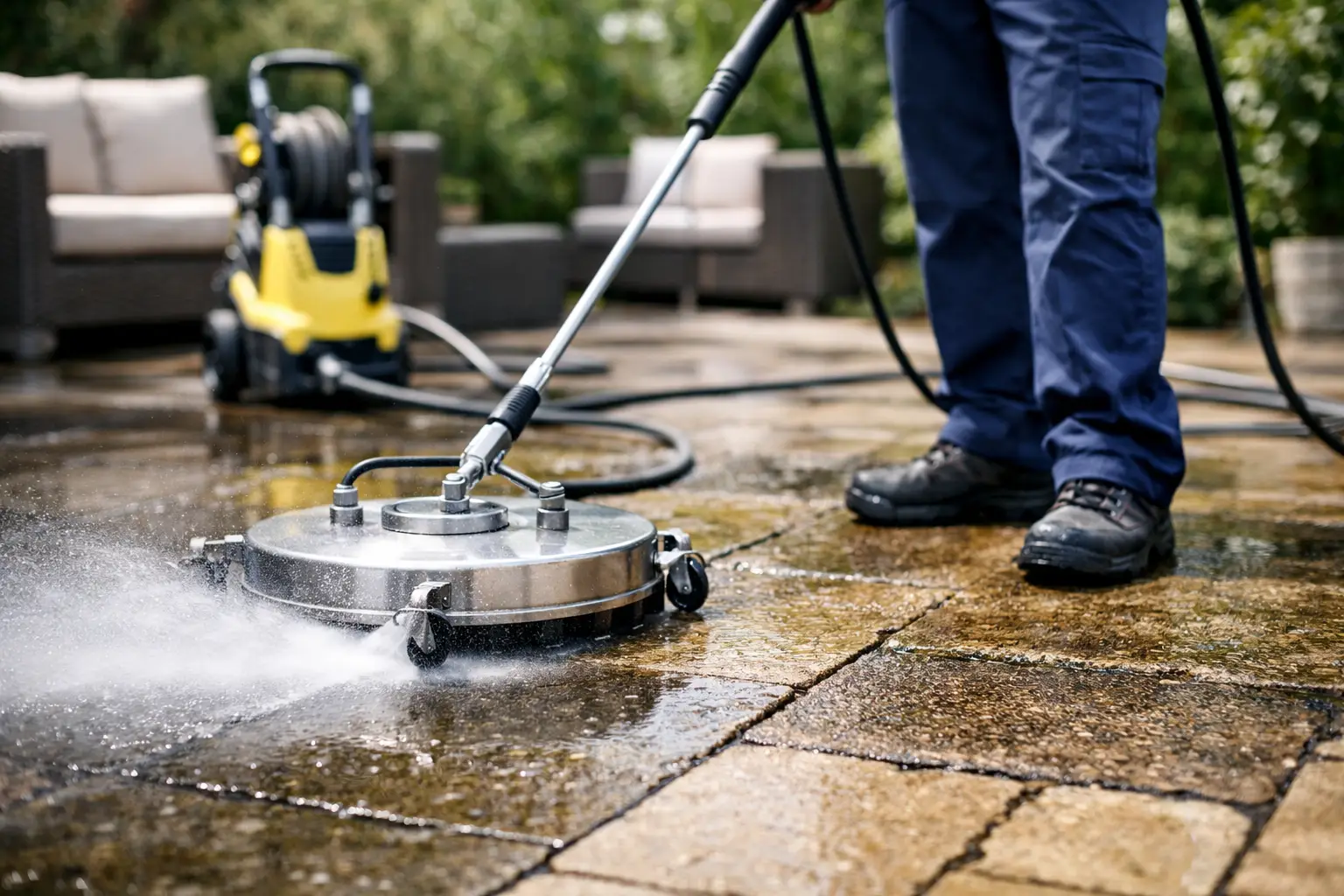
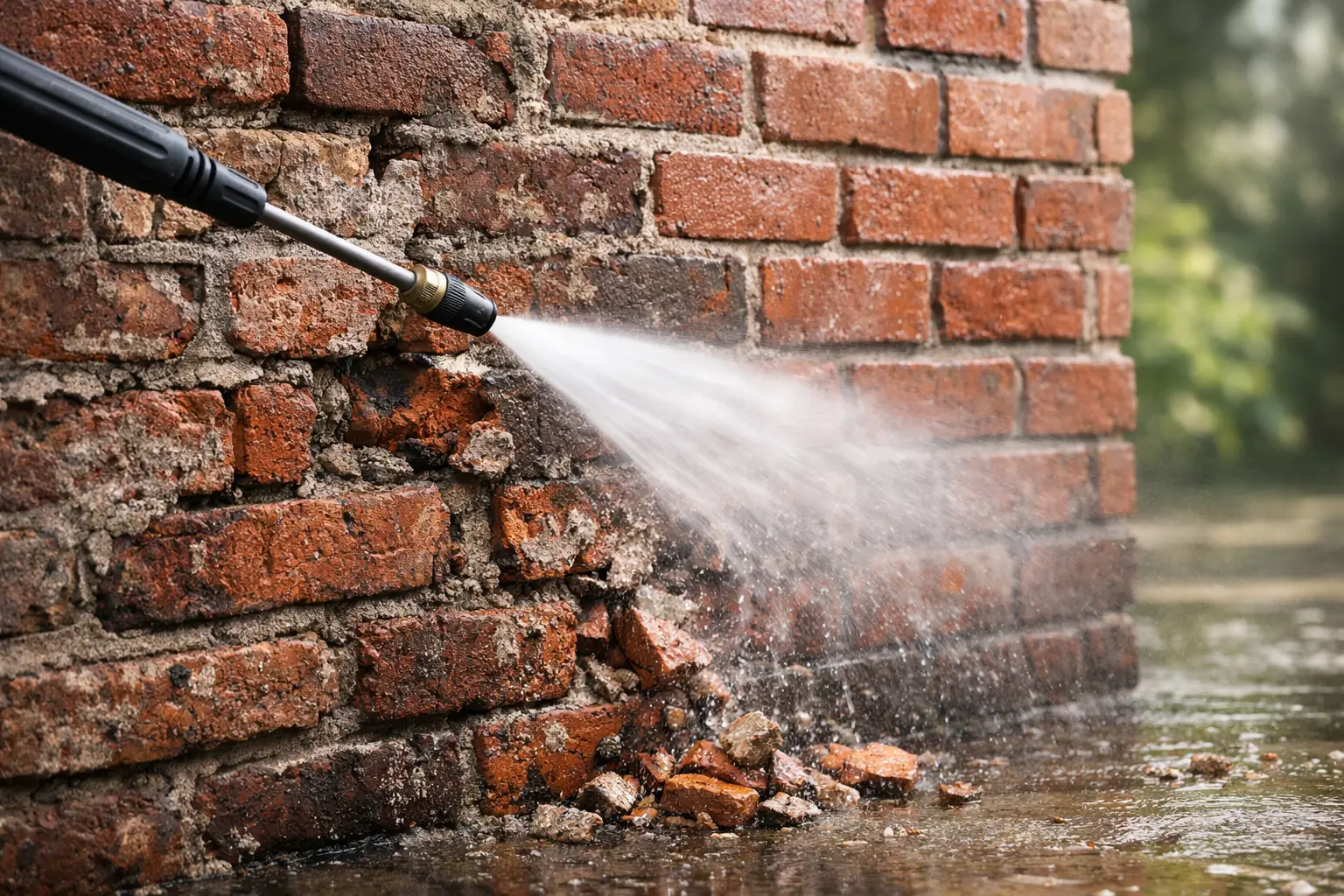
Pressure washing still has a place. Concrete, some stone surfaces, patios, and walkways often benefit from higher pressure, especially when embedded dirt or slippery buildup has settled into the surface. Hot water pressure washing can also be useful for grease, grime, and certain stubborn stains. But stronger is not automatically better. On the wrong material, too much pressure can scar wood, loosen siding, force water behind trim, and shorten the life of roofing materials.
The risk of one-size-fits-all cleaning
This is where many disappointing jobs start. A contractor may show up with a pressure washer and treat every surface the same because it is faster. That can leave lap marks on siding, etched concrete, shredded wood fibers, damaged window seals, or lifted shingle granules. A professional approach looks slower from the outside because it usually is. It takes time to evaluate materials, protect landscaping, choose the right detergents, and rinse properly.
The real benefits for homeowners
Clean exteriors obviously improve curb appeal, but that is only the surface-level benefit. The better reason to stay ahead of buildup is that dirt, algae, mold, and environmental staining do more than make a house look neglected.
Roof streaks, for example, are often tied to algae growth that feeds on the roofing material and holds moisture on the surface. Walkways and patios can become slick enough to create a safety issue. Siding can trap grime and organic growth in shaded areas, especially around gutters, trim lines, and the north side of the home. Windows lose clarity gradually, so many homeowners do not notice how much light they are giving up until they are cleaned properly.
Regular exterior cleaning can also make maintenance decisions easier. It is much simpler to spot cracked caulk, failing paint, damaged trim, or problem drainage when layers of grime are not hiding them. In that sense, cleaning is part of property care, not a cosmetic extra.
When to schedule residential exterior cleaning services
There is no perfect universal schedule because every property is different. Trees, roof pitch, drainage, sun exposure, nearby roads, pollen, humidity, and even the color of the home can affect how quickly buildup appears.
Homes surrounded by mature trees may need more frequent roof and gutter-line attention because of shade and moisture retention. Houses with large concrete areas or north-facing walkways often need cleaning sooner for safety reasons. If you are in Central Virginia, pollen, humidity, and seasonal moisture can create the kind of conditions where organic growth returns faster than many homeowners expect.
For many properties, an annual house wash is a practical baseline, while roofs, concrete, windows, decks, and fences may fall on a different cycle. The best schedule is based on what is happening at your home, not a generic rule. A good contractor should be able to explain what needs attention now, what can wait, and why.
What to look for in a residential exterior cleaning company
This is not a service where the cheapest estimate tells you much. Two companies can quote the same house and be planning completely different jobs.
Look for clear communication first. If you cannot get a straight answer before the work starts, you probably will not get one later either. Homeowners should know what surfaces are being cleaned, what method will be used, whether detergents are involved, what precautions are taken around plants and sensitive materials, and what results are realistic.
Experience matters, but so does the type of experience. Cleaning a concrete driveway is not the same as treating an older roof, washing a historic home, or handling delicate exterior materials around custom windows and painted trim. Training, insurance, and process matter because exterior cleaning is full of situations where poor technique causes expensive problems.
It also helps to work with a company that offers a broad range of services. Not because you need everything at once, but because a full-service provider is more likely to understand how different exterior systems interact. A contractor who cleans roofs, siding, windows, concrete, fences, and specialty surfaces tends to make better decisions than one who only knows how to wash one thing one way.
Why local knowledge makes a difference
Residential exterior cleaning is not identical from one region to another. Climate, soil, vegetation, and local building styles all shape the work.
In the Shenandoah Valley and surrounding Virginia market, you see a mix of newer homes, rural properties, older homes with delicate materials, and specialty properties where appearance matters year-round. You also see issues like red clay staining, heavy pollen, algae growth in shaded areas, and surfaces that need a more careful touch than standard high-pressure washing. That is where local experience pays off.
A company like Blue Ridge Exterior Cleaning understands that exterior cleaning is not just about getting things visibly brighter. It is about preserving siding, roofs, decks, concrete, windows, and other surfaces in a climate where moisture and organic buildup are constant factors. That means using the right process, communicating clearly, and solving problems that are specific to the property instead of forcing a standard package onto every job.
The trade-off between DIY and professional service
Some homeowners can handle light cleaning tasks on their own. A garden hose, brush, and basic maintenance go a long way in certain situations. But once ladders, roofs, detergents, electrical fixtures, oxidized siding, or higher-pressure equipment get involved, the margin for error shrinks fast.
DIY pressure washing often looks straightforward until you realize how easily pressure can gouge wood, force water behind siding, or leave visible marks across concrete and painted surfaces. Roof cleaning is an even bigger concern. Walking a roof and applying the wrong method can create both a safety risk and a material risk.
Professional residential exterior cleaning services are worth considering when the goal is not just to remove dirt, but to protect the property while doing it. That is especially true if the home has aging materials, complex access, delicate finishes, or stains that need more than a surface rinse.
A clean home exterior should not come at the cost of damaged siding, shortened roof life, or wasted money on work that has to be corrected later. The best service is not the one that promises the fastest spray-and-go result. It is the one that understands what each surface needs, communicates clearly, and leaves your home cleaner, safer, and better protected for the months ahead.