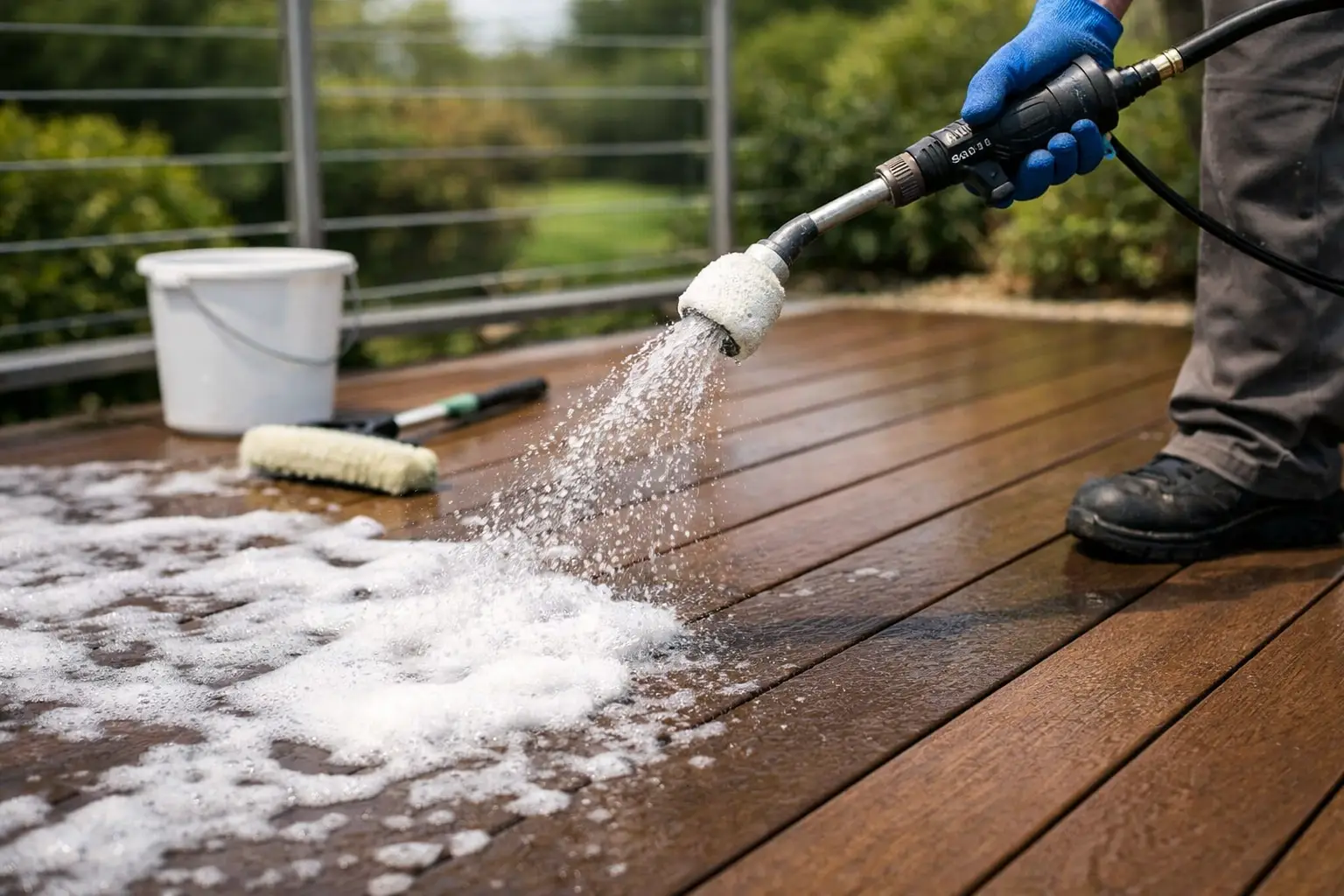
A composite deck can still look dirty long before it wears out. In Central Virginia, pollen, algae, mildew, red clay, and everyday foot traffic build up fast, especially in shaded or damp areas. Soft washing composite decks is the safest way to clean that buildup without scarring the decking, stripping the finish, or forcing water where it does not belong.
Composite decking is durable, but it is not indestructible. One of the most common mistakes homeowners make is treating it like poured concrete or an old pressure-treated deck. High pressure can leave visible lines, damage the surface, and remove the factory finish. Once that damage happens, it is hard to reverse.
Why soft washing composite decks works better
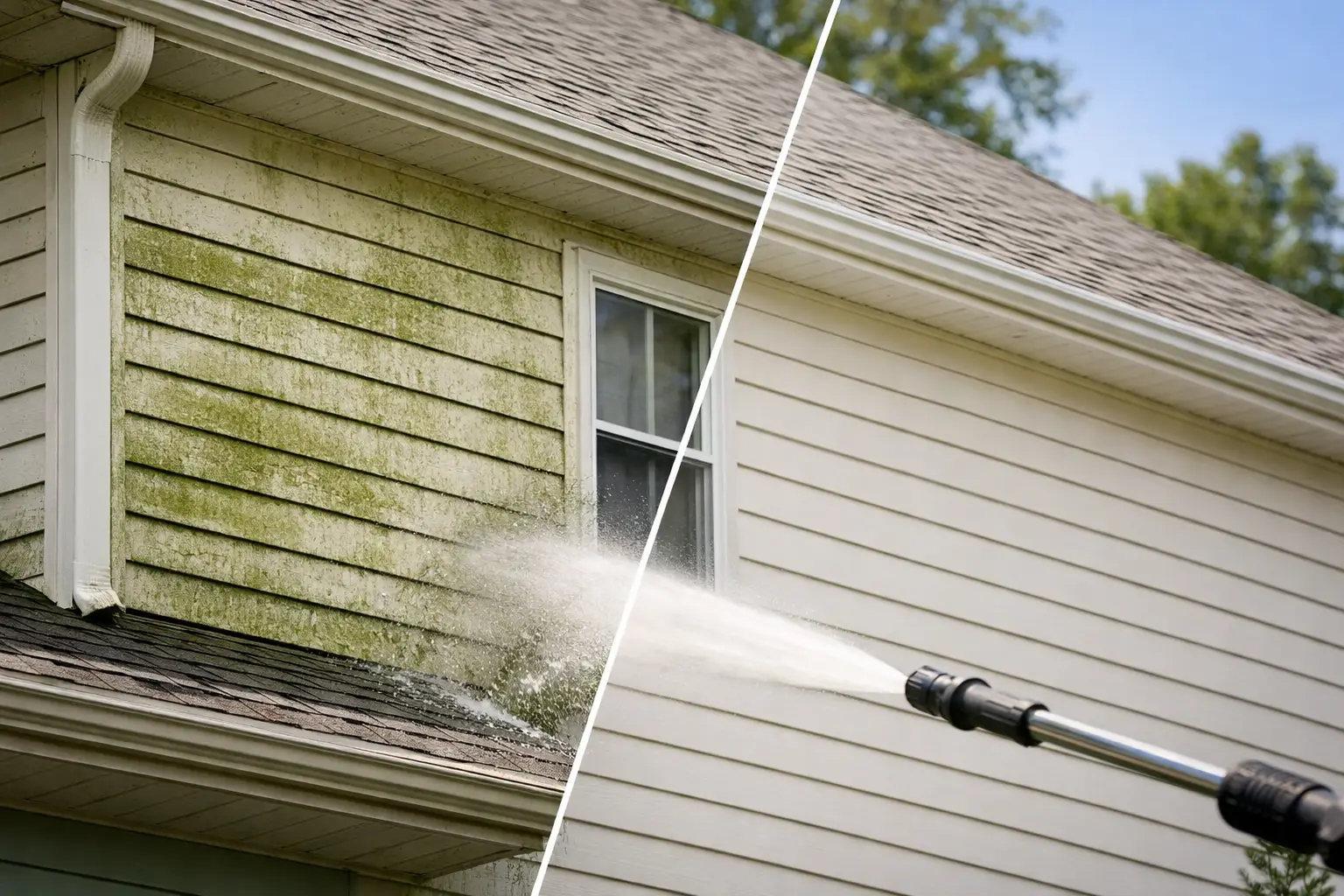
Soft washing relies on low pressure, proper cleaning solutions, and controlled dwell time to break down organic growth and lift dirt. That matters on composite materials because most staining is not just surface dust. It is often a mix of algae, mildew, tree debris, sunscreen oils, food spills, and airborne grime that bonds to the texture of the decking.
Low pressure does the rinsing. The cleaning solution does the real work. That approach is far safer for capped and uncapped composite products than blasting the deck with a pressure washer. It also gives more even results, especially on larger decks where wand marks can be obvious after improper washing.
What can go wrong with aggressive cleaning
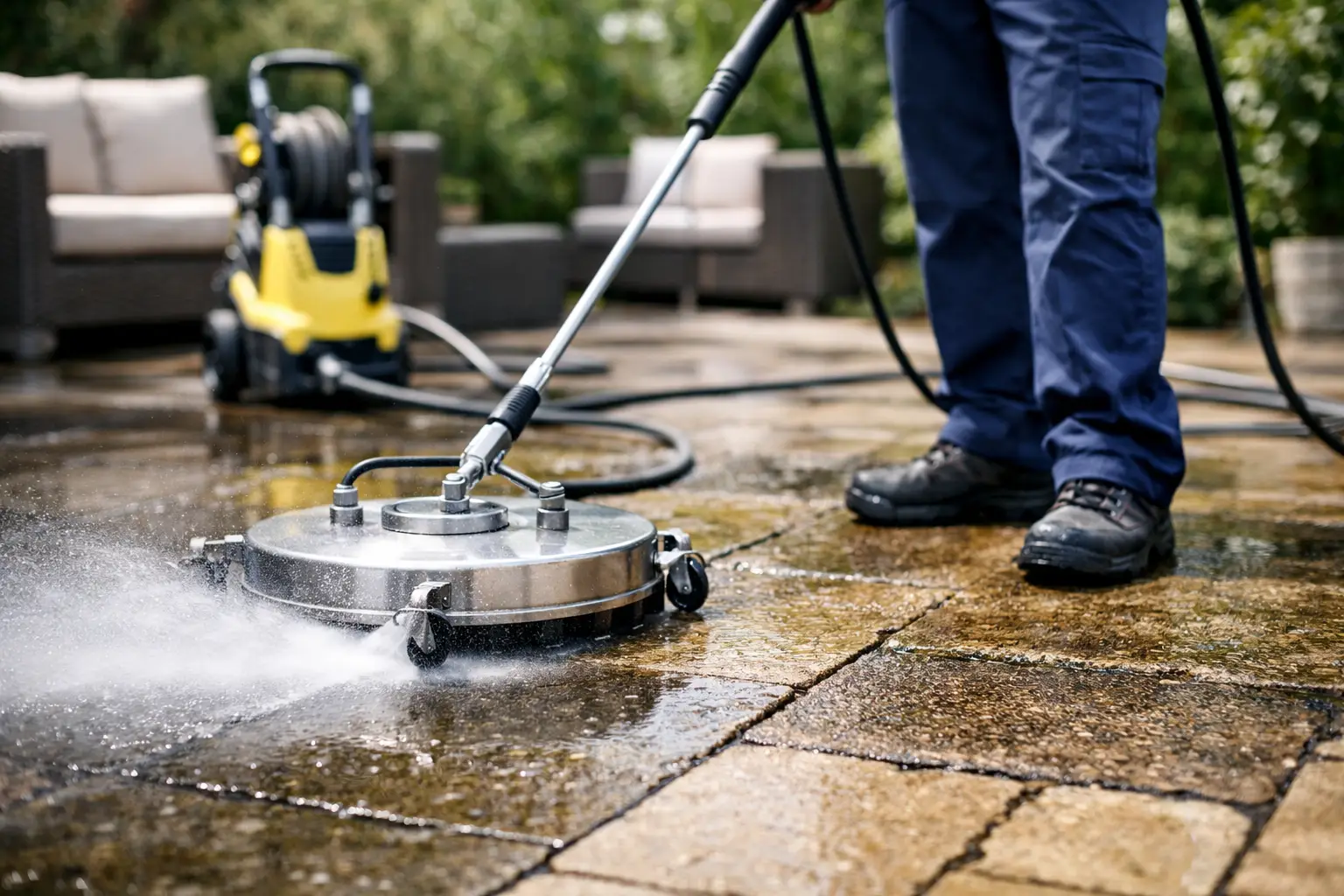
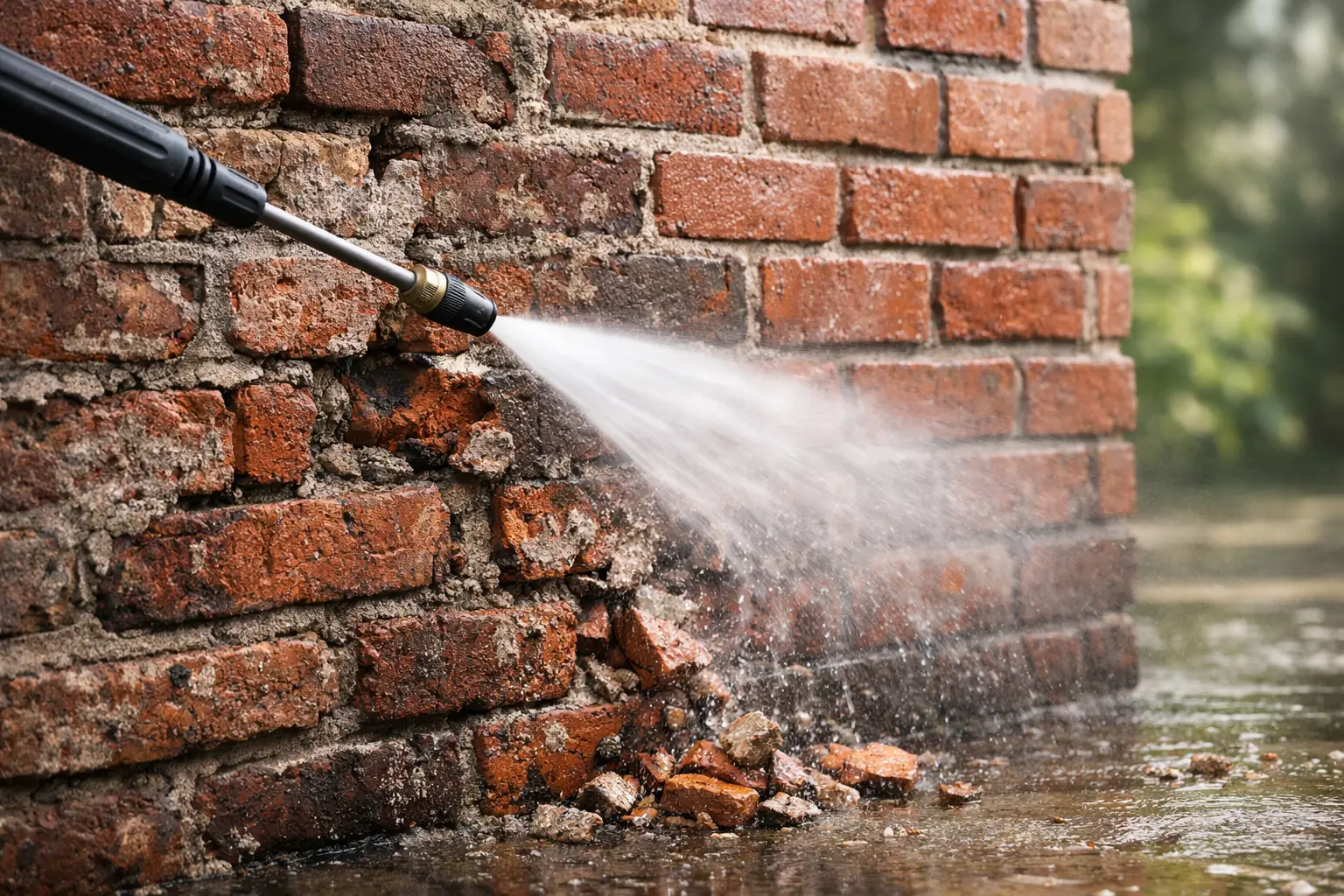
Pressure washing composite decking is not always wrong, but it is easy to do wrong. Too much pressure, the wrong nozzle, or getting too close to the surface can leave permanent marks. Even if the deck looks cleaner at first, damage often shows up after it dries.
There is also the chemistry side. A cleaner that is too harsh can fade color, affect surrounding landscaping, or leave residue behind. Composite manufacturers differ in what they allow, so the process needs to match the condition of the deck and the type of material. That is where experience matters more than speed.
When a composite deck needs professional cleaning
If your deck feels slick when damp, has dark spotting, or looks patchy even after rain, it is probably overdue for a proper wash. Shaded sections near trees usually show the worst growth first. Stairs, rail bases, and board edges also tend to trap grime.
Commercial properties have similar issues, just with heavier use. Restaurant patios, winery gathering spaces, office entrances, and shared residential amenities all need to stay clean without creating avoidable wear. In those settings, appearance and slip reduction both matter.
Soft washing composite decks step by step
A proper cleaning starts with identifying what is actually on the deck. Organic growth needs a different approach than grease, rust, or red clay. From there, the surface is pretreated with the right solution, allowed time to work, then rinsed with controlled pressure that is strong enough to remove contamination but gentle enough to protect the material.
Stubborn spots may need detail work with soft brushes rather than more pressure. That is an important distinction. The goal is not to force the stain out aggressively. The goal is to clean the deck thoroughly while preserving the finish and texture.
Nearby siding, doors, furniture, and landscaping should also be accounted for before any application begins. A good cleaning process protects the whole area, not just the deck boards.
How often should composite decking be cleaned?
For most homes, two to three years is a good baseline. If the deck sits under heavy tree cover, stays damp, or gets frequent use, once a year may make more sense.
Waiting too long usually means more staining, more slippery areas, and more effort to restore the original look. Regular maintenance is easier on the surface and more cost-effective than letting buildup become a bigger problem.
DIY vs professional service
Homeowners can handle light rinsing and basic maintenance, but the risk with DIY cleaning is usually not effort. It is using the wrong method. Rental machines are often more powerful than necessary, and many store-bought cleaners are either too weak to help or too aggressive for the material.
Professional service makes the biggest difference when the deck has visible algae, uneven discoloration, or sensitive adjacent surfaces. It also helps when you want the job done thoroughly without guessing about pressure settings, chemical strength, or rinse technique. That is especially true for larger decks and higher-end outdoor living spaces where replacement costs are significant.
For property owners who want clean results without unnecessary risk, companies like Blue Ridge Exterior Cleaning focus on matching the method to the surface instead of applying the same process everywhere. That is how composite decking gets cleaned properly and stays in better shape over time.
A composite deck should look clean, feel safe underfoot, and hold up for years. The right wash does all three without turning a maintenance job into avoidable damage.