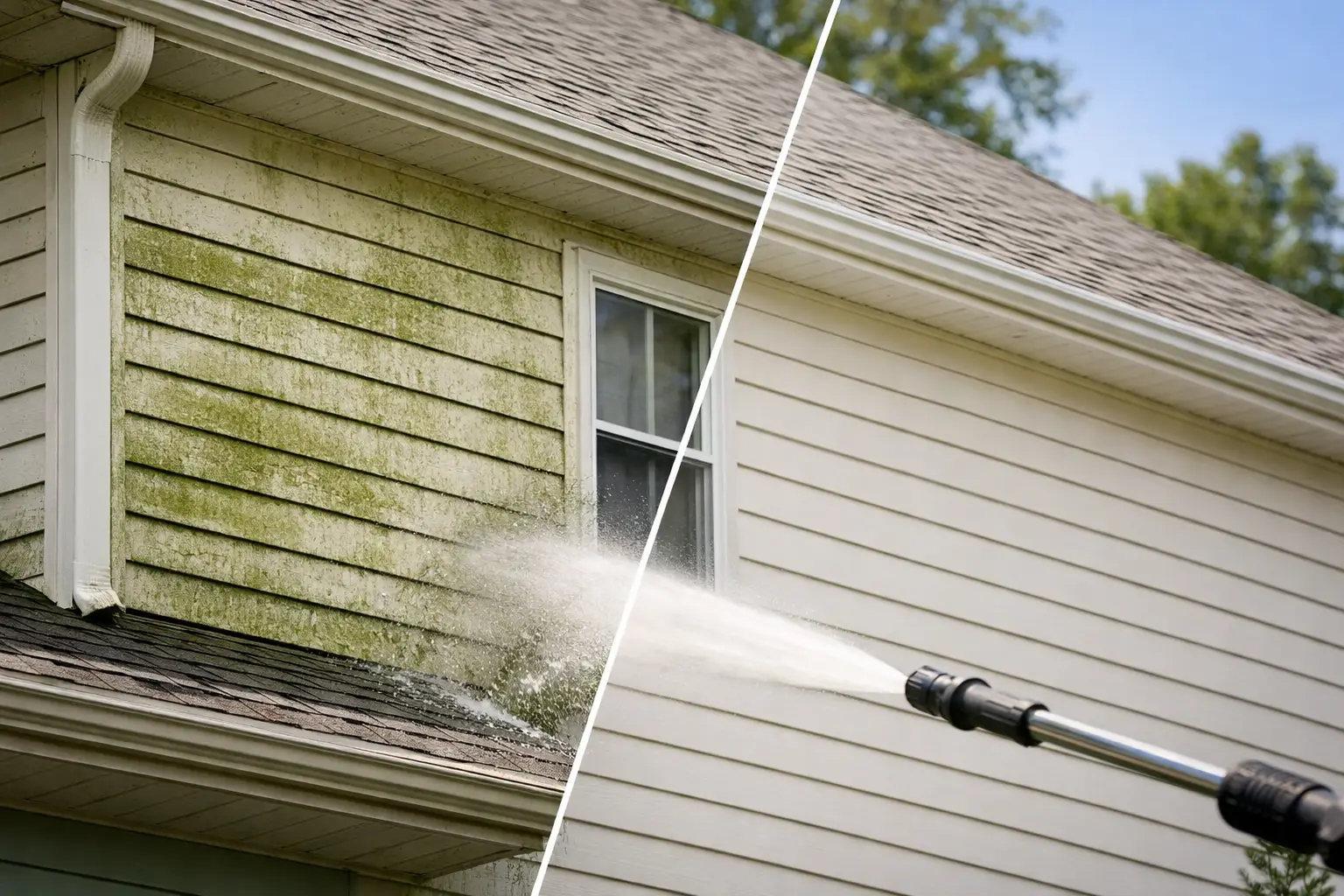
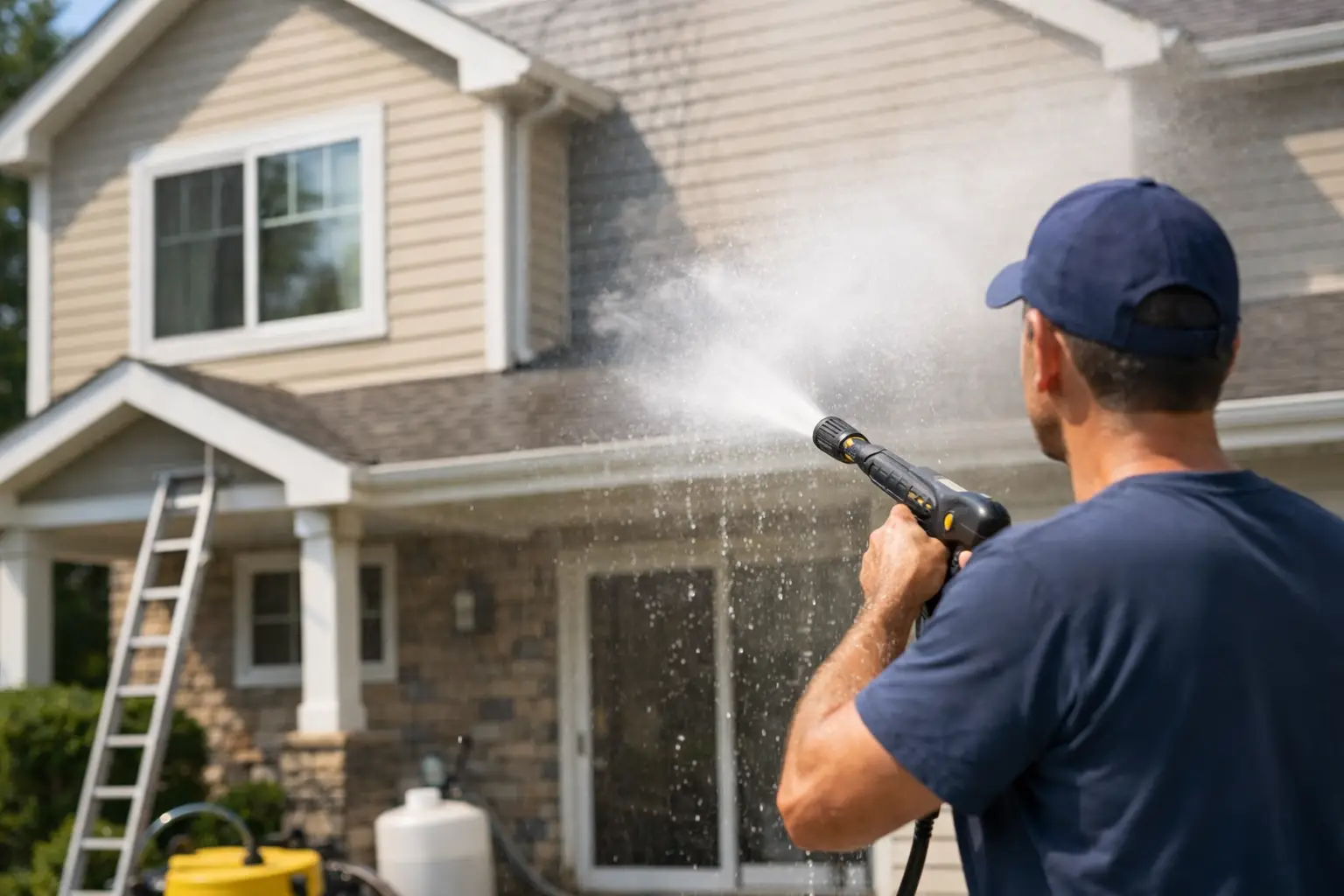
The black streaks on siding usually do not show up all at once. They build slowly, then one day the house looks tired, shaded, and older than it really is. A good house washing guide for homeowners starts there – not with equipment, but with the reason the job matters. Dirt, algae, mildew, pollen, spider webs, and airborne grime do more than hurt curb appeal. Left in place, they can shorten the life of exterior surfaces and make small maintenance issues harder to spot.
For homeowners in Central Virginia, house washing is rarely just about making the place look better for a weekend. Our climate gives organic growth plenty of opportunity. Shade, humidity, pollen, and seasonal moisture all work against clean siding. If you wait too long, buildup becomes more stubborn, and the temptation to blast it off with too much pressure goes up. That is where expensive damage happens.
What house washing really means
Many people use house washing and pressure washing as if they mean the same thing. They do not. In most cases, house washing is a low-pressure cleaning process designed to remove organic growth, grime, and staining from exterior surfaces without forcing water behind siding or scarring the material.
That distinction matters because different surfaces need different treatment. Vinyl siding can usually handle a soft wash approach very well. Painted wood, stucco, fiber cement, older trim, soffits, gutters, and delicate exterior details all need the same careful thinking. The goal is not brute force. The goal is a clean surface without damage.
A no-nonsense rule for homeowners is simple: if the cleaning method relies on high pressure to compensate for poor chemistry or poor technique, it is probably the wrong approach for the house itself.
A practical house washing guide for homeowners
Before any cleaning starts, the first step is identifying what is actually on the house. Green buildup is often algae. Black spotting can be mildew or surface staining. Rust-colored drips may point to metal runoff. Red clay splatter is a different problem entirely. Dust and pollen are easy to remove. Embedded staining is not.
That matters because the right process depends on the contamination, not just the siding type. A house with light pollen on sun-exposed vinyl is a very different job than a shaded home with years of organic growth around trim, under gutters, and behind landscaping.
Preparation is just as important as washing. Windows should be closed and checked. Outdoor furniture, decor, and light items need to be moved or protected. Plants should be pre-rinsed and managed carefully during the process. Electrical fixtures and vulnerable openings need attention. If a contractor does not talk about prep, that is a warning sign.
The wash itself should be controlled, even, and surface-specific. Cleaning solution is applied at low pressure, given time to work, then rinsed properly. A rushed job can leave tiger striping, missed sections, or residue. An aggressive job can force water into places it does not belong.
Why DIY goes wrong so often
A lot of homeowners already own a pressure washer, which makes house washing look straightforward. The problem is that the machine is often the least important part of the process. Cleaning chemistry, pressure control, nozzle selection, spray angle, dwell time, rinse technique, and surface knowledge matter more than raw power.
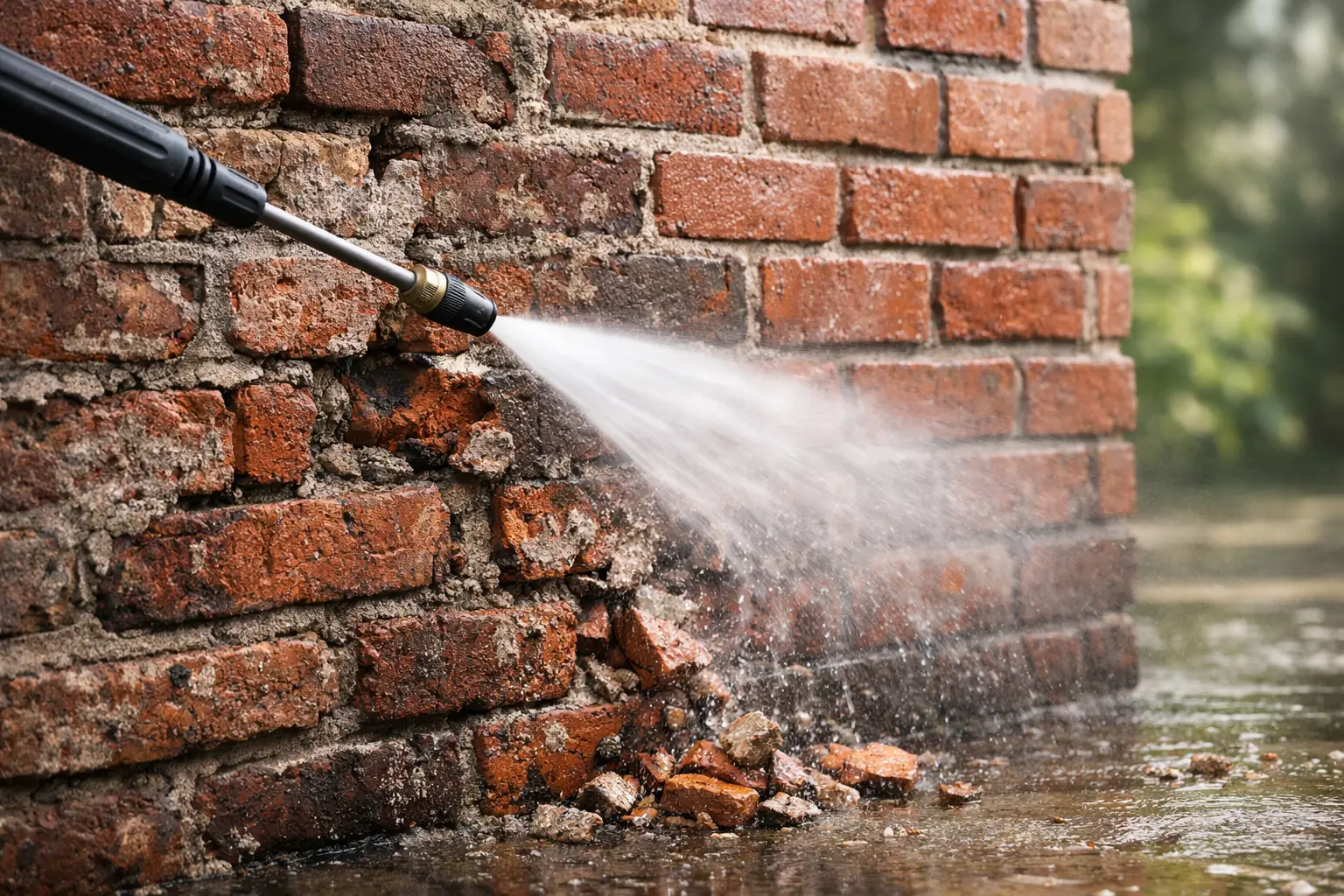
The most common DIY mistake is using too much pressure. Vinyl siding can crack. Oxidized siding can get scarred or left with obvious wand marks. Painted surfaces can peel. Water can get driven behind siding, around window trim, or into small gaps that were never meant to take direct force.
The second mistake is using the wrong cleaner or the wrong mix strength. Too weak, and the growth comes back fast because it was never fully treated. Too strong, and you risk damage to plants, painted surfaces, or nearby materials. There is a narrow lane between ineffective and careless.
Then there is the ladder issue. Washing upper elevations while handling a spray wand sounds manageable until the hose pulls, the footing shifts, or the siding gets slick. For two-story homes, that risk goes up quickly.
When house washing makes sense – and when it should wait
Most homes benefit from washing every 2 – 3 years, but there is no universal schedule. It depends on tree cover, moisture exposure, surface material, nearby roads, pollen load, and whether the house stays shaded for much of the day.
Homes with a lot of north-facing exposure or heavy tree cover often need more frequent attention. Full-sun homes may stay cleaner longer, though they still collect dust, pollen, and insect residue. If you are seeing clear green or black growth, waiting usually does not help.
Weather also matters. Mild temperatures are ideal. Extremely hot days can make cleaners dry too quickly. Freezing conditions are a nonstarter. Rain can interrupt dwell time and rinsing. A professional schedule is usually built around those realities, not just calendar availability.
Surfaces that need extra caution
Not every house exterior should be treated the same way. Older painted wood needs a gentler approach than newer vinyl. Stucco can hold moisture and react poorly to bad technique. Fiber cement is durable, but it still needs the right pressure and rinse method. Decorative trim, shutters, and aging caulk lines all deserve attention.
Historic homes are in a separate category. Older materials, aging finishes, fragile seals, and architectural details make surface knowledge critical. The same applies to homes with custom stains, specialty coatings, or areas where oxidation has already started. In those cases, the wrong wash can create a problem that did not exist before.
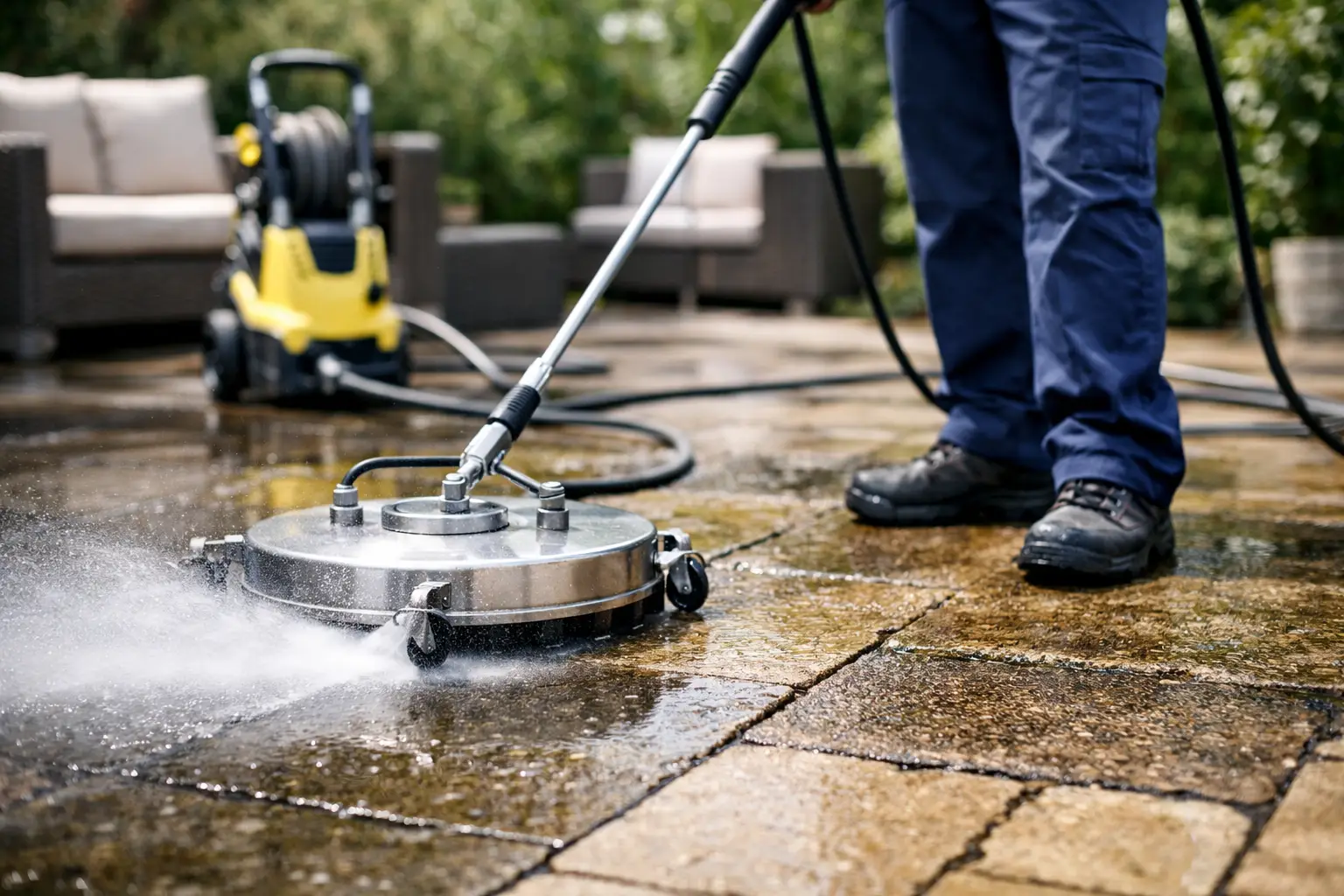
If your property includes decks, fences, walkways, window screens, solar panels, or roof staining, those should not automatically be bundled into the same process. Each surface has its own cleaning standard. One-size-fits-all exterior cleaning usually means one or more surfaces are being treated incorrectly.
How to choose a house washing service
A solid house washing guide for homeowners should help you evaluate the company, not just the process. Start with how they communicate. Do they answer questions clearly? Do they explain how they clean, what they protect, and what results are realistic? Good contractors do not hide behind vague promises.
Ask whether they use soft washing or low-pressure house washing for siding. Ask how they protect landscaping. Ask what they do differently for delicate materials, older homes, or heavy organic growth. If the answer to every problem is just more pressure, keep looking.
Experience matters, but specific training matters too. Exterior cleaning looks simple from the curb. It is not simple when you factor in surface chemistry, runoff control, oxidation, stain identification, and property protection. That is why homeowners across this region often prefer a specialist over a low-price operator with a rented machine.
It is also fair to ask about consistency. Are they showing up when they say they will? Is there a real person handling communication? Do they take time to inspect the property before pricing? Those details tell you a lot about what the actual service experience will be like.
What results should you expect?
A proper wash should leave the home visibly cleaner, brighter, and more uniform in appearance. Organic growth should be treated, not just thinned out. Trim lines should look sharper. Gutters, soffits, and shaded sections should no longer stand out for the wrong reasons.
But homeowners should also know what house washing cannot do. It will not fix faded paint. It will not reverse oxidation. It will not remove every deep stain from every surface. Honest expectations are part of professional service.
The best result is not just a cleaner house for this month. It is a house that has been cleaned in a way that protects siding, trim, seals, and surrounding property while giving buildup fewer places to hang on. That is the difference between a quick wash and real exterior maintenance.
Blue Ridge Exterior Cleaning has built its reputation around that difference – careful methods, clear communication, and cleaning that protects the property instead of gambling with it. If you are comparing options, that is the standard to use.
A clean exterior does more than improve the view from the driveway. It gives you a better read on the condition of your home, helps preserve the materials you have already paid for, and removes one more maintenance issue before it turns into a bigger one.